
Ombudsman uncovers alleged illegal levies in madrasah environments
Jakarta (ANTARA) - The Indonesian Ombudsman (Ombudsman RI) has uncovered allegations of illegal levies within madrasah environments, stemming from 32 public reports received in 2025.
Nuzran Joher, a member of the Ombudsman RI, stated that the institution continues to perform its public service oversight function by receiving and following up on community reports regarding alleged maladministration within the Ministry of Religious Affairs, including conducting prevention and investigation efforts.
“The reports we received are most dominantly related to costs supporting learning activities, such as unofficial tuition fees or school committee fees, the purchase of student worksheets (LKS), tutoring fees, extracurricular activities, and even mandatory alms,” Nuzran said, as quoted from a statement confirmed in Jakarta on Monday.
Furthermore, he added that the Ombudsman RI also found levies occurring during new student admissions, such as registration fees, re-registration fees, uniform costs, and development funds.
The Ombudsman RI also noted changes in recent technical regulation guidelines that no longer include clauses prohibiting such levies. This has become a significant point of concern that requires further discussion.
In addition to the issue of illegal levies, the Ombudsman RI is also conducting a Self-Initiated Investigation (IAPS) regarding allegations of violence within pesantren (Islamic boarding school) environments.
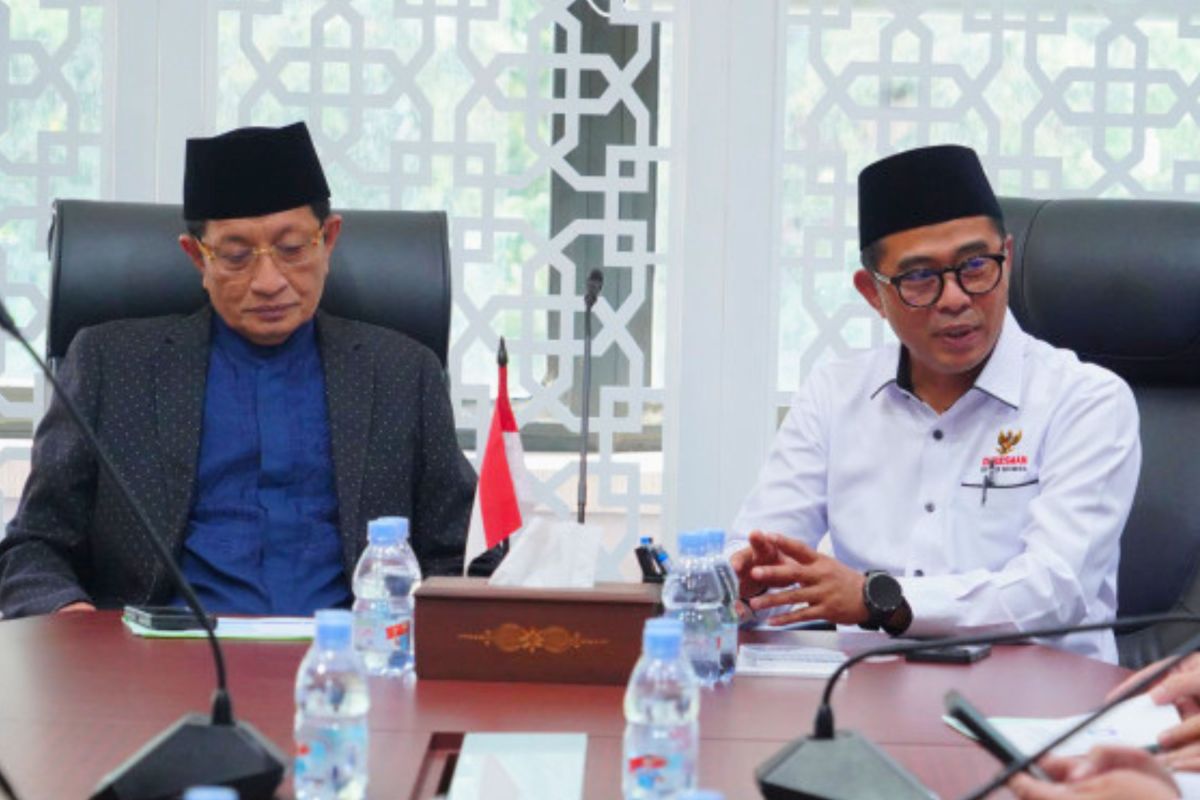
The Ombudsman RI held a coordination meeting with the Minister of Religious Affairs, Nasaruddin Umar, in Jakarta on Tuesday (26/5).
Nuzran explained that during the meeting, both parties coordinated and cooperated in accordance with the functions and duties of the Ombudsman RI, which include receiving and following up on public reports regarding alleged maladministration and undertaking prevention efforts.
On that occasion, the Ombudsman RI outlined several focus areas for public service oversight within the Ministry of Religious Affairs, including the oversight of Madrasah Student Admissions (PMBM), the IAPS regarding alleged illegal levies in madrasahs, the IAPS regarding alleged violence in pesantren, and the oversight of various other strategic religious education programmes.
The Ombudsman RI also presented several routine oversight programmes, including Public Service Oversight Opinions, which require support and cooperation from the Ministry of Religious Affairs’ ranks.
Additionally, the Ombudsman and the Ministry of Religious Affairs are exploring several oversight programmes, including the Free Nutritious Meal programme for madrasah students and the construction of Nutritional Fulfilment Service Units (SPPG) in pesantren, the revitalisation of madrasah infrastructure, the digitalisation of madrasah education, and the improvement of welfare for madrasah teachers.
Meanwhile, Minister of Religious Affairs Nasaruddin Umar welcomed the visit of the Ombudsman RI. According to him, the presence of the Ombudsman will assist in overseeing performance within the Ministry of Religious Affairs.
The Minister stated that the Ministry of Religious Affairs is a very large institution, with more than 4,700 work units. Furthermore, it has the largest number of employees, spread across to the Religious Affairs Offices (KUA) in rural areas.
“With the limited strength of the Inspectorate General, there are certainly things that are overlooked. Here, the Ombudsman RI helps us to see things that have not yet been visible,” said Nasaruddin.
Through this coordination, the Ombudsman RI hopes that public service oversight within the Ministry of Religious Affairs can be further strengthened to achieve excellent public service for the community.