
Ombudsman: Transport Safety Assurance Requires Systemic Solutions
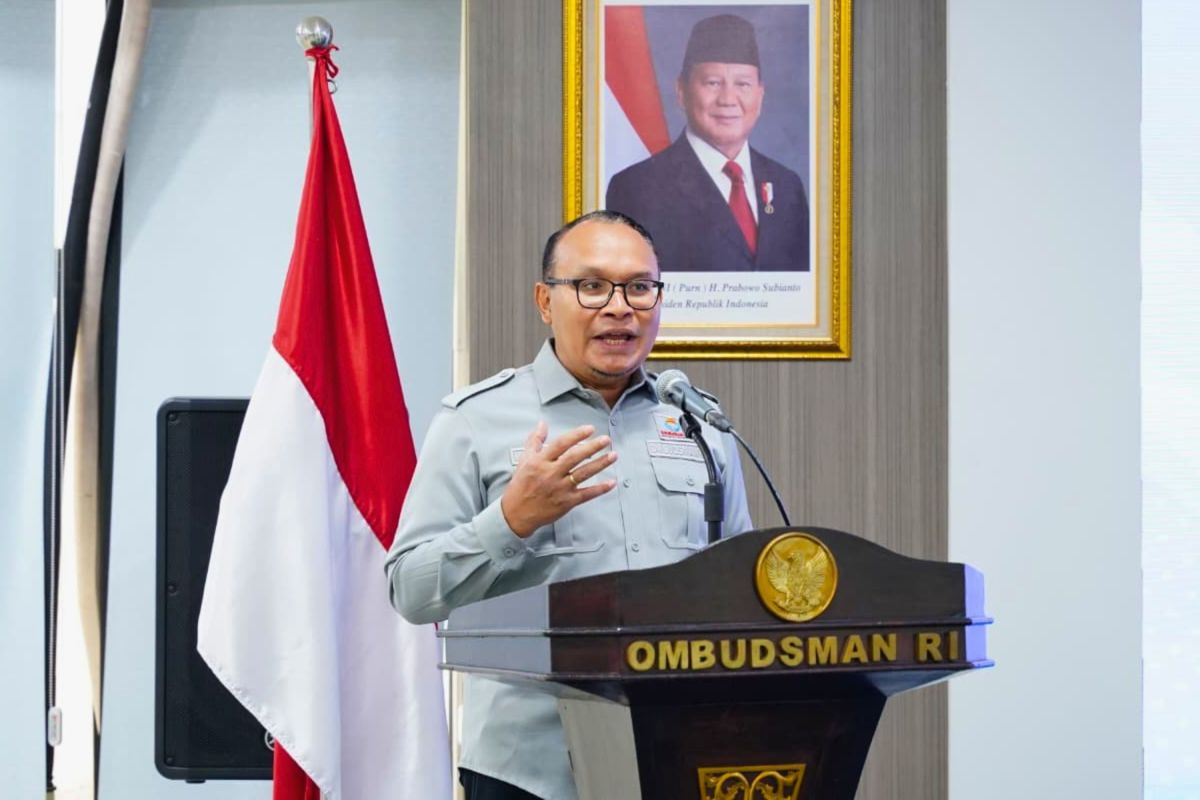
Jakarta (ANTARA) - The Republic of Indonesia Ombudsman states that guaranteeing safety in public services in the mass transportation sector requires systemic and foundational solutions, rather than merely addressing case-specific issues.
Ombudsman RI member Robert Na Endi Jaweng said that every systemic failure with the potential to cause casualties must be a serious concern for all service providers, as public safety is the primary principle in public services.
“Operators must not only focus on operational smoothness but are obliged to ensure that user safety is the top priority in every aspect of service,” said Robert, as confirmed in Jakarta on Wednesday.
The Ombudsman expressed deep concern over the railway accident incident in Bekasi, West Java, which resulted in fatalities and injuries.
According to Robert, the event is a humanitarian tragedy as well as a serious reminder because it involves stakes including public safety, system reliability, user protection, and overall public service governance.
As a state institution overseeing public service provision, he stated that the Ombudsman views the incident not merely as an operational technical accident.
Thus, the event must be placed within the framework of a comprehensive evaluation of public service quality.
“Public transportation is a basic service concerning the public’s right to safe, decent, reliable, and responsible services,” he said.
Various potential issues mentioned, continued Robert, could include procedural negligence, weak risk mitigation, suboptimal coordination among providers, and potential neglect of service safety standards.
It was emphasised that recurring risks must not be allowed and must be comprehensively corrected immediately.
Ombudsman RI will actively carry out its oversight function regarding the follow-up handling of the train incident, particularly in ensuring the fulfilment of the public’s rights as service users.
Robert stated that victims and their families are entitled to prompt handling, fair compensation, transparent information, and non-discriminatory access to services.
In addition, the public also has the right to openly know the results of evaluations and corrective steps taken by service providers.
Going forward, he added, the incident must drive the government, railway operators, and all stakeholders to conduct a thorough audit of safety standards, operational control systems, risk management, and emergency response patterns.
“Public service oversight must not stop at incident resolution but must be directed towards systemic reform to prevent similar occurrences,” said Robert, adding.
Thus, he continued, technological modernisation, strengthening safety standards, improving human resource quality, public information transparency, and reinforcing public complaint mechanisms must become priority agendas.
He opined that public trust in mass transportation can only be restored if the state is truly present through effective oversight, firm accountability, and systemic-oriented corrective actions.
Therefore, he emphasised that the tragedy must not end as a momentary event but must become a turning point to strengthen public service quality in Indonesia.
“Ombudsman RI reaffirms its commitment to continue overseeing public service provision in the transportation sector to ensure that public safety is truly the top priority,” he said.