
Ombudsman RI Expands 2026 Public Service Maladministration Assessment to Include SOEs, BHMN, and State Universities
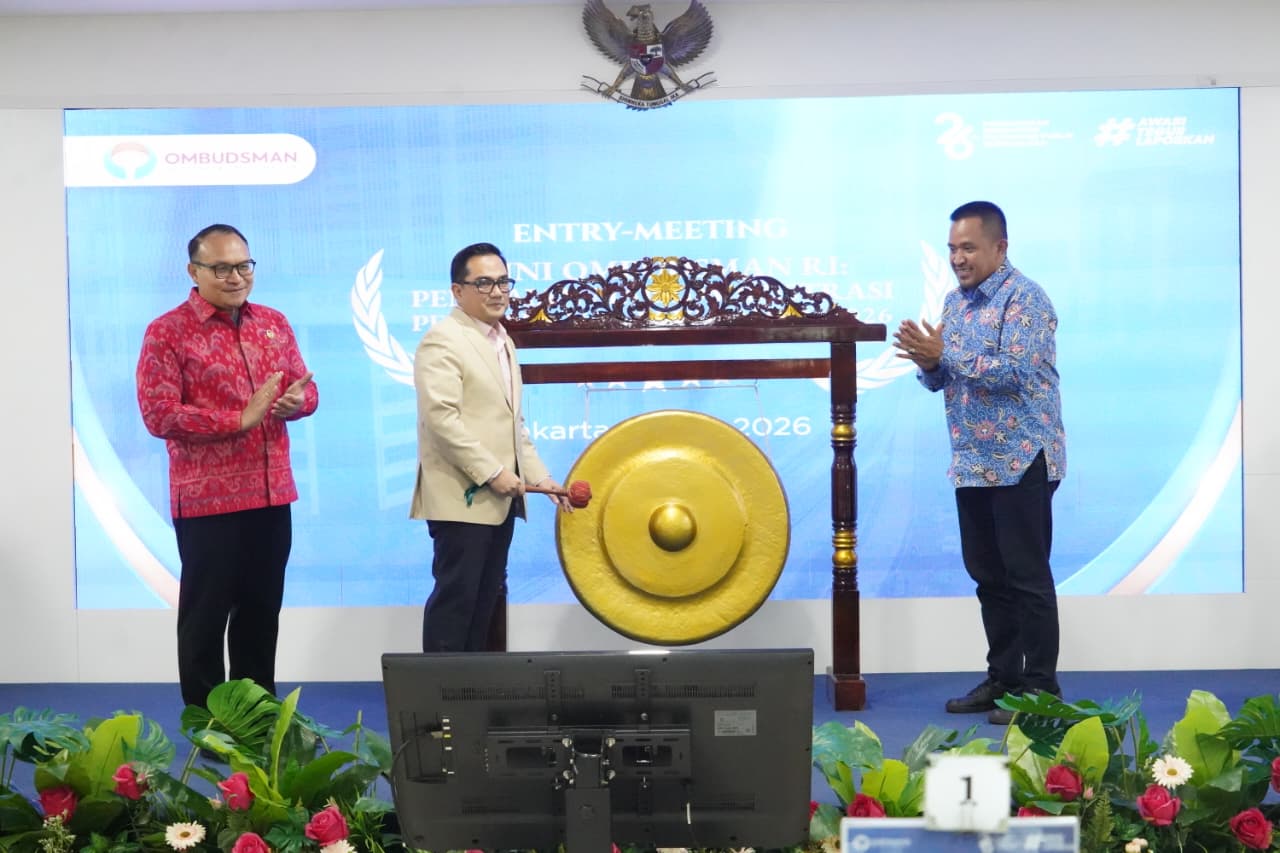
The Indonesian Ombudsman has officially commenced the 2026 Ombudsman Opinion: Public Service Maladministration Assessment through an entry meeting held on Tuesday (14/7) at the Ombudsman’s office in South Jakarta. This year’s assessment marks a significant milestone in strengthening public service oversight as it will, for the first time, include state-owned enterprises (BUMN), state-owned legal entities (BHMN), and state universities with legal entity status (PTN-BH).
Deputy Chairperson of the Ombudsman, Rahmadi Indra Tektona, stated in his remarks that the Ombudsman aims to convey the objectives, scope, methodology, and stages of the expanded 2026 assessment. ‘Collaboration and information transparency are key to ensuring that the assessment process not only meets compliance aspects but also has a tangible impact on improving services for the public as a whole,’ Rahmadi explained.
In line with this, M. Rifqinizamy Karsayuda, Chair of Commission II of the House of Representatives (DPR RI), who attended as a keynote speaker, highlighted the DPR’s focus on the Ombudsman’s role as an institution that supervises and encourages public service innovation in Indonesia. ‘The persistence of maladministration indicates a lack of competence and professionalism among civil servants, as well as weak internal oversight. The Ombudsman’s role as an external supervisor is vital to eradicating maladministration, preventing corruption, collusion, and nepotism, and promoting inclusive and equitable services,’ he said.
In 2026, the assessment will be conducted on 581 public service providers, comprising 40 ministries, 45 agencies, 21 BUMN/BHMN/PTN-BH, 38 provincial governments, 356 district governments, and 81 city governments. The expansion of the assessment scope to include BUMN, BHMN, and PTN-BH is expected to provide a more comprehensive picture of the quality of public service delivery in Indonesia.
The assessment employs a comprehensive approach by measuring the quality of public services and the compliance level of service providers with Ombudsman oversight products, based on Ombudsman Regulation No. 61 of 2025 on the Assessment of Maladministration in Public Service Delivery. The quality assessment is carried out across four main dimensions: Input, Process, Output, and Complaints. The Input dimension measures the readiness of service providers in terms of human resources, planning, and supporting systems. The Process dimension assesses the implementation of public services through the fulfilment of 14 standard service components and evaluates 12 forms of maladministration that may occur. Meanwhile, the Output dimension gauges service quality based on external evaluations of the services provided.
Furthermore, the assessment places significant importance on the management of public complaints. The Ombudsman evaluates various indicators, ranging from complaint management policies and mechanisms to the effectiveness of resolution. Service providers are also measured by the level of public trust, which reflects the integrity, capacity, and governance of public services carried out consistently.
In addition to assessing service quality, the Ombudsman also evaluates the compliance level of service providers in following up on Ombudsman oversight products, which include Corrective Actions (Laporan Hasil Pemeriksaan), Improvement Suggestions (Laporan Hasil Analisis), and/or Refinement Suggestions. This aspect aims to encourage public service providers to be more proactive in making continuous improvements and resolving maladministration issues.
The assessment is carried out in five stages: preparation, assessment implementation, compilation of results, submission of results, and evaluation and monitoring. The results will be classified into five opinion categories: Highest Quality (final score 88.00-100.00), High Quality (78.00-87.99), Medium Quality (54.00-77.99), Low Quality (32.00-53.99), and Lowest Quality (0.00-31.99). Through the 2026 Public Service Maladministration Assessment, the Ombudsman hopes that all public service providers will continue to improve service quality, strengthen good governance, and build public trust through professional, responsive, and maladministration-free services.