
Ombudsman Provides Five Notes on NTB Education Donation Draft Regulation
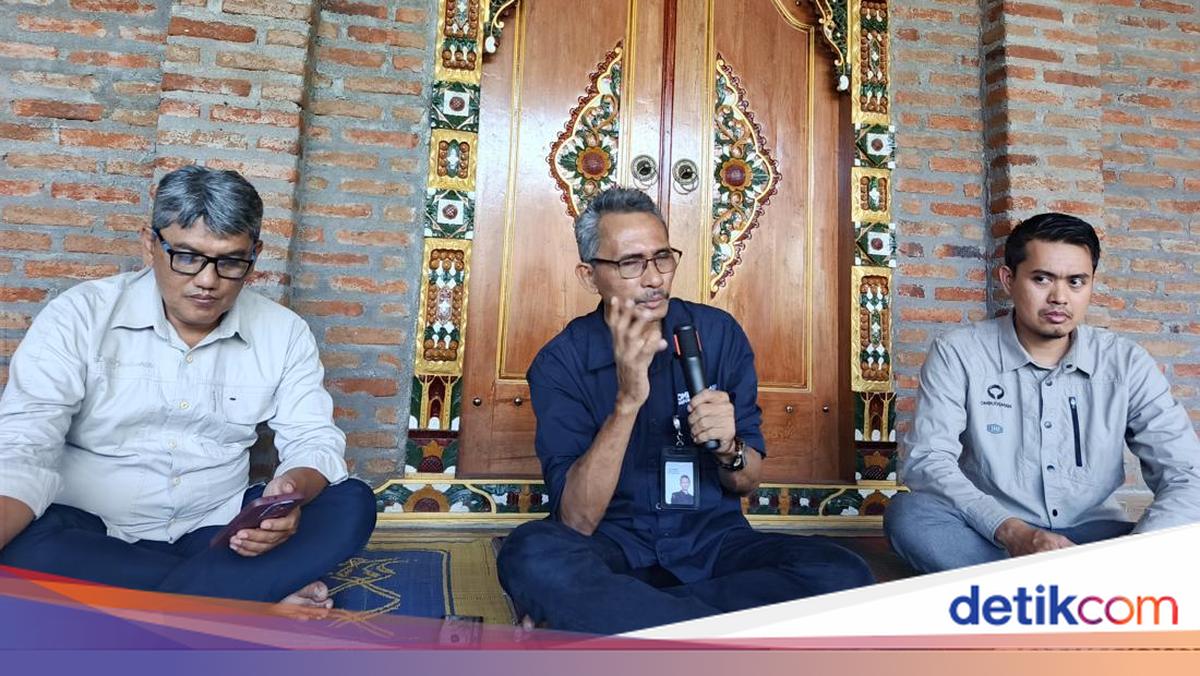
The Ombudsman of the Republic of Indonesia’s West Nusa Tenggara (NTB) representative office has provided notes on the Draft Regional Regulation (Raperda) concerning education fund donations sourced from the public for secondary education units, including vocational schools (SMK), senior high schools (SMA), and special needs schools (SLB). The Ombudsman assessed that the norms within the Raperda need revision to align with prevailing laws and regulations.
Head of the NTB Ombudsman Representative Office, Dwi Sudarsono, stated that the Raperda on school unit donations only examines contributions in the form of money. According to him, this contradicts Article 1, point 5 of the Minister of Education and Culture Regulation (Permendikbud) Number 75 of 2016 concerning School Committees, which defines donations as including money, goods, and services. “This Raperda only regulates monetary donations from parents or guardians. In fact, according to the provisions, donations can be sourced from various parties, including individuals, organisations, the business world, industry, and other stakeholders,” Dwi told journalists during a visit to Central Lombok on Tuesday (23/6/2026).
He added that, referring to the Permendikbud, this Raperda must also be discussed in detail because it concerns retribution paid into the regional treasury. Dwi said the discussion cannot focus solely on monetary donations, as there are many other sources that can be tapped. “Therefore, School Committees should be given the flexibility to raise and manage donations, including in other forms, not just money,” he added.
Based on these findings, the Ombudsman views that the Raperda requires further review as it concerns education donations. The matters needing re-regulation are highly technical. “Based on the notes above, the NTB Ombudsman representative proposes several provisions. First, the title of the Raperda should be revised to ‘Education Donations Sourced from the Public for Secondary Education Units Organised by Regional Governments and the Community’,” he explained.
Secondly, Dwi continued, in accordance with Permendikbud Number 75 of 2016, the Raperda should regulate the technical procedures or mechanisms for raising funds and other resources in the form of goods and services for education units. “Moreover, education funding from the Regional Government is still limited,” he said. Thirdly, the Ombudsman proposes that the draft regulation should stipulate that fundraising is not only from students or parents/guardians, but also from individuals, organisations, the business world, industry, and other stakeholders through creative and innovative efforts.
“Fourth, this Raperda should not be limited to regulating donations for education units organised by the Regional Government. The Raperda needs to regulate provisions for raising money, goods, and services in education units organised by both the Regional Government and the community,” he stressed. Lastly, the Ombudsman observed that the Raperda merely replicates higher legislation. Dwi stated that the Raperda should regulate the technical implementation of raising, managing, and using donations, which can be further detailed in a Governor Regulation (Pergub). “With this, we from the NTB Ombudsman will provide written enrichment suggestions for the NTB Provincial Raperda on education fund donations sourced from the public for secondary education units,” he concluded.
The NTB Regional People’s Representative Council (DPRD) is currently finalising the Raperda related to education cost donations for the high school and vocational school levels. This regulation is designed to curb illegal levies and provide legal certainty regarding donations so they are not coercive and do not burden the public. The main objective of this regional regulation is to eliminate illegal levy practices and ensure clear oversight to prevent arbitrariness or stark disparities in donation collection between schools. The donation scheme in this regulation will clearly distinguish between levies and donations. Donations are voluntary, non-coercive, and only intended for parents or community members who are financially capable. Furthermore, this regional regulation will also regulate protections for underprivileged students to ensure that citizens or students from low-income families are not burdened.