
Ombudsman: Passengers need swift information during flight disruptions
Jakarta (ANTARA) - The Ombudsman of the Republic of Indonesia (ORI) has reminded that passengers require fast, consistent and easily understood information in situations of flight disruption caused by the spread of volcanic ash from Mount Anak Krakatau.
Ombudsman member Robert Na Endi Jaweng, when contacted in Jakarta on Tuesday, said that in conditions of flight disruption caused by natural factors, flight safety is the highest priority, but it must go hand in hand with certainty of information and service to passengers.
“At the same time, passengers still have the right to receive clear information, certainty of service, and proper handling. Operational uncertainty must not become a burden for passengers,” he said.
Therefore, he emphasised that every change in flight status needs to be communicated promptly so that passengers can determine their next steps.
“Passengers must not be left waiting without certainty. They need to know whether their flight is still operating, delayed, cancelled, rescheduled, or diverted,” he said.
Robert said the information must be conveyed clearly through a single official channel (single entry) and in real time.
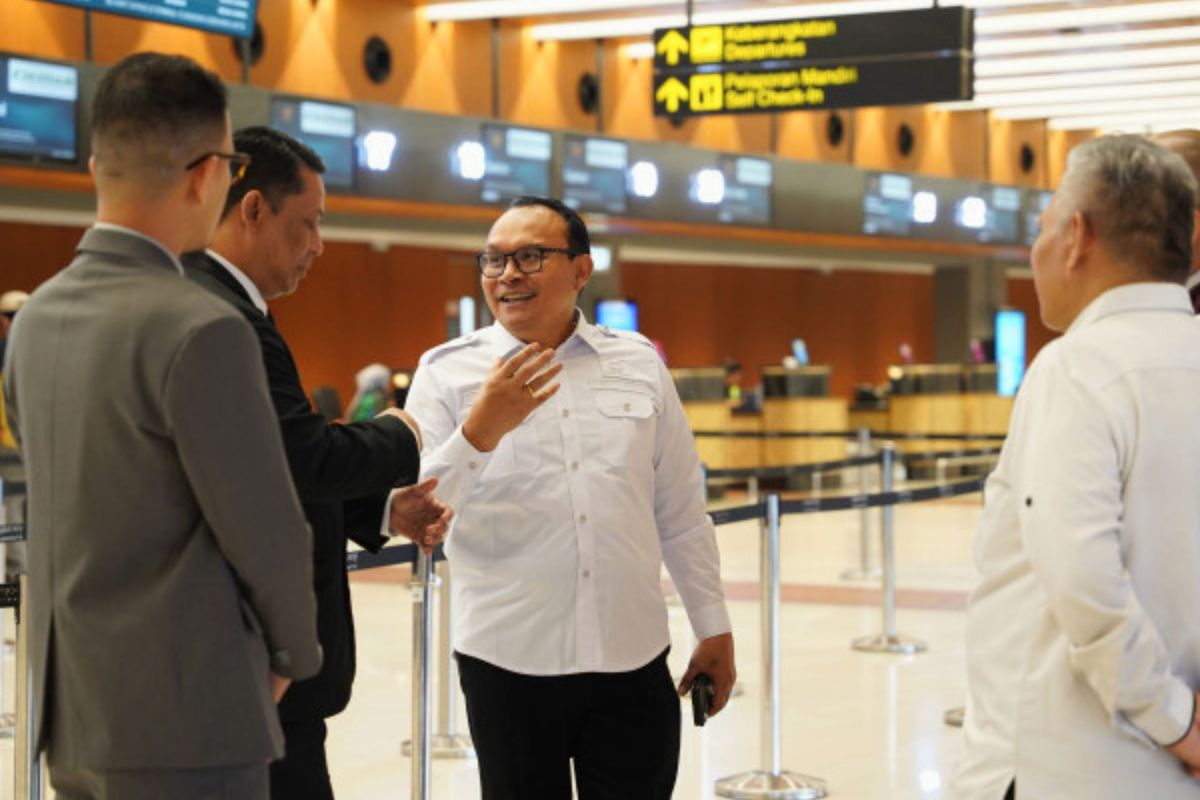
Robert conducted monitoring of passenger services at Soekarno-Hatta International Airport in Tangerang, Banten, on Monday (7/9).
A number of flight activities have been affected by the situation, including cancellations, delays, rescheduling and flight diversions.
The Ombudsman monitored the handling of passengers to ensure the public receives clear information as well as proper service and handling (service recovery) during operational flight disruptions.
In its field activities, ORI observed the communication of flight status information, the mechanisms for handling affected passengers, and the readiness of officers to provide explanations to passengers.
The Ombudsman also paid attention to the handling of schedule changes, cancellations and flight diversions, including information on refunds, rescheduling and baggage handling.
ORI also noted the importance of coordination between parties in handling flight disruptions caused by volcanic ash.
According to Robert, information on volcanic ash conditions and flight safety developments needs to be translated into service information that can be understood quickly and easily by the public.
During monitoring at Terminal 1B and Terminal 1C, the Ombudsman found flights from a certain airline still listed as on schedule, which was then confirmed with one of the passengers.
That situation drew ORI’s attention because it has the potential to create uncertainty for passengers, especially as at the same time the temporary closure of a number of airports was carried out based on flight information through the Notice to Airmen (NOTAM) issued by AirNav Indonesia as well as the results of paper tests conducted by the Meteorology, Climatology and Geophysics Agency (BMKG) to detect the presence of volcanic ash.
In such a situation, he said, airline management must not make decisions that differ from the authorities, even if only for the purposes of anticipation and precaution.
“On the other hand, oversight by the Ministry of Transportation and the Airport Authority is also being strengthened at various affected airports,” he said.
He emphasised that passengers need certainty regarding their flight status so they can determine their next steps, including whether to keep waiting, reschedule, or receive other forms of assistance.
The Ombudsman will further examine the coordination mechanisms and the handling of affected passengers, including ensuring that the information provided to the public accords with developments in the flight situation.
ORI reminded that in conditions of flight disruption caused by natural factors, services to passengers must still be carried out transparently, responsively and with a focus on certainty.
Flight safety must be the priority, but passengers’ rights to obtain information and proper service must also continue to be respected.