
Ombudsman: Not Every Permit Delay Is Maladministration — Here Are the Limits of Its Oversight
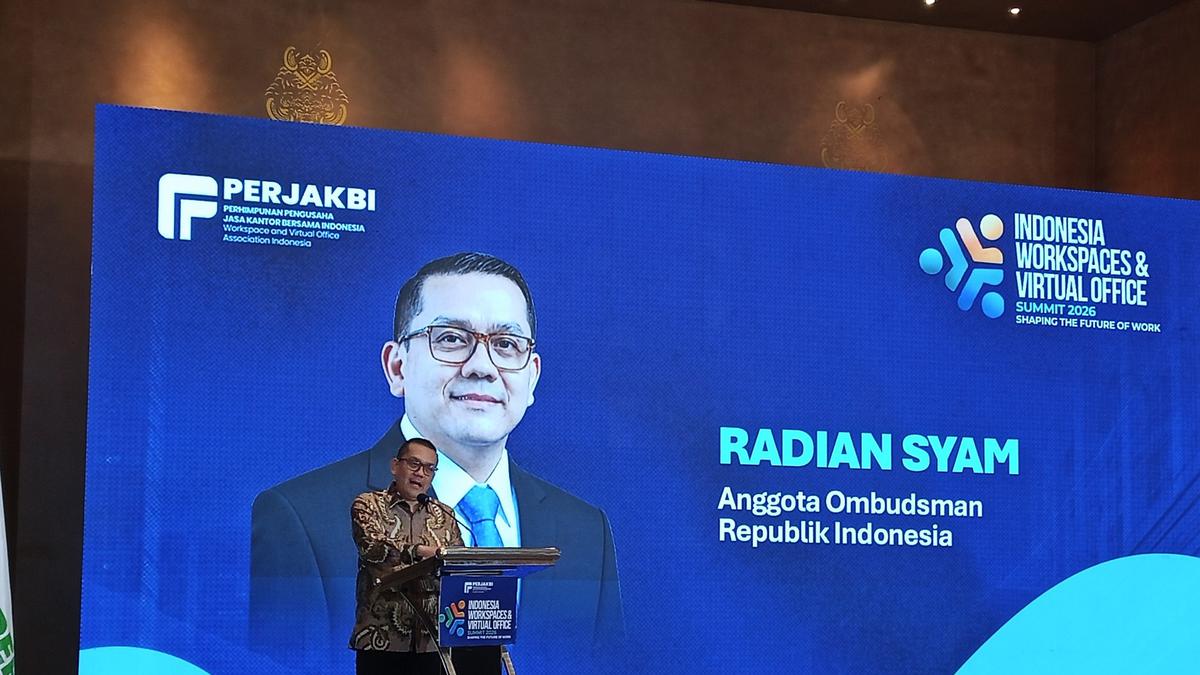
Jakarta — Ombudsman member Radian Syam emphasised that legal certainty is the foundation of ease of doing business.
“Ease of doing business is not merely about simplifying regulations; it is also a test of the quality of the rule of law,” Radian said at the Indonesia Workspaces & Virtual Office Summit 2026 in Jakarta on Wednesday (21 October 2026).
He outlined six standards for improving licensing services: transparency, certainty of procedures, certainty of timeframes, accountability, consistency and traceability.
Radian said digitising licensing was not simply a matter of transferring forms to an electronic system. “Digitalisation must strengthen transparency, traceability and accountability throughout the process,” he said.
For the workspace and virtual-office industry, he said clarity on administrative requirements and consistent service were crucial. However, ease of access must not remove legal obligations. “The state must make it easier for businesses to fulfil their legal obligations, not remove legitimate legal obligations,” he stressed.
Radian said the Ombudsman was not a substitute for the agencies that issue permits. “The Ombudsman oversees the delivery of public services, but does not replace the licensing authorities,” he said.
He cautioned that not every delay or refusal of a permit automatically constitutes maladministration. Any assessment must be based on the facts, legal elements and the findings of an investigation. He added that formalising a business could also make it easier to comply with requirements and protect legal certainty.
BKPM calls for clear rules
Meanwhile, Imam Soejoedi, a special adviser on macroeconomics at the Ministry of Investment and Downstreaming/BKPM, highlighted the impact that a lack of rules could have on micro, small and medium-sized enterprises (MSMEs).
“MSMEs should not be afraid to operate from a registered office simply because there are no rules on virtual offices,” he said. Such services, he added, could help reduce capital expenditure (capex) and operating expenditure (opex).
Imam said realised investment from January to September 2026 reached Rp1,539.2 trillion, up 7.3%. The government has set an investment target of Rp13,032 trillion for 2025–2029 in support of its goal of 8% economic growth.
He said licensing is now risk-based, governed by service-level agreements (SLAs) and integrated through the Online Single Submission (OSS) system. “We have been asked to roll out the red carpet for businesses,” he said.
Imam expressed hope that PERJAKBI and HIPMI would continue to act as strategic government partners in strengthening Indonesia’s business ecosystem, including by providing office services that support business growth.