
Ombudsman emphasises prioritising public interest
Jakarta (ANTARA) - The Ombudsman of the Republic of Indonesia (ORI) has reaffirmed its commitment to placing the interests of the state, the public, public services, and the execution of ORI’s duties above personal or group interests.
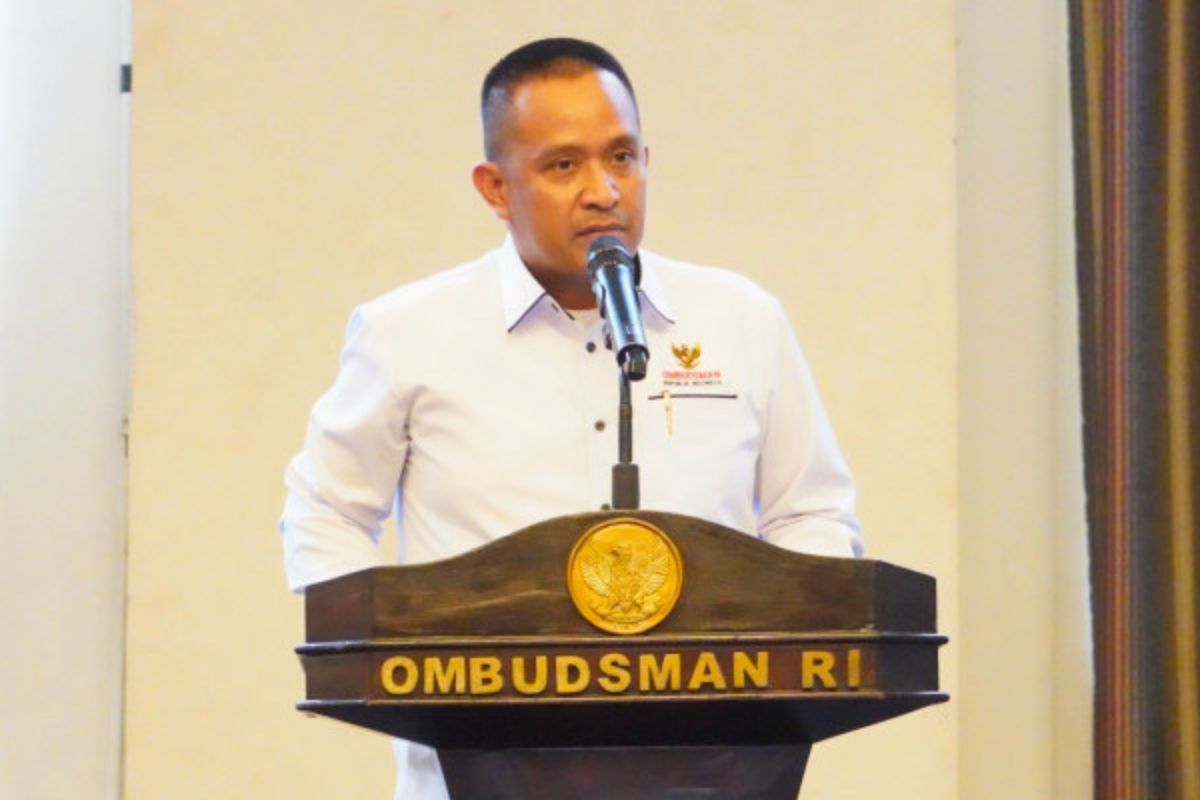
Vice Chairman of the Ombudsman, Rahmadi Indra Tektona, stated that integrity must go hand in hand with improving the quality of task execution, including the resolution of public reports. “Therefore, strengthening integrity is part of a collective effort to build a better Ombudsman,” Rahmadi said, as quoted from a statement confirmed in Jakarta on Friday.
As part of the efforts to strengthen integrity in performing its duties and functions, he noted that the Ombudsman is committed to preventing and managing conflicts of interest. This commitment was marked by the signing of a Joint Commitment for the Development of Integrity Zones (ZI) and a Statement of Commitment for the Prevention and Management of Conflicts of Interest.
In this commitment, Ombudsman personnel also emphasised that they must not use their positions, authority, or influence for the benefit of personal, family, group, and/or faction interests, and must be able to recognise and avoid situations that have the potential to create conflicts of interest during the performance of their duties.
Through this commitment, the Ombudsman encourages the establishment of a culture of integrity across all levels as part of the effort to maintain public trust in the execution of the Ombudsman’s duties and authority.
The signing of the commitment was part of a series of activities during the National Coordination Meeting (Rakornas) for the Resolution of Ombudsman RI Reports, which was preceded by a Hearing with Commission II of the Indonesian House of Representatives (DPR RI). The meeting was attended by the leaders of the Ombudsman RI, the secretary-general, inspectors, heads of Ombudsman representatives in 34 provinces, and the heads of the main assistantships of the Ombudsman.
The national coordination meeting serves as a momentum to evaluate report resolution performance, identify obstacles, and formulate steps to accelerate report processing. Rahmadi noted that every public report is a mandate for the enforcement of justice that must not be delayed.
“My hope is to cut the bureaucracy of handling, and simplify the verification flow so that the follow-up process for reports becomes faster,” he said.
He stated that the acceleration of report resolution is also being carried out through strengthened synergy with ministries, agencies, and local governments to ensure that the Ombudsman’s suggestions and recommendations can be followed up optimally. Additionally, the use of digital systems and real-time data-based report tracking needs to be maximised to support transparency and the effectiveness of report handling.
He also requested his staff to optimise corrective actions during the examination stage through applicable follow-up suggestions. Report handling, according to him, must also be conducted based on priority scales, considering the urgency and the impact on the community.
Through this national coordination meeting, Rahmadi aims to resolve at least 90 per cent of incoming reports before the end of the fiscal year. It was noted that these efforts are also directed towards reducing the duration of examinations and increasing the compliance of reported agencies in implementing Ombudsman recommendations.
“We have utilised the national coordination meeting to align perceptions, resolve procedural bottlenecks, and produce concrete solutions for clean public services,” said Rahmadi.