
Ombudsman: Agrarian reform must deliver legal certainty and justice
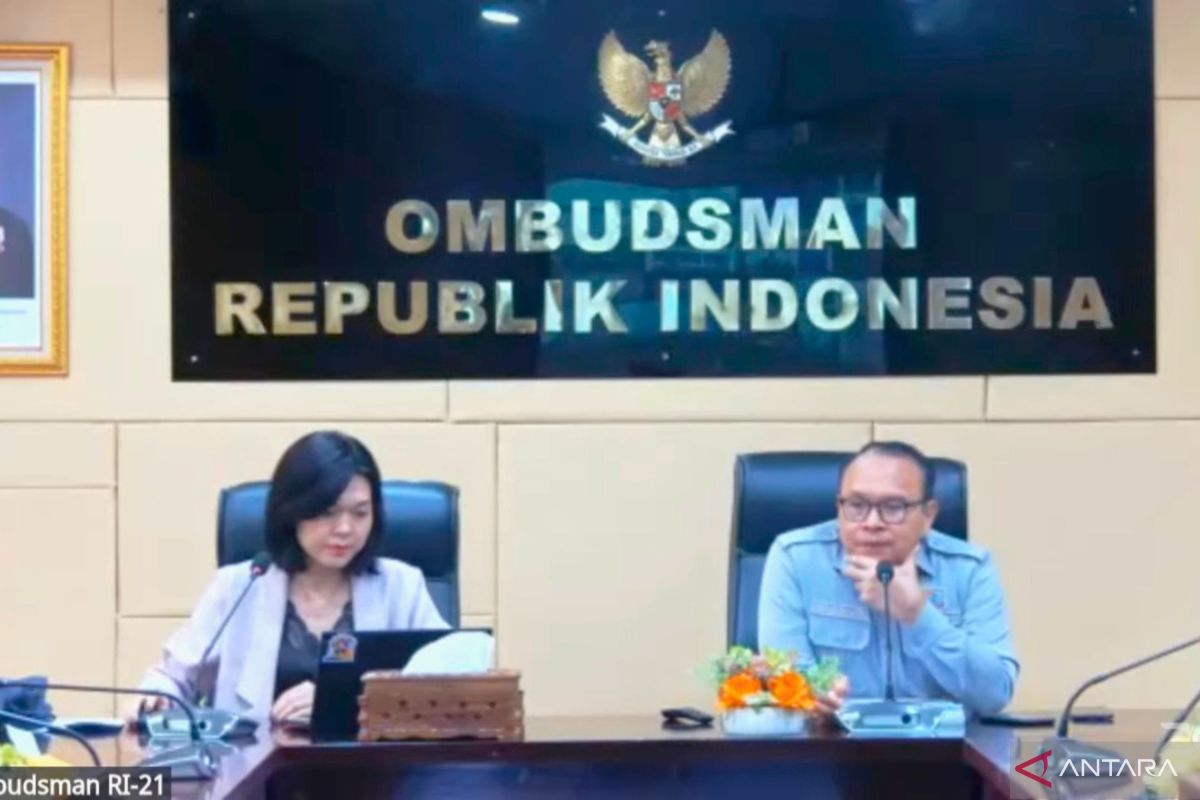
Jakarta (ANTARA) – The Ombudsman of the Republic of Indonesia (ORI) has stressed that agrarian reform must provide legal certainty and justice, during an online public discussion held in Jakarta on Friday.
Ombudsman member Robert Na Endi Jaweng said the success of agrarian reform could not be measured solely by the amount of land distributed or the number of certificates issued.
“Success must be reflected in reduced inequality in land ownership, secure community rights, fair resolution of conflicts and improved welfare for affected residents,” Robert said.
During the discussion, the Consortium for Agrarian Reform (KPA) highlighted structural agrarian issues, including the fact that smallholders with less than 0.5 hectares account for 61.3 per cent of farmers in Indonesia.
KPA also recorded an increase in agrarian conflicts, from 207 cases in 2021 to 341 in 2025. Meanwhile, the redistribution of 6.2 million land parcels and improvements to land services by the Ministry of Agrarian Affairs and Spatial Planning/National Land Agency (ATR/BPN) are progress that should be recognised.
However, Robert said these achievements had not fully resolved conflicts in priority areas. The figures for priority agrarian reform locations also differ: ATR/BPN records 26 out of 70 locations, while KPA lists 865 priority agrarian reform locations (LPRA).
Robert said the discrepancy underscored the need to consolidate and verify data as a basis for setting priorities and monitoring conflict resolution.
The National Agrarian Reform Agency (BRAN) is expected to focus on identifying the objects and subjects of agrarian reform and resolving structural agrarian conflicts in line with its mandate. ATR/BPN, meanwhile, should continue to handle land administration and the issuance of land rights within its authority.
He said clear divisions of responsibility should be accompanied by coordination across ministries and agencies and integrated data, so that cases involving land designated for agrarian reform (TORA) are not allowed to drag on.
“People must not face uncertainty because of conflicting information or agencies passing responsibility to one another,” he said.
ORI will continue to oversee the process and issue recommendations within its authority, without taking over the duties of ATR/BPN or BRAN.
To speed up the resolution of public complaints, Robert said, concrete coordination mechanisms are needed, from clarifying jurisdictions and appointing the responsible agency to drawing up follow-up plans and deadlines, and monitoring implementation.
He added that recurring patterns in complaints should also inform procedural improvements and the prevention of maladministration.
Coordination, he said, should not stop at meetings or exchanges of letters, but should produce corrective action and certainty for the public that cases will be resolved.
He said the public should be informed about the stages of resolution, the parties responsible and case developments.
“Protection for people in conflict areas must also be strengthened, including through coordination with law enforcement to prevent criminalisation and violence,” Robert said.
KPA recorded that legal proceedings against 147 farmers and Indigenous people had yet to be halted. Conflict resolution, meanwhile, must be based on verified data, objective examination, respect for the rights of all parties and accountable procedures.
He said administrative issues should be addressed by the agencies with the relevant authority, while disputes over rights should be resolved through the appropriate legal mechanisms.
ORI is therefore calling for stronger coordination across ministries and agencies, integrated land data, and a clear division of authority between BRAN and ATR/BPN to ensure agrarian reform is implemented effectively, transparently and fairly.
At the same event, Ombudsman chair Nuzran Joher said cooperation between the government, ORI and civil society should be directed towards resolving conflicts, improving the quality of land services and strengthening legal certainty for the public.
“I hope this meeting will be a concrete step towards more transparent, accountable and fair land administration that serves the public interest,” Nuzran said.
ORI hopes that agrarian reform regulations and the strengthening of BRAN’s institutional capacity will provide an opportunity to improve land administration governance.
He stressed that success must be reflected in faster conflict resolution, certainty in public services, the prevention of maladministration and improved public welfare.
Source: jawawa.id (https://jawawa.id/newsitem/ombudsman-agrarian-reform-must-deliver-legal-certainty-and-justice-1792777877)
Originally published by Antara (Indonesian) (https://www.antaranews.com/berita/5808555/ombudsman-reforma-agraria-harus-beri-kepastian-hukum-dan-keadilan), translated from Indonesian