
Oman’s Foreign Minister: Gulf Security Cannot Be Stable Without Iran
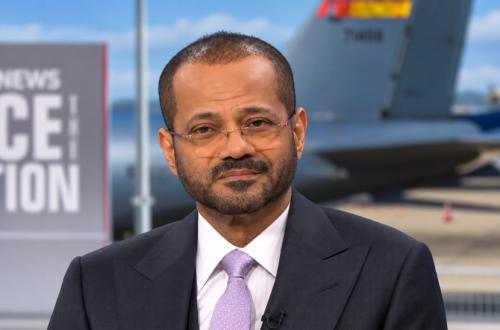
JAKARTA — Oman is pushing for a peace pact involving eight countries in the Gulf region, including Iran, as part of efforts to end prolonged tensions in the Middle East. Foreign Minister Badr Albusaidi said the US government understood the direction of change being pursued by countries in the region, although Washington and Tehran still face fundamental differences in negotiations to end the conflict.
The proposal has emerged as several Middle Eastern countries explore a series of diplomatic agreements to prevent a renewed war between the United States and Iran. Discussions cover reopening the Strait of Hormuz, easing sanctions on Tehran, resolving the conflict in Yemen, and establishing a regional security framework that no longer excludes Iran.
In an interview with The Guardian published on Wednesday (28 October 2026), Albusaidi said he believed that bringing Iran back into peaceful relations with its neighbours could unlock significant economic opportunities, including for the United States.
He said this prospect had been part of lengthy discussions during Oman’s mediation of talks between Washington and Tehran. Albusaidi believes there is a general understanding of the direction regional relations would take if the two countries reach an agreement.
“I think there is a general acceptance that this will be the direction we take once we reach an agreement,” Albusaidi told The Guardian.
The statement is significant because Oman has long acted as an intermediary in communications between the United States and Iran. Muscat maintains diplomatic relations with both sides and was involved in talks before the war broke out in February 2026.
Albusaidi’s confidence, however, should not be taken as confirmation that President Donald Trump’s administration has approved a regional security pact involving Iran. As of Wednesday, Washington had made no official announcement endorsing the proposed eight-country pact.
Oman’s proposal is also not an agreement signed by all the participating countries. It remains a diplomatic agenda requiring political approval and the resolution of various security disputes.
Eight Gulf states, including Iran and Iraq
The plan outlined by Albusaidi includes the six members of the Gulf Cooperation Council (GCC): Saudi Arabia, the United Arab Emirates, Qatar, Kuwait, Bahrain and Oman. The two other proposed participants are Iran and Iraq.
All eight countries have direct interests in Gulf security, including maritime safety, energy infrastructure, trade relations and preventing cross-border conflict.
In a speech entitled “Inclusive Security in the Gulf” at Girton College, University of Cambridge, in England, on Monday (26 October 2026), Albusaidi said any regional security architecture that excluded Iran was inherently unstable.
He argued that for nearly half a century Iran had too often been cast as the principal threat underpinning the formation of the regional security system. In his view, this approach had hindered the creation of a co-operation mechanism involving all countries in the region.
Albusaidi also criticised Gulf states’ reliance on foreign powers to resolve security issues. He said defence ties with countries outside the region had brought benefits in the past, but had not always resolved disputes that continued to develop.
In his view, Gulf states must take primary responsibility for their own security rather than leave external powers to determine the region’s security structure.
The proposal does not mean Oman wants to end all co-operation with the United States or Western countries. Albusaidi explicitly said ties with international partners remained necessary, while expressing hope that their role would shift increasingly towards economic co-operation and investment.
He proposed that the region’s relations with outside powers should not be dominated indefinitely by military commitments. Instead, stability built through regional agreements should create a more open environment for trade and economic development.
This approach reflects an important distinction between reducing security dependence and ending all defence ties. Oman has not announced any decision to withdraw from its existing military co-operation with other countries.
Reviving an idea that failed in 1976
Albusaidi linked his proposal to a diplomatic meeting held almost 50 years ago.
In November 1976, the foreign ministers of Bahrain, Iran, Iraq, Kuwait, Oman, Qatar, Saudi Arabia and the United Arab Emirates met in Muscat. The meeting aimed to explore the creation of collective security arrangements for the entire Gulf region.
According to Albusaidi, it was the only occasion on which all eight countries sat together to discuss an inclusive regional security framework.
Subsequent geopolitical changes, however, hindered the idea’s progress. The Iranian Revolution in 1979, the Soviet Union’s invasion of Afghanistan in the same year, and the Iran-Iraq war throughout the 1980s reshaped the balance of power in the region.
In those circumstances, Gulf states strengthened security co-operation with the United States and other Western partners.
The United States subsequently expanded its military involvement in the region through defence agreements, troop deployments, intelligence co-operation and military facilities. The US Central Command (CENTCOM) was established in 1983, while the US Navy’s Fifth Fleet was reactivated and based in Bahrain in 1995.
The Gulf Cooperation Council, established in 1981, succeeded in developing economic and political ties among six Arab states. Iran and Iraq, however, were not members.
Albusaidi acknowledged that the GCC had brought significant benefits, particularly in economic co-operation. But he argued that the separation of GCC countries from Iran and Iraq had made it difficult to establish security arrangements that genuinely covered the whole region.
Through its latest proposal, Oman wants to revive the idea discussed in 1976, with a non-aggression pact serving as an initial step towards building trust between countries.
Such a pact could provide a basis for discussing a range of security issues, but no final draft has been published and none of the eight countries has formally approved it.