
Old Phones Deemed Useless, Suddenly Repurposed as Data Centres
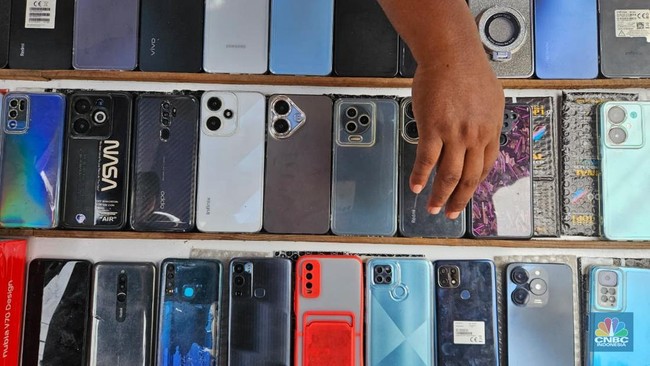
Researchers from the University of California San Diego (UCSD), in collaboration with Google, are recycling old Pixel phones to create low-cost data centres. This project aims to extend the lifespan of unused devices while simultaneously reducing electronic waste.
Google Research explains that retired phones contribute to ‘embodied carbon’—the carbon emissions generated during the manufacturing process of devices, as reported by Toms Hardware. Given that many people replace their phones every few years, this habit has become one of the largest contributors to electronic waste. Consequently, the UCSD team is working to provide these devices with a second life as versatile computing platforms.
Research results indicate that smartphones released approximately three years ago still possess higher single-core performance compared to certain servers, such as the Asus RS720A-E11, which can be equipped with Nvidia H200 or Nvidia RTX Pro 6000 GPUs and dual AMD EPYC server processors. Although the overall performance of a server is significantly higher, SPEC benchmark scores show that the processor cores in old phones remain sufficiently capable of performing various computing tasks.
To achieve this, researchers remove unnecessary components, including screens, batteries, cameras, speakers, and device casings. Only the motherboard is retained, as it contains the system-on-chip (SoC) that handles the computation. The Android operating system is then replaced with a Linux distribution commonly used in data centres. This step eliminates unnecessary pre-installed applications and enables the use of orchestration software.
Based on testing, approximately 25 to 50 used phones can generate computing power equivalent to a single dual-socket server processor. UCSD also found that a cluster of 20 phones can run an application required by a class of more than 75 students. With this approach, applications do not need to run on cloud services that require additional costs and larger data centre resources.
The research team even plans to utilise around 2,000 used phones to build a local data centre capable of supporting one hundred classes simultaneously. In addition to allowing applications to run locally and ensuring the hardware is self-owned, the researchers noted that construction costs are only a