
Ojol Drivers Have Independent Status, Not Labourers
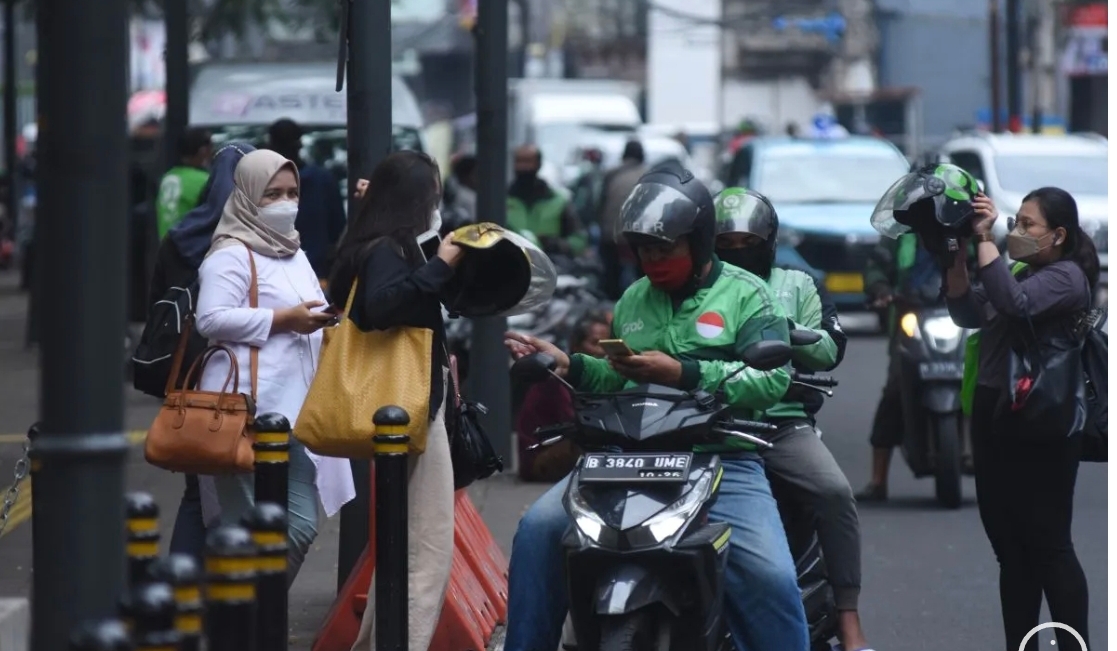
The Confederation of South Sulawesi Ojol Trade Unions (KSOS) has affirmed that online motorcycle taxi (ojol) drivers cannot automatically be categorised as labourers simply because they work through digital platforms.
KSOS Chairman Hairun H said that a driver’s status must be assessed on the basis of their actual working conditions, not merely on the existence of an application or the terms used in a contract.
“Platforms cannot escape responsibility simply because their contracts use the term ‘partner’. But at the same time, we as ojol drivers also cannot automatically be called labourers just because the platform sets service standards, matches us with customers, or processes payments,” Hairun said at a meeting with KSOS officials some time ago.
According to him, determining an employment relationship must consider several elements, including the degree of platform control, the driver’s freedom to decide their working hours, and the pattern and structure of the remuneration received.
KSOS also referred to labour provisions that define an employment relationship as a relationship between an employer and a worker or labourer based on an employment agreement containing elements of work, wages, and command.
In Hairun’s view, these provisions do not automatically make all app-based work a conventional employment relationship.
“Drivers are not a uniform population. Some depend heavily on a single platform, some use several applications at once. Some only work at certain hours, and others combine ojol work with trading, permanent jobs, or local services,” he said.
For this reason, KSOS rejects an approach that lump all ojol drivers into a single legal status.
According to Hairun, this diversity of working patterns actually shows that drivers have the character of independent workers or transaction-based business operators.
“A uniform classification could turn the diversity of drivers’ economic conditions into a single legal relationship that may not match the reality on the ground,” he asserted.
KSOS stated that maintaining independent status does not mean it wishes to free platforms from responsibility. On the contrary, the organisation is urging the government to build a protection system suited to the character of gig economy work.
Such protections include occupational safety, portable social security, transparency of fares and deductions, fair contracts, a suspend mechanism that can be challenged, personal data protection, and drivers’ rights to organise and bargain.
“Being independent does not mean being without protection. Precisely because this relationship differs from a conventional employment relationship, the state must provide protections that match drivers’ reality,” Hairun explained.
He also touched on the provision of bonuses or holiday allowances (BHR) to drivers, which he said does not automatically form a basis for changing the legal status of ojol drivers to labourers.
“Just because we have all been given BHR, do not assume we must be regarded as labourers,” Hairun stressed.
KSOS hopes the government will not rush into creating a single classification for all ojol drivers. In its view, policy must be able to recognise work flexibility while ensuring platforms remain responsible for drivers’ welfare and protection.