
OJK Warns Young People: Don't Let FOMO Wreck Your Finances
The Financial Services Authority (OJK) has reminded the younger generation not to be carried away by fear of missing out (FOMO) and fear of other people’s opinions (FOPO) in managing their finances. These habits need to be avoided as digital financial services continue to develop.
Chief Executive of Supervision of Financial Services Business Actors’ Behaviour, Education, and Consumer Protection at OJK, Dicky Kartikoyono, said financial literacy is not only about the ability to understand financial products. Literacy is also needed to form disciplined money management habits and the ability to exercise self-control.
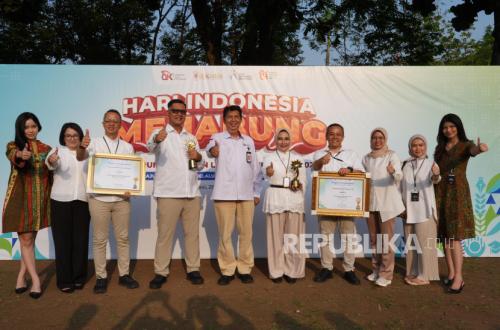
“The goal of improving financial literacy and inclusion carried out by OJK is to build personal character that is disciplined, patient, able to control oneself, and able to manage finances so as to avoid FOMO and FOPO habits amid the development of the digital economy and finance,” Dicky said at the peak of Indonesia Savings Day and Financial Literacy Month 2026 at Sekolah Rakyat Menengah Atas (SRMA) 13 Bekasi, Friday (28/8/2026).
According to Dicky, the habit of saving also needs to be built from an early age. Saving is not merely leaving money aside, but setting aside a portion of money regularly. This habit can provide room to plan for needs and the future.
Chair of the OJK Board of Commissioners, Friderica Widyasari Dewi, said people do not need to wait until they have a lot of money to start saving. The habit can actually begin with small amounts.
“Saving from an early age is very important for your future. Don’t wait until you have a lot of money to save. Precisely so that the money grows, we must save little by little,” Friderica said.
Efforts to improve saving habits are also carried out through the One Account One Student (KEJAR) Programme. From September 2025 to June 2026, 679,000 new student accounts were opened. OJK also recorded more than 270,000 Bank Goes to School activities carried out in 122,000 schools.
Nationally, the financial inclusion rate has reached 93.61 percent, while the financial literacy rate stands at 69.57 percent. OJK said literacy and inclusion levels among students and university students remain below the national achievement and therefore need to be continuously strengthened.