
OJK Warns: Floods and Forest Fires Are Now a Threat to Financial Services
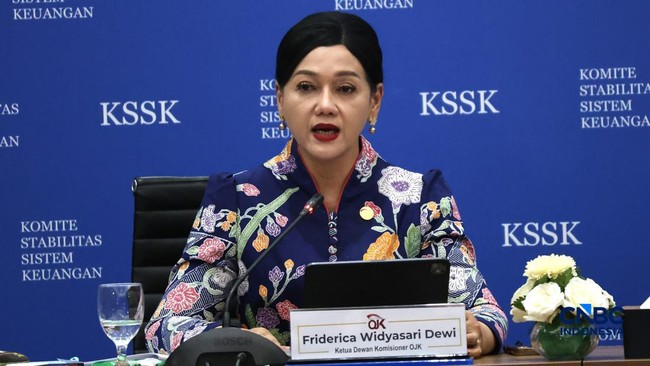
Jakarta, CNBC Indonesia – The Financial Services Authority (OJK) has said that climate change-driven natural disasters, including floods and forest and land fires, have become financial risks with a direct impact on the financial sector.
OJK Commissioner Friderica Widyasari Dewi said climate risk is now one of five global strategic challenges with implications for Indonesia. The effects of natural disasters need to be considered by the financial industry because they can affect borrowers’ ability to meet their obligations to banks.
“All the climate risks occurring today have turned into financial risks, affecting asset quality, credit risk, insurance claims and investment values,” Friderica said during a presentation at the IAI-ISRF to APAFest event at the Indonesia Stock Exchange’s Main Hall in Jakarta on Tuesday (10 November 2026).
She said the second strategic challenge was interconnectedness and systemic risk. Environmental disruption can spread across various sectors, from health and production to logistics and inflation.
Friderica cited the impact of haze from forest and land fires, which affects not only public health in Indonesia but also that of other countries. This illustrates the extensive links between environmental risks and how they can disrupt a range of economic activities.
The third challenge is climate risk measurement. This includes the availability and quality of data, the quality of business information, and the use of technology to measure and manage risks caused by climate change.
The fourth challenge concerns the credibility of sustainability reporting. Friderica said there remains a gap between environmental, social and governance (ESG) commitments, their actual implementation, and the quality of companies’ disclosures, potentially leading to image-washing practices.
She identified three practices requiring attention: greenwashing, impact washing and social washing. Greenwashing occurs when a company claims its products or activities are environmentally friendly, while impact washing involves exaggerating the positive effects of an activity or product on the environment and society.
Social washing is when a company cultivates the appearance of making a positive social contribution without backing it up with appropriate implementation. All three practices are being considered in discussions at the Organisation for Economic Co-operation and Development (OECD).
Friderica said strengthening the credibility of sustainability reporting remained a task for both regulators and industry. Some company representatives still need guidance on preparing transparent sustainability reports that reflect actual conditions and do not conceal material information.
Companies also need to understand the consequences of failing to report their actual circumstances, she said. OJK therefore hopes AI can support the OECD in providing guidance and improving the quality of sustainability reporting.
The fifth challenge is governance and accountability. This includes oversight, internal controls and stronger accounting competencies to ensure that sustainability risks are managed and reported accountably.
Source: jawawa.id (https://jawawa.id/newsitem/ojk-warns-floods-and-forest-fires-are-now-a-threat-to-financial-services-1794297030)
Originally published by CNBC Indonesia (https://www.cnbcindonesia.com/market/20261110135710-17-783894/ojk-beri-peringatan-banjir-karhutla-kini-jadi-ancaman-jasa-keuangan), translated from Indonesian