
OJK Targets 98 Percent National Financial Inclusion by 2045
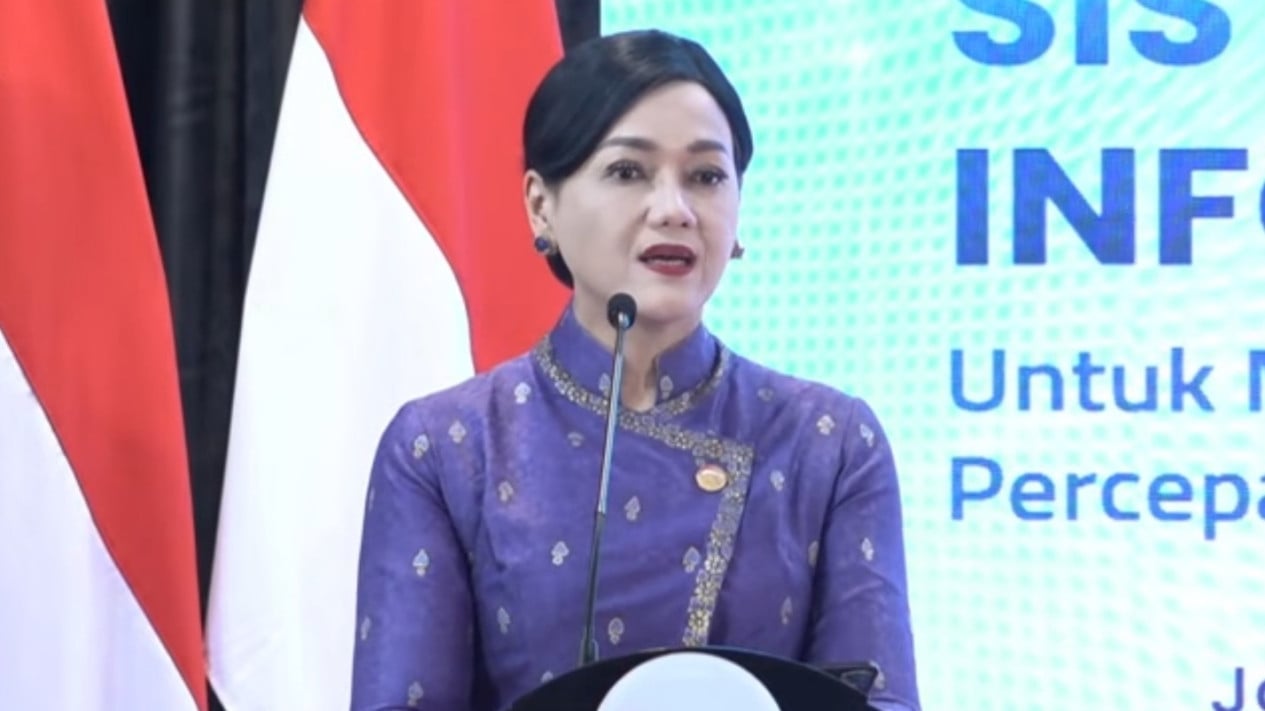
The Financial Services Authority (OJK) is targeting a national financial inclusion rate of 98 percent by 2045. The target is being pursued through various efforts.
Chairman of the OJK Board of Commissioners Friderica Widyasari Dewi reported that school and university students remain a segment of society with financial literacy and inclusion levels below the national average.
“Currently, in accordance with the mandate of the National Long-Term Development Plan (RPJPN) 2005-2045, God willing, the hope is that by 2045 Indonesia’s financial inclusion will be 98 percent,” she said in her remarks at the Indonesia Savings Day event in Bekasi on Friday, 29 August 2026.
Friderica, affectionately known as Kiki, said this situation makes school and university students one of the OJK’s priority targets for improving financial literacy and inclusion.
“If we look at the financial literacy and financial inclusion of school and university students, it is still below the national literacy and inclusion standards. So this is a task for all of us here, and also for regional heads, to further improve the literacy and inclusion index of students in Indonesia,” she said.
Based on the results of the 2026 National Survey on Financial Literacy and Inclusion (SNLIK), the financial literacy rate among school and university students was recorded at 62.72 percent, lower than the national rate of 69.57 percent.
Meanwhile, their financial inclusion rate reached 92.76 percent, still below the national figure of 93.61 percent. Kiki considers improving this index among students important given the sizeable population of school-age and university-age residents.
Based on 2025 data from Statistics Indonesia (BPS), there are around 88 million people of school and university age, equivalent to 31 percent of Indonesia’s total population of 287.2 million.
According to her, high access to financial products and services needs to be balanced with the ability to understand and use them wisely.
Furthermore, Kiki acknowledged that the financial literacy challenges facing the younger generation today are growing. This comes amid the ease of access to online shopping and various digital financial services. Such convenience can become a distraction for young people who make impulsive purchases through online shopping platforms.