
OJK Stress Tests Banks at Rp18,000 per Dollar, Here Are the Results
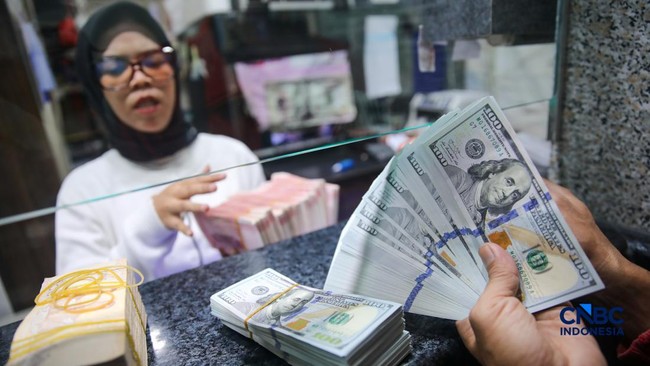
The Financial Services Authority (OJK) has confirmed that the depreciation of the rupiah to around Rp18,000 per US dollar has not yet had a significant direct impact on the condition of the national banking industry.
Dian Ediana Rae, Chief Executive of Banking Supervision at OJK, stated that the stability of the financial services sector, particularly banking, remains maintained despite global economic turmoil increasing exchange rate volatility in developing countries.
"OJK continues to monitor global economic developments, which are currently overshadowed by geopolitical turmoil and oil prices affecting the escalation of volatility in global financial markets, as well as the strengthening of the US Dollar Index which increases exchange rate fluctuations in emerging markets," Dian said in a written statement.
According to Dian, the rupiah’s depreciation could potentially increase import costs, trigger inflation, and suppress people’s purchasing power. However, these conditions have not yet disrupted the resilience of the banking industry.
One supporting factor is the very low Net Foreign Exchange Position (PDN). As of April 2026, the PDN was recorded at 1.63% (long position), far below the maximum limit of 20%.
Credit quality also remains maintained, with a Non-Performing Loan (NPL) ratio recorded at 2.17%, while liquidity conditions remain strong with the AL/DPK and AL/NCD ratios above the regulatory thresholds. The Loan to Deposit Ratio (LDR) was recorded at 86.88%, still within the ideal range of 78%-92%.
Liquidity resilience is also reflected in the Liquidity Coverage Ratio (LCR) of 192.37%, far above the minimum requirement, indicating sufficient capacity to meet short-term liquidity needs.
From a capital perspective, the banking industry is also considered to have a strong buffer. As of April 2026, the Capital Adequacy Ratio (CAR) reached 23.97%, while the ratio of Allowance for Impairment Losses (CKPN) to NPL was recorded at 165.35%.
Nevertheless, Dian cautioned that a prolonged weakening of the rupiah could still increase credit risk, especially for debtors with high exposure to foreign currencies.
"In such conditions, banks need to ensure the adequacy of Allowance for Impairment Losses (CKPN) and strong capital resilience," he said.
To anticipate these risks, OJK continues to conduct intensive supervision of the banking industry, including through stress tests that incorporate a rupiah depreciation scenario as one of the assumptions.
"Based on the results of the stress test, the banking sector is considered still capable of facing potential pressures arising from the rupiah depreciation," Dian said.
Meanwhile, the direct impact on Rural Banks (BPR) is considered relatively limited because their business activities focus on collecting funds and distributing credit in rupiah and do not involve foreign exchange transactions.
Nevertheless, OJK urges BPRs to increase vigilance against the potential decline in debtor repayment capacity, especially for MSMEs that depend on imported raw materials or are linked to global supply chains. BPRs are also asked to strengthen early warning systems and ensure capital adequacy and CKPN provisioning.
OJK continues to strengthen coordination with Bank Indonesia (BI), the Deposit Insurance Corporation (LPS), and the Ministry of Finance within the framework of the Financial System Stability Committee (KSSK) to maintain financial system stability amid global uncertainty.