
OJK Strategy to Expand MSME Financing Access via Alternative Credit Scoring
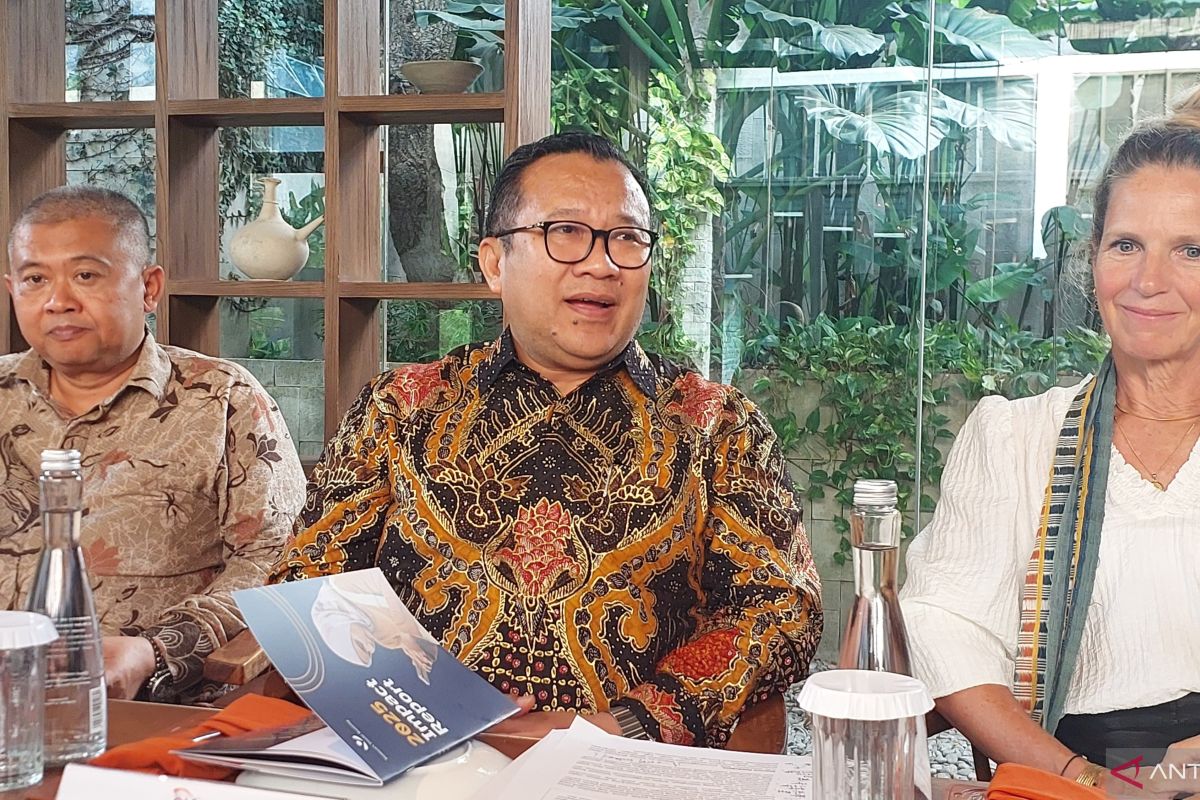
Jakarta (ANTARA) - The Financial Services Authority (OJK) is strengthening its strategy to expand financing access for micro, small and medium enterprises (MSMEs), particularly the ultra-micro segment, through the use of an alternative credit scoring system.
Adi Budiarso, Executive Head of Technology Innovation Supervision for the Financial Sector, Digital Financial Assets and Crypto Assets at OJK, said MSMEs in Indonesia need strengthening, especially regarding financial access and improved productivity that drives public welfare, while also boosting their contribution to national economic growth.
“Around 60 per cent of GDP (gross domestic product) is driven by MSMEs. And when we talk about gender in Indonesia, it turns out 65 per cent are women entrepreneurs. If we talk about the ultra-micro segment, their numbers are also very large,” Adi said at a discussion on alternative credit scoring in Jakarta on Thursday.
He said the challenge of limited access to formal financing is most acutely faced by ultra-micro business operators, most of whom are women.
Adi explained that alternative credit scoring utilises various data sources beyond banking credit histories, so business operators who have yet to build a financing track record can still be assessed for eligibility by financial institutions.
“There are still many MSMEs and ultra-micro business operators who have no data in the Financial Information Service System (SLIK). That is why we are introducing alternative credit scoring so they have a greater chance of obtaining access to financing,” he said.
OJK, together with several partners, has also developed pilot projects on the use of alternative credit scoring. One of these was carried out with dairy farmers in Malang through the implementation of an Enterprise Resource Planning (ERP) system that connects farmers’ business data with community banks (BPR), Islamic community banks (BPRS), and cooperatives.
“As per the government’s target for economic growth towards an advanced Indonesia, it must reach 8 per cent by 2029, which means we must double productivity from current levels. That means productivity and innovation, better access, and better assistance,” he said.
The scheme is expected to open up financing access for business operators who have so far lacked credit histories or collateral.