
OJK states pension fund inclusion has only reached 5.10 per cent
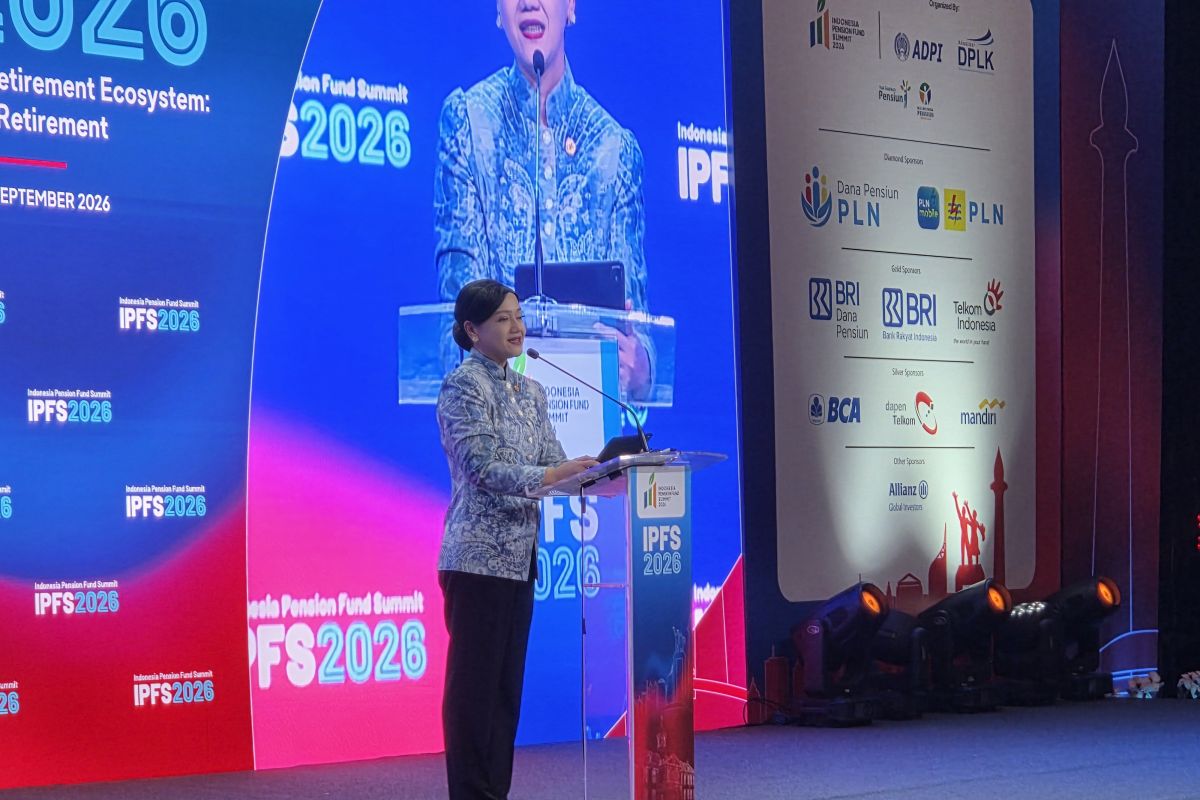
Jakarta (ANTARA) - The Financial Services Authority (OJK) noted that the level of pension fund inclusion in Indonesia in 2026 has only reached 5.10 per cent.
This figure is considered relatively low compared to many other financial service sectors. The Chair of the OJK Board of Commissioners, Friderica Widyasari Dewi, stated during the Indonesia Pension Fund Summit (IPFS) 2026 in Jakarta on Friday that this figure reflects the challenge of expanding membership to strengthen social security for the elderly.
Expanding access to pension funds is particularly necessary for informal and self-employed workers, who possess income characteristics different from formal employees. “Therefore, with more participants, larger contributions, and wider access, we hope pension funds will provide a larger and more stable pool of long-term funds,” said Friderica, also known as Kiki.
Kiki noted that the development and deepening of the pension fund industry requires collaboration between the government, OJK, employers, employees, associations, and providers of both mandatory and voluntary pension programmes. “Regarding collaboration, certainly, the development and deepening of the pension fund industry market cannot be done in isolation. We must collaborate,” she explained.
According to her, there are four main challenges in expanding pension fund membership: literacy levels, the ability of the public to set aside income (affordability), access and participation (accessibility), and trust. To address these challenges, OJK is encouraging the creation of new growth sources by expanding membership among formal, self-employed, and informal workers.
The authority is also encouraging the development of more flexible pension fund programmes and products, the expansion of distribution channels through digital platforms, and the strengthening of partnerships within the pension fund ecosystem.
Based on OJK data, as of July 2026, the number of pension fund participants reached approximately 30.67 million people, while total pension fund assets reached Rp1,699.99 trillion, representing a year-on-year (yoy) growth of 6.70 per cent. On the other hand, the pension fund literacy rate in 2026 was recorded at 22.21 per cent, which is higher than the inclusion rate of 5.10 per cent.
OJK also noted that the replacement ratio—the ratio of income replacement upon entering retirement in Indonesia—remains in the range of 15-20 per cent, well below the 40 per cent standard. This condition poses a challenge to strengthening elderly protection, especially amidst changing demographic structures and increasing life expectancy.
Kiki stated that strengthening the pension fund industry should not only focus on industry growth but must also ensure that the pension system becomes stronger, integrated, and inclusive. “Of course, this is very important, but we must simultaneously ensure that while the industry grows, the pension system becomes stronger, integrated, inclusive, and capable of providing adequate benefits to the public,” said Kiki.
She also encouraged the public to begin preparing for retirement from the start of their productive years, rather than waiting until they approach retirement age. “So, when we talk about retirement preparation, it should not be right before the time comes, but rather from the first day someone starts working, they should already be able to think about what their retirement plan looks like,” she said.
Through the expansion of membership and access, OJK hopes that pension funds will not only provide financial protection for the public during retirement but also serve as long-term institutional investors that support the deepening of the financial market.