
OJK Seeks Transition Period if Government Withdraws SAL from Banks
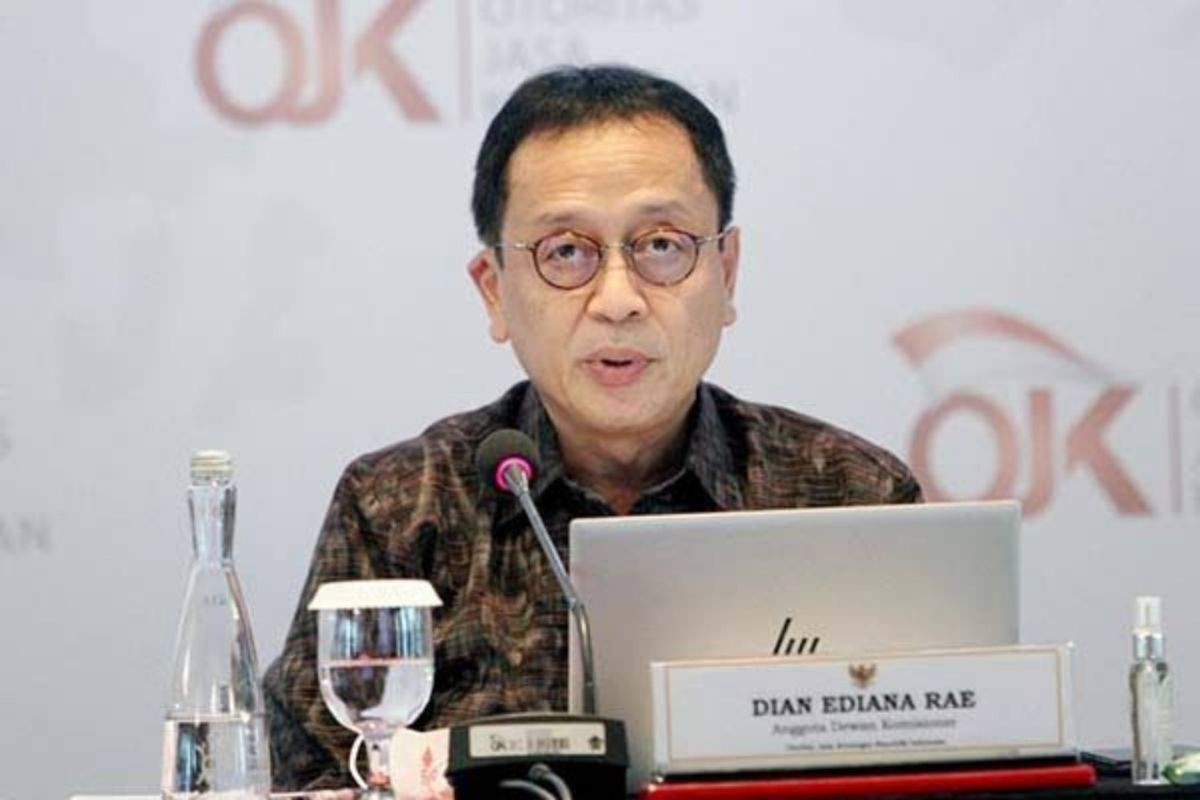
The Financial Services Authority (OJK) hopes there will be a transition period if the government’s excess budget balance (SAL) placed in Himbara banks is withdrawn, so as not to directly disrupt banking liquidity and to maintain financial system stability. “I am confident the Minister of Finance and the Governor of Bank Indonesia will hopefully agree with OJK that this can be resolved during a transition period without disrupting bank liquidity,” said OJK Chief Executive of Banking Supervision Dian Ediana Rae when met by reporters at the Coordinating Ministry for Economic Affairs office in Jakarta on Monday. Dian confirmed the discourse that the government’s SAL placement in Himbara would be withdrawn in stages, although implementation still depends on the government’s decision. He also acknowledged that, in principle, the withdrawal is the government’s authority according to budgetary needs. According to Dian, OJK actually hopes the SAL placement can last longer to be more optimal in supporting banking liquidity and credit distribution. “The hope is that it lasts longer, which is better for adding liquidity. This is to suppress interest rates and also to ensure effective credit distribution,” Dian said. He explained that the placement of government funds in banks is actually not a common practice because liquidity management fundamentally lies with Bank Indonesia as the monetary authority. Once government funds enter a bank, in practice they become integrated into the bank’s overall liquidity structure and can no longer be treated as separate funds. Therefore, their management becomes part of the bank’s overall liquidity arrangement. If the SAL is indeed withdrawn from Himbara, Dian said that strengthening the main source of bank liquidity becomes important, namely through increasing third-party funds or collecting public deposits. Various instruments can also be used to maintain liquidity, including repurchase agreement facilities with Bank Indonesia if the bank holds government securities, as well as utilising the interbank money market. “But I see nothing to be afraid of, it is not too serious,” Dian said. Given that the SAL placement is outside normal practice, he added that banks have certainly anticipated this non-permanent condition and will eventually be able to return to normal conditions where government account management is entirely with Bank Indonesia. He also confirmed that this matter will be discussed further in the Financial System Stability Committee forum together with the Ministry of Finance and Bank Indonesia to ensure the transition period can proceed without placing excessive pressure on the banking sector. “But from my analysis, the pressure on bank liquidity is actually not too heavy (if the SAL is withdrawn from Himbara),” Dian said. As a note, based on Bank Indonesia data, banking credit in May 2026 grew by 11.51 percent year-on-year, higher than the 9.98 percent growth in April 2026. Banking liquidity was also maintained with a liquid assets to third-party funds ratio of 24.74 percent and third-party funds still growing high at 13.47 percent year-on-year in May 2026. During that period, the average credit interest rate was recorded at 8.72 percent and the one-month deposit rate at 4.26 percent.