
OJK Says Economy Moderating, Financial Sector Stability Maintained
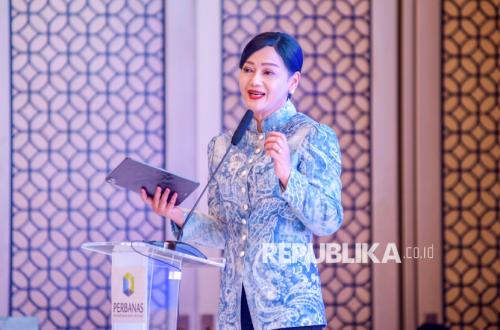
The Financial Services Authority (OJK) has assessed that the Indonesian economy is in a moderated condition, experiencing a slowdown that remains reasonable and under control amid increasing inflationary pressures. Nevertheless, the OJK has confirmed that stability in the financial services sector is being maintained amidst global and domestic economic dynamics.
Chair of the OJK Board of Commissioners, Friderica Widyasari Dewi, stated that the OJK Monthly Board of Commissioners Meeting (RDKB) on 1 July 2026 concluded that financial sector stability is still maintained. “The Financial Services Authority’s Monthly Board of Commissioners Meeting on 1 July 2026 assessed that financial sector stability is maintained,” Friderica said during a virtual press conference for the OJK RDKB for June 2026 on Tuesday (7/7/2026).
Friderica noted that the easing of geopolitical tensions in the Middle East has reduced pressure on global energy markets. This condition is reflected in oil prices returning close to pre-conflict levels, although geopolitical risks still need to be monitored due to the potential for new escalation.
According to her, the global economy is still showing performance differences between countries amidst rising inflationary pressures. The United States is considered to remain resilient with a strong labour market, while China is still overshadowed by weak domestic consumption and private investment. Meanwhile, economic activity in Europe remains subdued although the manufacturing sector is starting to improve.
Friderica said the OECD and the World Bank have revised their global economic growth projections for 2026 from 2.8 percent to 2.5 percent. This outlook is still overshadowed by weak global demand, China’s economic slowdown, and high global interest rates persisting for longer.
Domestically, the OJK noted that a number of economic indicators are showing a slowdown. Indonesia’s annual inflation in June 2026 increased to 3.34 percent from 3.08 percent in May. Meanwhile, Indonesia’s Manufacturing Purchasing Managers’ Index (PMI) fell to a level of 46.9 from 50 in the previous month, indicating the manufacturing sector has re-entered a contraction phase.
Furthermore, Indonesia’s trade balance recorded a deficit of 1.61 billion US dollars in May 2026 after posting a surplus for six consecutive years. The foreign exchange reserves position also declined compared to the beginning of the year, although in June it increased slightly to 145.6 billion US dollars from 144.9 billion US dollars in May.
“Domestically, economic indicators are moderating amidst rising inflationary pressures. Meanwhile, the manufacturing PMI weakened, the trade surplus narrowed, and foreign exchange reserves declined, but stability is maintained through a mix of fiscal and monetary policies,” Friderica stated.
To maintain financial system stability, the OJK continues to strengthen various policies, including optimising the implementation of the Financial Information Service System (SLIK), which came into effect on 1 July 2026.