
OJK Says Banking Intermediation Remains Sound Despite Weak Rupiah
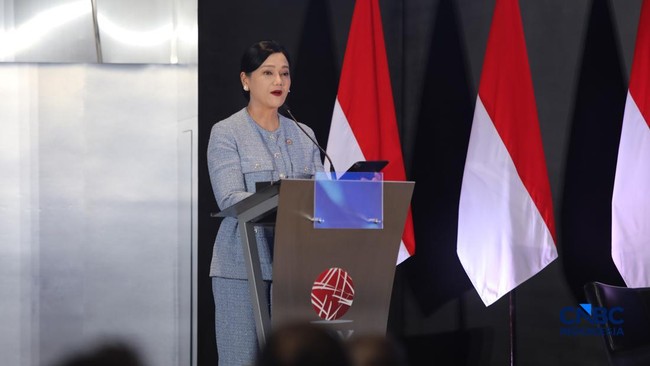
Jakarta - The Financial Services Authority (OJK) has stated that the financial services industry continues to perform its intermediation function in support of national economic activity amid persistently high global uncertainty. Although the Rupiah exchange rate against the US dollar has weakened, breaching the 18,000 per dollar mark, OJK Board of Commissioners Chairperson Friderica Widyasari Dewi said indicators of banks’ foreign exchange intermediation remain well maintained. “This is reflected in the foreign exchange loan-to-deposit ratio, which remains at an adequate level,” she said during a hearing with Commission XI of the Indonesian House of Representatives in Jakarta on Wednesday (10/6/2026). The official, familiarly known as Kiki, explained that banking intermediation has grown positively, with credit expanding 9.98% year-on-year as of April to Rp8,755 trillion. Meanwhile, Third-Party Funds grew 11.4% year-on-year to Rp10,077 trillion, with liquidity remaining ample and the banking industry’s capital adequacy ratio at a strong level of 23.97%. “The OJK continues to strengthen forward-looking supervision through regular stress testing and close monitoring of liquidity, capital, asset quality, and risk concentration risks,” she said. Furthermore, she noted that the national banking sector in aggregate still recorded a profit, while the net open position remained below the regulatory threshold, indicating that banks’ exchange rate risk exposure remains under control. She added that apart from maintaining financial services sector stability amid global uncertainty, the OJK is also driving momentum to accelerate national economic growth through strategic and priority programmes aimed at strengthening the intermediation function, expanding financing access, and enhancing financial system resilience. These priorities include boosting financing for the financial services sector, improving the ecosystem and financing for MSMEs, deepening financial markets as a source of development financing, and developing a green economy through the implementation of carbon economic value and sustainable finance. Concurrently, the OJK is also promoting safe digital finance development, strengthening the Islamic financial services sector, expanding financial literacy and inclusion, protecting consumers and the public, and consistently enforcing the law to continue strengthening integrity in the financial services sector. “With these various priority agendas, we want to ensure that the financial services sector is not only stable and resilient but also increasingly productive and contributive, thus becoming a vital foundation for inclusive, sustainable, and competitive national economic growth,” she concluded.