
OJK: Rise in BPJS Ketenagakerjaan's JHT Claims Driven by Increasing Layoffs
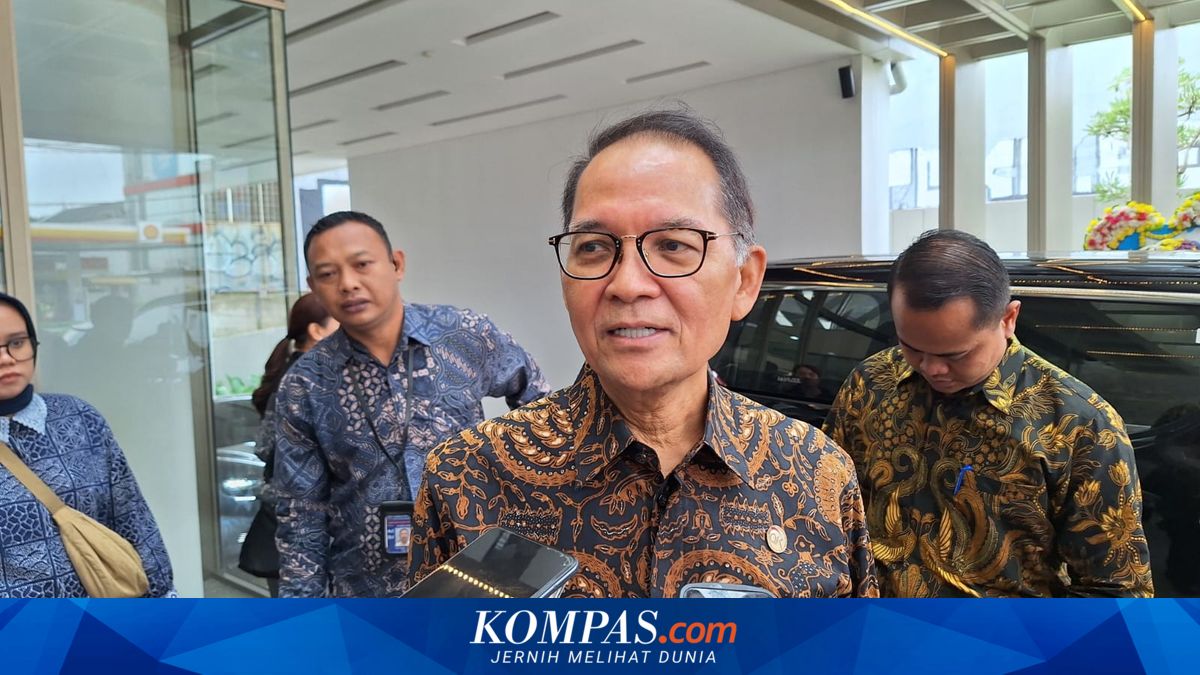
JAKARTA, KOMPAS.com - The Indonesian Financial Services Authority (OJK) reports that the phenomenon of layoffs can have an impact on increased benefit payments at BPJS Ketenagakerjaan, particularly for the Old Age Security (JHT) and Job Loss Guarantee (JKP) programs.
The Head of the OJK’s Supervision Executive for Insurance, Guarantees and Pension Funds, Ogi Prastomiyono, said that year-on-year, in March 2026, JHT claims increased by IDR 1.85 trillion, equivalent to 14.1 percent.
“This is driven by an increase in the frequency of claims related to layoffs,” he said in a written statement on Saturday (May 16, 2026). In addition, Ogi added, JKP claims also experienced a significant increase of 91 percent year-on-year.
This is partly influenced by the relaxation of claim requirements and increased benefits as regulated in Government Regulation (PP) Number 6/2025 concerning the Job Loss Guarantee (JKP) program.
This is done, among other things, through periodic evaluations of program design and benefits to ensure they remain aligned with economic conditions and participant risk profiles.
“With this approach, it is hoped that a balance between adequate benefits for participants and the sustainability of social security funds can be maintained in the long term,” he said.
Not only that, layoffs need to be a concern for the commercial insurance industry because they can have an impact on asset quality and premium growth.
In conditions of layoffs, Ogi said, people tend to prioritize basic needs so that insurance policies are at risk of lapsing. “Meanwhile, on the other hand, the risk in credit insurance increases due to the potential for debtor defaults,” he said.
This can create pressure on the claim ratio and company solvency if not properly anticipated.
In life insurance (AJK), although the risks guaranteed are primarily death or permanent total disability, deteriorating economic conditions as a result of layoffs can also indirectly contribute to increased claims, for example through health factors or psychosocial pressures.
To anticipate that the claim ratio remains maintained, insurance companies need to strengthen overall risk management.
Ogi explained that steps that can be taken include tightening the underwriting process, especially in sectors that are vulnerable to layoffs.
The insurance industry can also adjust premiums to suit current risk profiles and ensure a risk-sharing scheme with banks so that credit distribution remains prudent.
In addition, strengthening the claim verification process and evidence of insurability is important to mitigate potential moral hazard, accompanied by increased data integration with banks so that monitoring of debtor credit quality can be carried out earlier and more accurately.
“With these steps, it is hoped that the industry can continue to maintain stable performance in the midst of economic dynamics,” concluded Ogi.
Previously, Chairman of the Indonesian Employers Association (Apindo), Shinta Widjaja Kamdani, said that the weakening rupiah, which had touched a level of IDR 17,500 per US dollar, had begun to make the business world apprehensive.
The pressure on the exchange rate is feared to trigger an increase in prices and the threat of layoffs if it continues for too long. “The continued weakening of the rupiah, creating new all-time low levels, is a serious concern for entrepreneurs,” he said.