
OJK Riau Islands and Natuna Regency Expand Financial Literacy in Border Regions
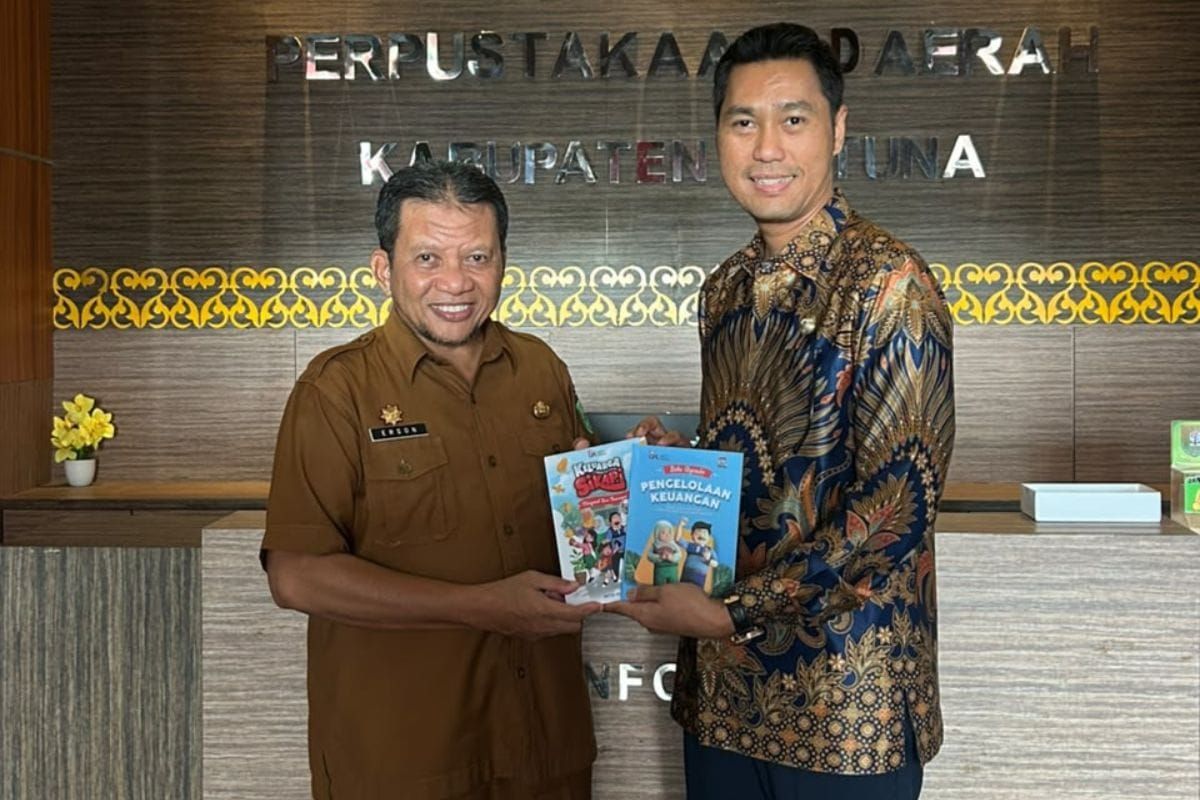
The Financial Services Authority (OJK) of Riau Islands (Kepri) is partnering with the Library and Archives Office (Disperpusip) of Natuna Regency to expand financial literacy and inclusion for communities in border regions.
The Head of OJK Kepri, Sinar Danandjaya, stated in Natuna on Thursday that his office met with the Head of Disperpusim Natuna, Erson Gempa, on Tuesday (29/9) at the Natuna Disperpusip Office to discuss efforts to strengthen public financial literacy and inclusion.
As a result of the meeting, OJK and Disperpusip Natuna will organise a Training of Trainers (ToT) programme. This specialised training will focus on sustainable financial planning and vigilance against illegal financial activities, specifically for librarians stationed across 37 villages in Natuna Regency.
Through this ToT, librarians are expected to serve as financial education agents, helping residents in their respective villages improve their understanding of financial management while remaining wary of illegal financial schemes.
“Libraries are not just places for reading, but can also serve as community learning centres. Through this collaboration, we want to expand financial education so that the community becomes more capable of managing finances healthily and recognising legal and logical financial products and services,” he said.
According to Danandjaya, the ToT is the initial step in increasing public understanding of financial management. Subsequently, OJK and Disperpusip are exploring the use of village libraries as ‘Laku Pandai’ agents, or branchless banking services, to promote financial inclusion.
Utilising village libraries as Laku Pandai agents is expected to bring basic financial services closer to rural communities, such as savings, cash withdrawals, and bill payments. This would eliminate the need for residents to travel long distances to access essential financial services.
“As part of our support for strengthening public literacy, OJK has also handed over 17 financial education books to the Natuna Regency Library and Archives Office,” he added.
He explained that financial management covers three primary needs: routine expenses or living costs, situational needs for emergencies, and financial preparation for the future and old age.
He suggested that the public could use the 10-20-30-40 financial allocation formula: 10 per cent for social funds, 20 per cent for savings and investment, a maximum of 30 per cent for debt instalments, and 40 per cent for living expenses.
Furthermore, he noted that the public must understand how to select and use legal loan services to avoid illegal loans that can cause significant harm.
“This knowledge is vital so that the community does not make mistakes in choosing and utilising financial services, including avoiding illegal lending,” he concluded.