
OJK Reveals Universal Banking Concept for Indonesia's Financial Centre
The Financial Services Authority (OJK) is promoting a universal banking concept for the Indonesia International Financial Centre (PFII). The model would allow a single banking entity to provide a range of financial services under one roof, from commercial banking to investment banking.
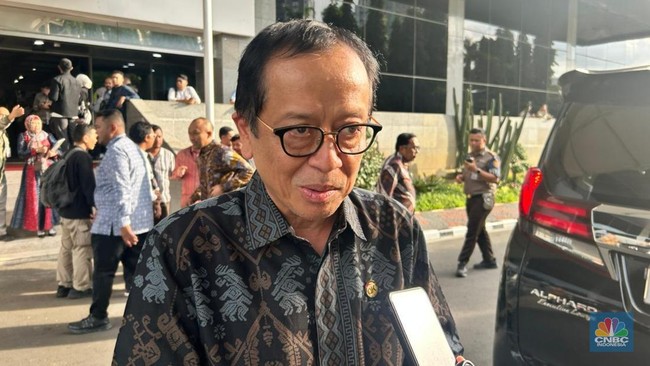
Dian Ediana Rae, Chief Executive of Banking Supervision at OJK, stated that the concept adopts practices already implemented in various international financial centres through a one-stop service approach. “In many national projects, in financial centres, the basic concept is what we call one-stop service. In banking terms, that is universal banking,” he said during a meeting at the House of Representatives (DPR) building on Wednesday.
According to Dian, through this concept, banks would no longer be limited to conducting only one type of business activity, making the licensing process and product development simpler. “A bank can act as a commercial bank, it can act as an investment bank, and so on. Including insurance, and possibly, if there is a crypto licence later, it could also be included. So it is no longer restricted to a single sector,” he explained.
He noted that Indonesia has not yet explicitly implemented the universal banking concept. However, the Financial Sector Development and Strengthening Law (P2SK) has opened the door for the OJK to formulate related regulations, though implementation will still require consultation with the DPR.
Dian believes this approach is necessary if Indonesia wants to drive the transformation of the banking system while increasing the financial sector’s contribution to economic growth. This is because the national financial system structure is still dominated by the banking industry. “As you know, banking still accounts for 80% of total financial services. That means 80% of financing comes from banks. That is why the Indonesian economy is still very dependent on banks,” Dian asserted.
He said the large capacity of the banking industry can be utilised to encourage the growth of other financial service sectors, such as capital markets, insurance, and pension funds, so that financial sector deepening can occur more rapidly.
Dian also explained that financial service entities operating in the PFII will not be allowed to collect or manage funds from the public in Indonesia. According to him, this scheme is a common practice in various international financial centres to avoid disrupting fund collection by domestic financial institutions. “Because otherwise they would cannibalise each other. For example, if a bank stands in the Indonesia Financial Centre and can accept deposits from national depositors, that is not the goal. The funds would be sucked there. Even worse, if there are tax facilities there, people might move their funds there,” he clarified.
Furthermore, he stated that banks wishing to operate in the PFII may need to form a new entity specifically established in the area. The institutional scheme and financial conglomerate arrangements are still to be discussed further. “In my opinion, there must be a new entity. It depends on how the concept is approved later. But it must be a separate entity that stands there. We have not yet discussed in detail matters related to financial conglomerates and so on,” Dian added.