
OJK Reveals Evidence of Solid Performance of Indonesian Banks Amid Global Challenges
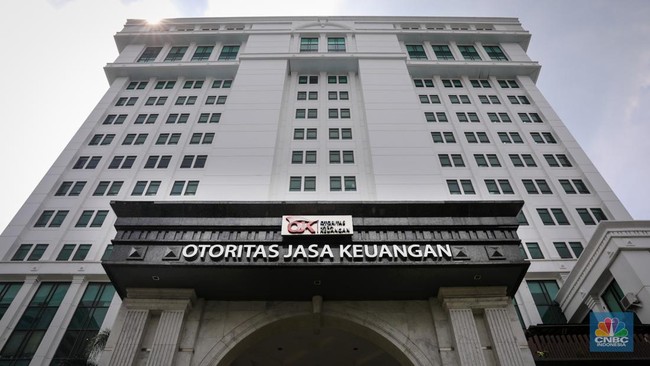
Jakarta, CNBC Indonesia — The Financial Services Authority (OJK) has affirmed that the intermediation performance of domestic banking remains resilient and is growing positively, with a maintained risk profile amid global economic volatility that is driving surges in energy prices and increasing market fluctuations.
OJK’s Executive Head of Banking Supervision, Dian Ediana Rae, stated that in March 2026, credit grew by 9.49% year-on-year to Rp8,659.05 trillion, an increase from February 2026’s 9.37% growth. This annual credit expansion was contributed by state-owned commercial banks (BUMN), national and foreign private commercial banks, as well as foreign bank branches (KCBLN).
Additionally, credit quality is maintained, with the Loan at Risk (LAR) ratio, gross Non-Performing Loan (NPL), and net NPL ratios standing at 8.94%, 2.14%, and 0.83% respectively, improving from February 2026 (9.24%, 2.17%, and 0.83%).
On the funding side, third-party funds (DPK) grew by 13.55% year-on-year to Rp10,230.81 trillion, up from 13.18% in February 2026, with growth in current accounts, deposits, and savings at 21.37%, 8.36%, and 11.57% year-on-year respectively.
In line with this, the banking loan-to-deposit ratio (LDR) in March 2026 was 84.64%, slightly down from 84.72% in February 2026. This LDR ratio indicates that the banking sector has sufficient liquidity room for future credit disbursement.
“This overall shows that the increased volatility in global markets remains a concern, but Indonesia’s banking industry has strong capitalisation and adequate liquidity to absorb potential future pressures,” said Dian in her statement on Wednesday (7/5/2026).
The year-on-year credit growth of Rp750.64 trillion (9.49%) primarily came from the construction sector at Rp181.98 trillion (46.67%), followed by the household sector at Rp103.83 trillion (5.56%), and the manufacturing industry at Rp97.62 trillion (7.96%).
Furthermore, based on credit usage types, investment credit (KI) grew by 20.85% year-on-year, followed by working capital credit (KMK) and consumer credit (KK) at 4.38% and 5.88% respectively. By debtor category, corporate credit and SME credit grew by 14.88% and 0.12% year-on-year respectively.
SME Credit
Dian stated that OJK and the government continue to strive to boost SME growth to achieve inclusive and sustainable national economic growth. One of OJK’s policies to promote SME credit is the issuance of POJK No. 19 of 2025 on Ease of Access to Financing for Micro, Small, and Medium Enterprises (POJK SME).
The issuance of this POJK SME aligns with the government’s Asta Cita to increase employment, accelerate economic equality, and eradicate poverty as priority agendas. Through this POJK SME, OJK encourages banks to provide easy, accurate, fast, affordable, and inclusive access to SME credit.
Dian explained that SME credit shows signs of improvement, recording positive growth again after previous contraction. In March 2026, SME credit totalled Rp1,498.64 trillion, expanding by 0.12% year-on-year with a high NPL of 4.60%, amid pressures on public purchasing power and domestic economic dynamics. This mini growth is an improvement from February 2026’s 0.56% contraction.
This SME credit growth was contributed by micro and medium credit at 0.20% and 0.90% year-on-year respectively, offsetting a 0.49% decline in small credit. The year-on-year SME credit growth mainly came from the agriculture, forestry, and fisheries sector at Rp11.91 trillion (4.20%); followed by financial and insurance activities at Rp8.10 trillion (65.40%); and accommodation and food services at Rp2.53 trillion (3.50%).