
OJK Reveals a Series of Challenges Facing the Multifinance Industry
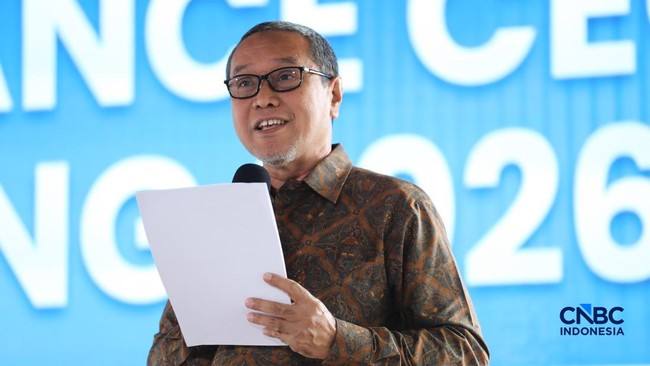
The Financial Services Authority (OJK) has revealed a number of challenges currently facing the multifinance industry amid economic dynamics and changing financial market conditions. One of these relates to interest rates.
Jasmi, Deputy Commissioner for Supervision of Financing Institutions, Venture Capital, Microfinance Institutions and Other Financial Institutions at OJK, said that the multifinance business does not rely solely on its own capital, but also on funding support from various financial services institutions. According to him, the condition of higher-for-longer interest rates needs to be anticipated so that its impact on the industry can remain properly measured.
In addition to the interest rate factor, Jasmi also highlighted the challenge of maintaining financing quality amid debtor repayment capacity that is beginning to face pressure. This condition is considered to require attention so that financing growth remains healthy and sustainable.
He explained that the non-performing financing (NPF) ratio must be maintained at a healthy level. In addition, the industry is also faced with the process of debt collection and financing risk management.
“If this is not managed properly, it could potentially lead to increasingly high challenges for financing in multifinance, both for new financing and for existing financing,” said Jasmi at the CNBC Indonesia Multifinance CEO Gathering on Tuesday (11/8/2026).
According to Jasmi, the multifinance industry is also required to continue innovating and adjusting its business models to developments occurring both within and outside the financing ecosystem. The rapidly changing business environment means companies must become increasingly adaptive in responding to market needs and technological developments.
He added that the characteristics of financing in Indonesia, particularly in the micro, small and medium enterprise (MSME) segment, require a more specific approach. Proper management is needed so that financing quality is maintained while supporting the growth of the productive sector.
On the other hand, operational challenges are also a concern for multifinance industry players. Companies need to be able to manage various changes occurring from both internal and external factors so that business operations remain effective.
Jasmi said financing companies must also be able to meet the expectations of various stakeholders. From shareholders, the public, to regulators, all have high expectations regarding the performance, governance and business sustainability of multifinance companies.
For information, based on OJK data as of June 2026, multifinance company financing receivables were recorded at Rp511.26 trillion, growing 1.88% year-on-year (yoy).
This growth slowed compared to December 2024, which reached 6.92%, and remained thin compared to the 1.96% growth in June 2025.
Amid this limited growth, the gross non-performing financing (NPF) ratio for multifinance was recorded at 3.01% in June 2026.
This gross NPF did decline slightly compared to the May 2026 position of 3.06%. However, this level is still higher than June 2025, which was 2.55%.
Meanwhile, net NPF was recorded at 0.81% in June 2026, down from 0.85% in May 2026 and 0.88% in June 2025.