
OJK Responds to Prabowo's Plan to Reduce KUR Interest Rates to 5%
The Financial Services Authority (OJK) has voiced its position regarding President Prabowo’s statement to provide a people’s credit programme with a maximum interest rate of 5% and a one-year term. The statement was made during his speech on International Labour Day.
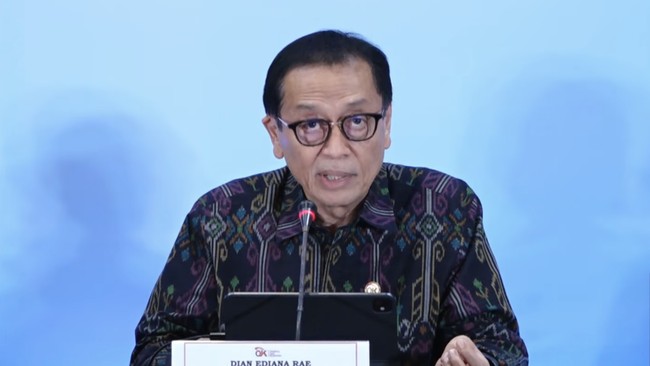
OJK Banking Supervision Executive, Dian Ediana Rae, noted that regarding the people’s credit programme, banks must improve the quality of governance and implement sound risk management to ensure the programme remains sustainable and aligned with the banks’ risk appetite and expertise.
“To anticipate potential credit risks from this programme, OJK encourages strengthened supervision and the implementation of regular stress tests to ensure that capital adequacy and asset quality remain maintained across various economic scenarios,” she stated in an official release on Monday (18/05/2026).
Furthermore, the banking sector is requested to maintain adequate provisioning in accordance with applicable regulations to anticipate potential credit losses. Banks are also urged to continue applying the 5C principles—Character, Capacity, Capital, Collateral, and Condition of Economy—during the credit disbursement process to maintain financing quality.
On the other hand, OJK will coordinate with the Government and other stakeholders to ensure that the implementation of the people’s credit programme is well-targeted, effectively mitigated, and operates in a healthy and sustainable manner.
Regarding banking interest rates, Dian noted that the weighted average Rupiah credit interest rate in March 2026 was 8.76%, showing a downward trend compared to February 2026 and March 2025, which were 8.80% and 9.20%, respectively.
This decline was driven by a decrease in the weighted average interest rates for productive credit, specifically Working Capital Loans (KMK) and Investment Loans (KI), which both saw year-on-year decreases of 67 bps and 68 bps, falling to 8.00% and 7.90% respectively.
She added that the decline in Rupiah credit rates aligns with a 55 bps year-on-year decrease in the weighted average Rupiah third-party funds (DPK) to 2.66%. This was also contributed to by the decline in the BI Rate over the past year, from 5.75% in March 2025 to 4.75% in March 2026, with the most recent BI Rate reduction occurring in September 2025.
“In general, the reduction in the BI Rate will be responded to by banks through lower credit interest rates; therefore, credit interest rates are expected to remain on a downward trend,” she said.
However, the reduction in interest rates for individual banks will depend on the strategy and cost structure of each bank, particularly regarding the Cost of Funds (CoF).
“Therefore, the banking sector needs to manage their funding strategies, specifically to increase the proportion of low-cost funds, which will create room for further reductions in credit interest rates,” she added.
Additionally, she reminded that in efforts toward further reductions, interest rates must also consider geopolitical conditions and global economic dynamics. Amidst these conditions, during the Federal Open Market Committee (FOMC) meeting at the end of April 2026, the Fed decided to maintain the benchmark interest rate (Fed Funds Rate) at 3.50%-3.75%, which influences interest rates both globally and domestically.
“OJK constantly advises banks to gradually adjust their interest rates to remain in line with market conditions and healthy financial ratios,” she concluded.