
OJK Reaffirms Sustainable Finance Commitment at International Forum
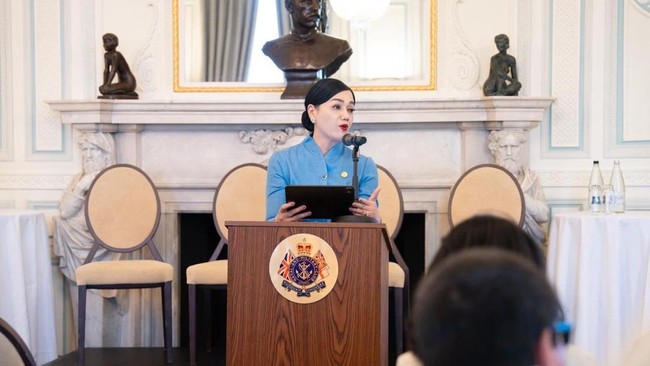
The Financial Services Authority (OJK) has affirmed its commitment to strengthening the role of the financial services sector in sustainable finance programmes and the implementation of the carbon economic value scheme. This role is crucial in supporting economic growth by leveraging the transition to a low-carbon economy while strengthening Indonesia’s position in the global sustainable finance architecture. The commitment was delivered during the London Climate Action Week (LCAW) 2026, held from 22-25 June in London, England. OJK’s participation in LCAW 2026 is part of efforts to enhance climate-related financial risk management and the carbon market ecosystem in Indonesia through international collaboration and best practice learning. The series of LCAW 2026 events was also attended by the Minister of Forestry, the Minister of Environment, the Deputy Speaker of the People’s Consultative Assembly, the Deputy Chair of Commission I of the House of Representatives, ambassadors, and representatives from the Carbon Economic Value Steering Committee. OJK Chairperson Friderica Widyasari Dewi participated in various international forums, including The Net Zero Delivery Summit, a roundtable discussion with the Centre for Economic Transition Expertise at the London School of Economics and Political Science, the Indonesia Climate Action Leadership Luncheon, the Southeast Asia Climate Action Forum, and a Satu Karsa Sharing Session with global investors, as well as bilateral meetings with various leading global institutions. Through these forums, OJK emphasised that a successful transition to a low-carbon economy requires a credible and transparent financing ecosystem that maintains investor confidence. ‘OJK will continue to ensure that the sustainable finance and transition financing agenda does not stop at a policy framework, but truly becomes a credible market mechanism. The ultimate goal is to create a stable, high-integrity financial system capable of financing Indonesia’s greener, more resilient, and inclusive economic future,’ Friderica stated. She noted that Indonesia’s main challenge is not merely providing capital, but ensuring that financing flows to credible, bankable projects that deliver real impact for the national economy. According to Friderica, transition finance is a strategic agenda for Indonesia as a developing country, a G20 member, and an archipelagic nation that must maintain economic growth, create jobs, and strengthen industrialisation while meeting its commitment to achieve net zero emissions by 2060 or sooner. She also stressed that sustainable finance is no longer a voluntary initiative but has become part of the legal framework, prudential regulations, risk governance, and reporting obligations that drive changes in how financial institutions manage risk, allocate financing, and support sustainable economic growth. In a Transition Finance Panel session at The Net Zero Delivery Summit hosted by the City of London Corporation, OJK emphasised that Indonesia’s transition finance must be directed to support the transformation of hard-to-abate sectors such as energy, manufacturing, transportation, agriculture, forestry, and land use. To support this, OJK continues to strengthen the sustainable finance architecture through various policies, including the Indonesian Sustainable Finance Taxonomy (TKBI), enhanced sustainability reporting aligned with international standards, the implementation of Climate Risk Management and Scenario Analysis (CRMS), the development of transition finance guidelines and transition plans, and the development of sustainable financial instruments and market infrastructure. OJK is currently drafting a new regulation on the implementation of sustainable finance for financial services institutions, issuers, and public companies, revising the previous regulation to align with national and global sustainability disclosure standards, targeted for issuance this year. Friderica explained that the TKBI serves as a key reference for the financial industry and investors to identify green and transition economic activities, enabling more targeted financing while minimising the risk of greenwashing. ‘OJK wants to ensure that sectors needing to transition are not left behind, but are instead encouraged to develop credible transition plans. A successful transition is not just about moving capital to already green sectors, but about transforming high-emission sectors to become lower carbon in a gradual, measurable, and responsible manner,’ she said. In addition to strengthening the regulatory framework, OJK also introduced various innovative financing initiatives to global investors, including the Satu Karsa blended finance platform, which supports credible and high-integrity nature-based carbon projects in collaboration with the Ministry of Forestry. This initiative is directed at supporting reforestation and agroforestry, critical land restoration, community empowerment, the development of high-quality carbon credits, and job creation for local communities. ‘Satu Karsa demonstrates that Indonesia’s natural assets must not only be protected but can also become a source of strategic advantage if managed through a transparent, high-integrity framework that benefits communities. Through a blended finance approach, Indonesia can attract long-term investors,’ Friderica concluded.