
OJK Prepares Two Regulations to Govern Mineral Exchange, Details Revealed
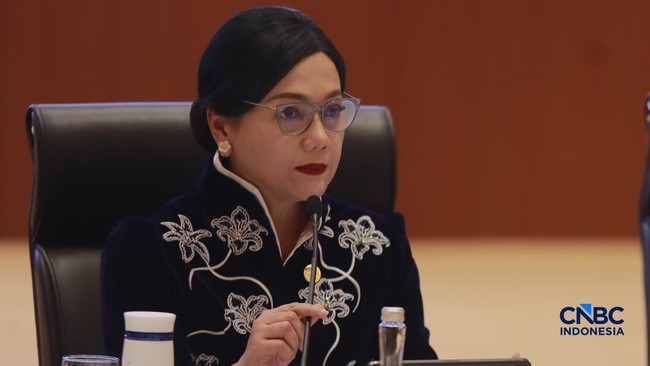
The Financial Services Authority (OJK) has stated that the draft regulations regarding the formation of the Mineral and Strategic Commodities Exchange (BMKS) have been prepared. OJK is preparing two OJK Regulations (POJK) to govern the operation of the exchange.
OJK Board of Commissioners Chair, Friderica Widyasary Dewi, stated that the two regulations consist of a transitional POJK and a POJK specifically regulating the BMKS. “So, there will be two POJKs, namely the transitional POJK and the OJK regulation itself,” said Friderica, as reported on Friday (4/9/2026).
Friderica noted that OJK will subsequently coordinate with the House of Representatives (DPR RI), specifically Commission XI. Discussions with Commission XI are scheduled for next week. “We are also coordinating very well with Danantara, and God willing, next week we will discuss this with Commission XI because, as stated in the law, we must also obtain approval from Commission XI,” she explained.
According to Friderica, all draft regulations have been prepared. However, OJK cannot yet disclose the detailed substance of the regulations, including the specific types of minerals and strategic commodities that will be included in the BMKS. “The regulations will be in the POJK. Therefore, I cannot spill the details yet because we are still waiting for the final drafts. For example, which minerals and which strategic commodities will be included, as well as other regulations,” she said.
She explained that the presence of the BMKS is intended to serve as a reference for price discovery of Indonesia’s minerals and strategic commodities. According to her, the existence of a domestic exchange can encourage more transparent price formation while helping to overcome practices of under-invoicing and transfer pricing, which have long been a concern for the government.
“As the President has frequently stated, practices of under-invoicing and transfer pricing are occurring. With this exchange, since an exchange serves as a mechanism for price discovery, it will allow for transparent price formation,” Friderica remarked.
Furthermore, Friderica stated that OJK is also studying the mechanisms of several overseas commodity exchanges, including Shanghai and London. This step is being taken to ensure that the BMKS can become a credible, transparent, and trusted price reference. She assessed this as vital, considering Indonesia is one of the world’s largest producers of various minerals and strategic commodities, yet price formation for these commodities has largely relied on foreign exchanges.
“We are the producers, and for some, we are the largest in the world, but why is price formation not happening here, but rather in other exchanges?” she questioned.
Friderica emphasised that the formation of the BMKS is ultimately aimed at providing greater benefits to the public from the management of Indonesia’s natural resources. Regarding whether there will be an obligation for businesses to conduct transactions through the BMKS, including mechanisms for exports or domestic trade, Friderica has not yet provided specific details. “Mandatory for exports or domestic? We cannot spill that just yet,” she concluded.