
OJK prepares three focuses for developing sharia financial literacy and inclusion
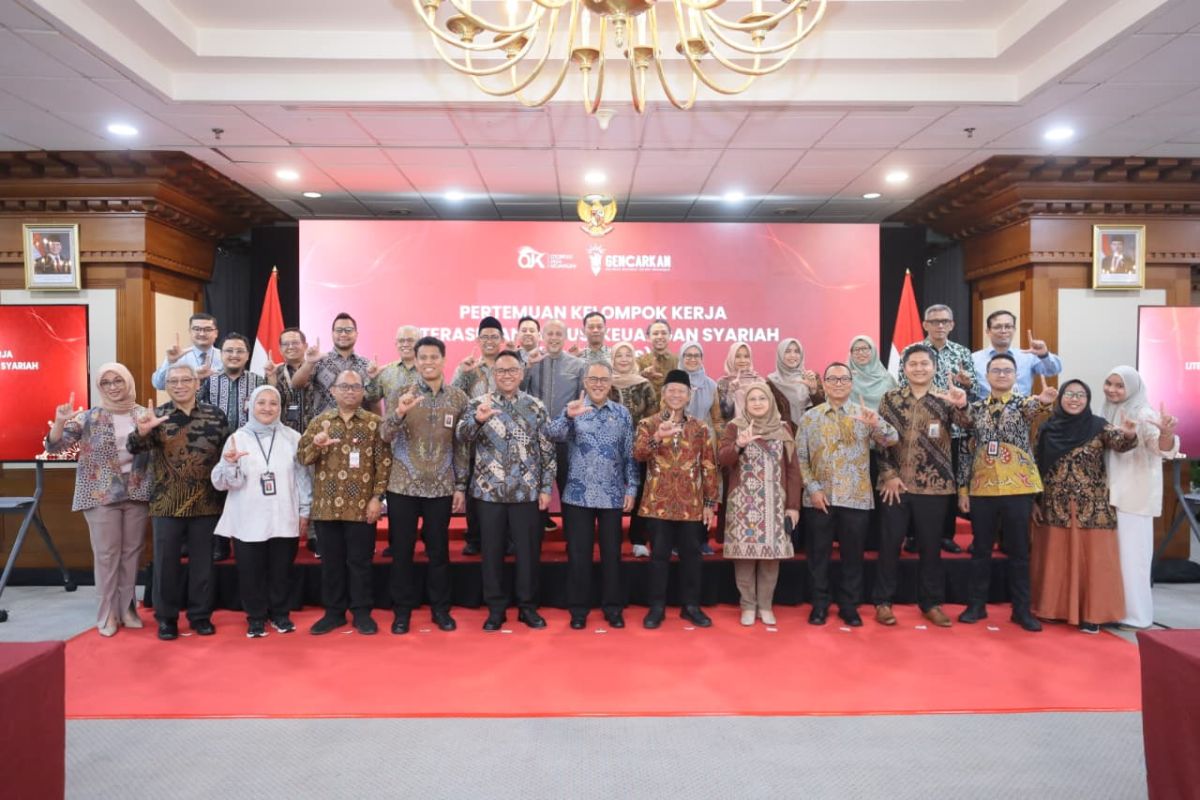
The Financial Services Authority (OJK) is preparing three focuses for developing sharia financial literacy and inclusion to make them more targeted, optimal, sustainable, and impactful for the public economy. The effort was marked by the first 2026 meeting of the Sharia Financial Literacy and Inclusion Working Group (Pokja LIKS), which concentrated on three main agendas. “First, formulating a sharia financial literacy and inclusion strategy based on data, digitalisation, and community needs. Second, integrating sharia financial literacy and inclusion with market conduct, consumer protection, and financial health. Third, strengthening synergy among parties to produce concrete and actionable steps,” said Dicky Kartikoyono, Chief Executive of Behavioural Supervision of Financial Service Business Actors, Education and Consumer Protection at OJK, in an official statement in Jakarta on Tuesday. Dicky explained that Pokja LIKS holds a special position as a strategic partner of OJK, serving as a coordination forum and a space to unify ideas, drive action, and deliver tangible impacts in improving sharia financial literacy and inclusion. He expressed hope that the programme would not only increase knowledge but also boost public participation in using sharia financial products. “Sharia financial literacy and inclusion must go hand in hand with market conduct supervision and consumer protection. Innovation can develop healthily, be trusted, and be sustainable while still paying attention to consumer protection aspects,” Dicky said. The forum was also attended by the Chairman of the Daily Board of the National Sharia Council-Indonesian Ulema Council (DSN-MUI) KH Muhammad Cholil Nafis and his board members. Other attendees included leaders and representatives of professional and community organisations in the sharia economy and finance sector, representatives of associations and Self Regulatory Organisations (SRO) in the sharia financial services sector, academics, women leaders, and influencers or Key Opinion Leaders (KOL) who are external members. Representatives from sharia compartment work units also attended as internal members of Pokja LIKS. Head of OJK’s Financial Literacy and Inclusion Department and Main Coordinator of Pokja LIKS, M Ismail Riyadi, stated that Pokja LIKS has played an active role in formulating educational and inclusion programmes for sharia finance to make them more adaptive to community needs and to drive the economy. “Through recommendations, evaluations, and inputs submitted periodically, Pokja LIKS provides substantive and strategic perspectives in refining work programmes, formulating new initiatives, and strengthening the policy direction of sharia financial literacy and inclusion to be more adaptive to community needs and industry developments,” Ismail said. He noted that the implementation of sharia financial literacy and inclusion programmes still needs further development, particularly in expanding reach, ensuring programme sustainability, and converting understanding into the use of sharia financial products. OJK has carried out various LIKS activities to promote sharia financial literacy, including the Indonesia Sharia Financial Olympiad (ISFO), the Sharia Financial Ramadan Movement (GERAK Syariah), the Sharia Financial Literacy Savvy Mothers Programme (SICANTIKS), the Sharia Financial Literacy Savvy Santri Programme (SAKINAH), and the School of Syariah (SOS). OJK also encourages sharia financial business matching through the Sharia Financial Education and Business Forum (FEBIS) and the Sharia Financial Inclusion Centre Ecosystem (EPIKS). In addition, to encourage the use of financial products and services, OJK organises the Sharia Financial Fair (SYAFIF) and the Sharia Financial Expo and Seminar (EKSIS). “OJK continues to encourage synergy and collaboration among all parties in efforts to improve sharia financial literacy and inclusion to realise increased public financial well-being,” Ismail said.