
OJK Prepares Rules for Tokenised Gold and Government Bonds, with Investments Starting at Rp10,000
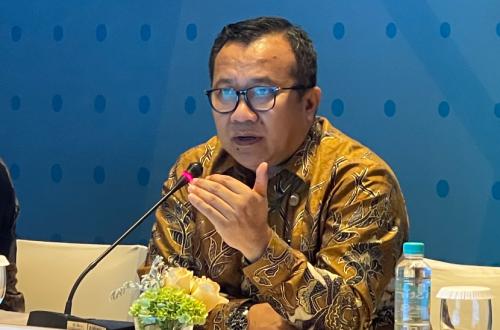
JAKARTA — The public’s opportunities to invest in gold, government bonds and property with a small amount of capital are expanding through tokenisation technology. The Financial Services Authority (OJK) is preparing regulations that would allow these assets to be offered as digital tokens, enabling investors to buy fractions of an asset without having to provide as much money as a conventional purchase would require.
Adi Budiarso, OJK’s Executive Head of Financial Technology Innovation, Digital Financial Assets and Crypto Assets Supervision (IAKD), said work on a draft OJK regulation on tokenised asset offerings would begin in October 2026. The regulation will cover the tokenisation of real-world assets (RWAs), including gold, government securities, economic benefits from property, and token trading within closed ecosystems.
Speaking at a media discussion in Jakarta on Thursday (8 October 2026), Adi explained that tokenisation uses blockchain technology to divide an asset’s value into smaller investment units. The scheme could broaden access to investment instruments that have traditionally required relatively large amounts of capital.
“For example, government bonds, which people usually have to buy through banks and the capital market in minimum amounts of Rp1 million, could be bought in smaller fractions through tokenisation — Rp10,000, Rp100,000 and so on. This uses blockchain technology,” Adi said.
Government securities are debt instruments issued by the government. Tokenisation could divide investment in these instruments into smaller units, allowing people to invest according to their financial means. However, implementation is still awaiting regulation. OJK will set out rules for issuance, trading and custody, as well as investors’ rights in relation to tokenised instruments.
Tokenised gold is also included in the planned regulatory framework. Under certain arrangements, a token could represent ownership of a quantity of gold held as the underlying asset.
Property tokenisation may use a different mechanism. Investors would not necessarily own the land or building directly, but could instead obtain rights to the economic benefits generated by the asset.
These benefits could include rental income or proceeds from the use of a property. Similar arrangements could also be applied to creative-economy projects, including the film industry, which needs alternative sources of funding.
“There are several projects that we will look at, including creative-economy and creative projects, and films that could also be financed this way,” Adi said.
Tokenisation could create new opportunities to raise funds from the public. Projects or assets that previously required large investments could potentially obtain financing from a wider pool of investors through the offering of low-value tokens.
However, assets do not all have the same characteristics. A token that grants direct ownership of an asset has different legal implications from one that only provides rights to income or other economic benefits.
In the case of tokenised gold, for example, buyers may have an ownership claim over the underlying gold if the terms of issuance grant them that right. By contrast, holders of tokens linked to rental income from a property do not necessarily own the building generating that income.
These distinctions will determine investors’ rights, issuers’ responsibilities and the procedures for resolving disputes. OJK is therefore preparing provisions on issuer criteria, asset types, governance, licensing and supervision of tokenisation activities.
“The principle is that we will provide an overarching framework for the ecosystem or business processes, so it is clear who is operating in this industry and that they are properly licensed by OJK,” Adi said.
OJK will also regulate the requirements for assets underlying token issuance. Its assessment will cover asset characteristics and quality, ownership status, and which institutions are authorised to supervise them.
Such regulation is necessary because tokenisation may involve both financial and non-financial assets. Assets do not all have the same arrangements for custody, ownership records and supervision.
Adi said the existence of an underlying asset must be verified before a token is issued and traded. OJK will examine custody arrangements to prevent tokens from being issued in quantities or values that do not correspond to the actual assets.
Another risk to be addressed is the possibility of multiple claims on the same asset. If an asset has been used as the basis for issuing tokens, oversight mechanisms must ensure that it is not repeatedly used without adequate backing.
Clarity over ownership rights is also essential. In tokenisation that grants only rights to economic benefits, ownership of the underlying asset may remain with its original owner, while investors receive rights to income under the applicable terms.
Conversely, if a token represents direct ownership, the transfer of rights must comply with the characteristics of the asset and the relevant legal requirements. This distinction will determine the form of protection available to investors.
OJK is also considering the involvement of other regulators when tokenised assets fall outside the financial services sector. Coordination is needed to ensure that oversight of token issuance does not conflict with rules governing the underlying assets.
Seven innovations pass the sandbox
Plans for tokenisation rules follow the testing of a number of digital finance innovations through OJK’s regulatory sandbox. As of September 2026, OJK had recorded 372 requests for consultation, of which 236 had been held.
Seven participants have passed the regulatory sandbox process. The testing assessed the viability of business models, the reliability of technology, risk management and consumer protection.
The mechanism allows regulators to test innovations before products or business models are developed on a wider scale. The results also inform the drafting of rules suited to the characteristics and risks of each product.
OJK has issued 18 regulations in the IAKD field: seven OJK regulations, nine OJK circular letters and two regulations issued by members of the Board of Commissioners. The draft regulation on tokenised asset offerings will supplement the existing rules.
Adi said the regulation of digital financial innovation was guided by a balance between allowing technological development and managing risks. OJK also applies a technology-neutral approach, so its rules are not tied to any one type of technology.
This approach enables regulation to focus on functions, business processes, risks and intended outcomes. As a result, technological changes need not always be accompanied by fundamental changes to the supervisory framework.
Alongside tokenisation, OJK is preparing a regulatory framework for stablecoins — digital assets designed to maintain a relatively stable value by reference to a particular asset. Further work on the rules could begin in 2027.
Adi said the development of blockchain technology and decentralised financial services was increasing demand for digital instruments that could enable automated settlement. Such instruments are known as programmable money.
“With technological developments, digital finance in the future will need programmable money. That role could be played either by a CBDC or a stablecoin,” Adi said.
He said stablecoins differ from central bank digital currencies (CBDCs). USDT is one example of a stablecoin that has gained global traction.
“What we are preparing for the future now is stablecoins. USDT is a stablecoin; it is not a CBDC,” he said.
According to OJK figures, the global stablecoin market capitalisation was estimated at US$320 billion at the end of May 2026. Transaction value for 2025 was estimated at US$28 trillion.
In Indonesia, the planned stablecoin rules will apply to the digital financial asset ecosystem, not to payment instruments. OJK is also coordinating with Bank Indonesia to ensure development is consistent with rules on currency, payment systems and financial stability.
One innovation to have passed the regulatory sandbox is IDRP, on 11 June 2026. The testing provided early experience in developing digital instruments that can support blockchain-based transactions.
Future stablecoin regulations will cover the management of reserve assets, redemption mechanisms, issuer governance and consumer protection. These provisions are needed to ensure holders understand the assets backing the instrument and the rights they can claim.
Tokenisation and stablecoins could broaden investment and transaction options within the digital financial ecosystem. Their implementation, however, will depend on regulatory certainty, infrastructure readiness and providers’ ability to manage the risks involved.
Source: jawawa.id (https://jawawa.id/newsitem/ojk-prepares-rules-for-tokenised-gold-and-government-bonds-with-investments-starting-at-rp10-000-1791507167)
Originally published by Republika (https://ekonomi.republika.co.id/berita/tmm64g416/ojk-siapkan-aturan-tokenisasi-emas-hingga-sbn-investasi-bisa-rp10-ribu), translated from Indonesian