
OJK: Paylater loan balances grow 33.54 percent, driven by KBMI 1 and 3 banks
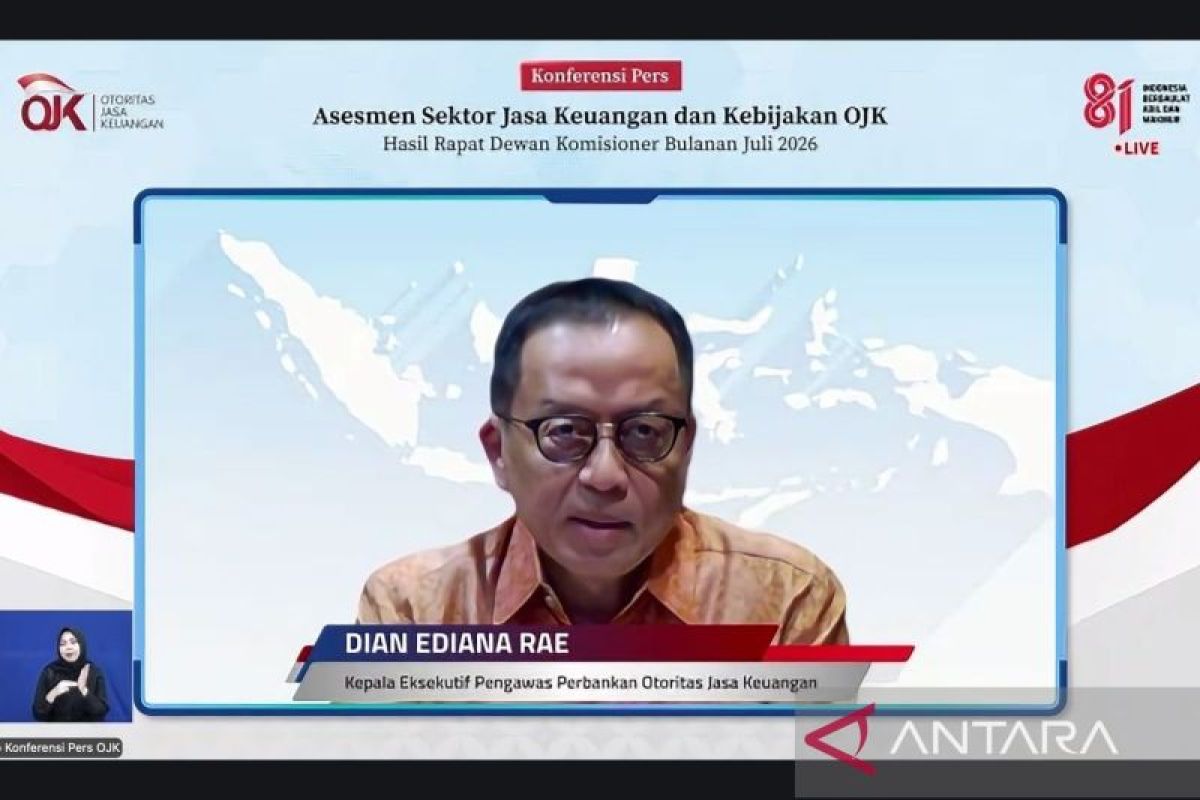
Jakarta (ANTARA) — The Financial Services Authority (OJK) has revealed that the outstanding balance of banking buy now pay later (BNPL) grew 33.54 per cent year on year (yoy) to Rp30.71 trillion as of June 2026, driven mainly by the performance of KBMI 1 and KBMI 3 banks.
However, compared with the previous month, the growth of the paylater outstanding balance, or remaining loan principal, slowed slightly.
As of May 2026, banking paylater outstanding balances had grown by 37.72 per cent (yoy).
“The growth in paylater outstanding balances was driven primarily by KBMI 1 and KBMI 3 banks, which managed to record double-digit growth,” said Dian Ediana Rae, Executive Head of Banking Supervision at OJK, at a press conference on the RDKB results in Jakarta on Tuesday.
Dian further noted that banking paylater credit as a proportion of total banking credit remains very small, at just 0.34 per cent.
The number of banking paylater accounts has reached 32.80 million, with an average outstanding balance of Rp0.94 million per account.
Meanwhile, credit risk from banking paylater in June 2026 remained under control, with a non-performing loan (NPL) ratio of 2.36 per cent, a relative decline compared with May 2026, when it stood at 2.50 per cent.
“We view banking paylater as still offering good prospects, in line with the development of the digital economic ecosystem and the ease of access offered by fintech and e-commerce platforms,” said Dian.
Dian said that OJK supports banks’ efforts to provide safe and accessible financing to the public through the development of products and services tailored to each bank’s capacity and capabilities.
Paylater services enable the public to obtain short-term consumer financing through data-based credit assessment processes carried out by service provider applications in cooperation with banks, in accordance with risk management and prudence principles.
According to Dian, factors such as the ease, speed, and efficiency of the approval process have made paylater a popular alternative compared with other consumer credit instruments, such as credit cards.
Furthermore, public consumption behaviour, particularly among the younger generation, shows a tendency to treat short-term interest-bearing instalments as part of a lifestyle.
Meanwhile, from a macroeconomic perspective, the increasing use of paylater credit may reflect households’ efforts to meet consumption needs through short-term debt, with digital services becoming one of the liquidity solutions most quickly accessed by the public.