
OJK Opens Recruitment for Chief Executive of Mineral Exchange Supervisory Board
The Financial Services Authority (OJK) is opening opportunities for professionals wishing to register as the Chief Executive of the Mineral Exchange Supervisory Board. The selection will be managed through a Selection Committee (Pansel).
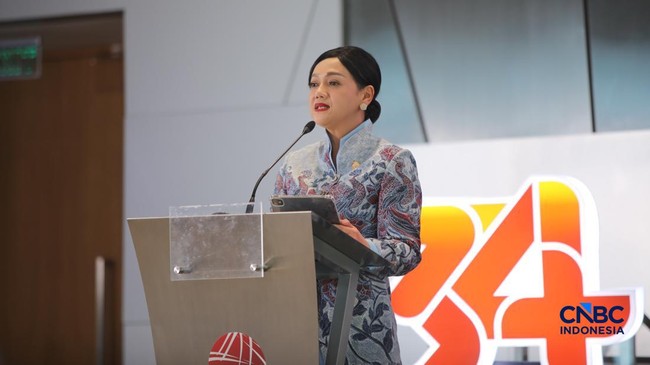
Chair of the Board of Commissioners of the Financial Services Authority, Friderica Widyasari Dewi, stated that the exchange is planned to become effectively operational on 1 January 2027. This is in accordance with the mandate of the Law on the Development and Strengthening of the Financial Sector (P2SK).
"There will be a new Chief Executive for the Supervisory Board of the Mineral and Strategic Commodities Exchange. If you are interested in applying, please register with the Pansel," said Friderica, who is often called Kiki, to reporters at the Indonesia Stock Exchange (BEI) Building in Jakarta on Wednesday (15/7/2026).
Beyond the official appointment, Kiki added that much needs to be prepared in establishing this exchange, including infrastructure and derivative regulations from the OJK. "A lot needs to be prepared, especially infrastructure and regulations. At the very least, the OJK Regulation (POJK) must also be in place," she explained.
The presence of the Mineral Exchange is considered capable of promoting market efficiency and transparency, risk management, access to financing, supply chain efficiency, and increasing downstream competitiveness. Furthermore, a reliable regulatory, supervisory, and market infrastructure framework will support mineral downstreaming through transparent trading, efficient transaction settlement, and commodity-based financing. Support and involvement from all stakeholders are necessary to ensure the mineral and strategic commodities exchange can develop credibly and competitively.
The Mineral Exchange is also expected to become a trading hub and a recognised price reference at both the regional and global levels.
On the same occasion, Chair of Commission XI of the Indonesian House of Representatives (DPR RI), M. Misbakhun, said the establishment of the Mineral and Commodities Exchange is intended to measure market-driven price levels. He noted that Indonesia’s minerals and commodities have so far suffered from under-invoicing, not only in terms of price but also volume.
Even though Indonesia is a world producer of minerals, with coal accounting for 43% of international trade, Misbakhun stressed that the country has vast wealth in palm oil, gold, silver, and copper, yet still experiences under-invoicing. Consequently, the government wants to strengthen governance. "So far, there has been under-invoicing not only of prices but also of volumes, resulting in reduced tax revenues and levies. This is what will be fixed; it must be addressed for better governance," he said.
The establishment of the Mineral Exchange is also a response to the changing geopolitical map and financial landscape.