
OJK No Longer to Collect from Industry? DPR Prepares New Scheme, Here Are the Risks
A proposal to halt levies by the Financial Services Authority (OJK) from financial industry players is gaining traction in the DPR, sparking debate over the regulator’s independence as well as its effects on state revenues and the sustainability of the financial sector’s programmes.
Commission XI of the DPR RI is reviewing the proposal during a Public Hearing by the working committee on the Draft Law amending Law Number 4 of 2023 on the Development and Strengthening of the Financial Sector (UU P2SK), held on Monday (6/4/2026).
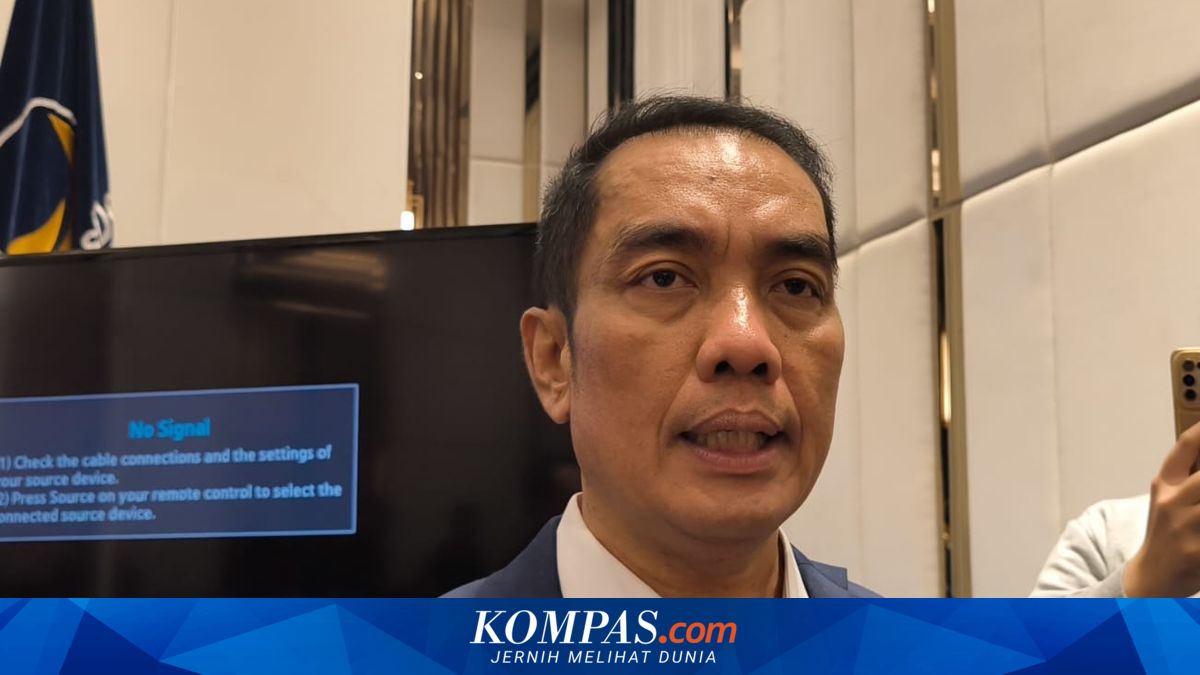
Deputy Chairman of Commission XI DPR RI, Fauzi Amro, stated that the proposal arises because OJK’s funding has traditionally come from levies on the financial services industry it oversees.
He argued that this situation could lead to conflicts of interest in carrying out supervisory functions.
“We hope OJK has independence. How can it supervise and collect fees at the same time? We see no independence there. It is laden with interests,” he said when met after the hearing at the parliamentary building in Jakarta on Monday.
To date, surpluses from BI and LPS have been recorded as Non-Tax State Revenue (PNBP). However, the DPR assesses that these funds could potentially support OJK’s operations.
Fauzi mentioned that BI’s surplus is estimated at around Rp78 trillion and LPS at about Rp42 trillion. Thus, the total potential funds available range from Rp115 trillion to Rp120 trillion.
Under this scheme, OJK is expected to no longer depend on the industry it regulates, thereby strengthening the institution’s independence.
However, this option brings fiscal consequences. If OJK’s funding is shifted from PNBP, there is a potential reduction in state revenues. Moreover, similar schemes might be demanded by other sectors.
“The best option is from surpluses. But if there is no surplus, from where? That might be selective contribution clauses,” Fauzi said.
Nevertheless, the DPR emphasised that this proposal is still in the discussion stage and not yet a final decision in the revision of UU P2SK.
In the hearing, Commission XI invited various parties, from BI, LPS, OJK, business actors, to academics, to provide input on the funding scheme.
On the other hand, OJK emphasised that the most crucial aspect is not the funding source, but the adequacy of the budget to carry out its supervisory and regulatory mandate in the financial services sector.
OJK Commissioner Chairman Friderica Widyasari Dewi noted that budget limitations have so far prevented several strategic programmes from running optimally, including information technology development, supervisory systems, operations, and strengthening the financial services sector.
“Going forward, we respect the various discourses available. But the essence is that the decision is not with us. The key point is that we support it so that OJK can carry out its mandate in accordance with the law, supported by sufficient budget,” said Kiki.
“It’s not final yet. It could be hybrid (half-and-half or mixed),” she added.
Thus, the future direction of OJK’s funding remains a tug-of-war between efforts to maintain independence, budget needs, and its impact on state finances, all of which are now being tested in the revision of UU P2SK.