
OJK Malang Partners with ILO to Strengthen Dairy Farmers' Financial Access via ERP
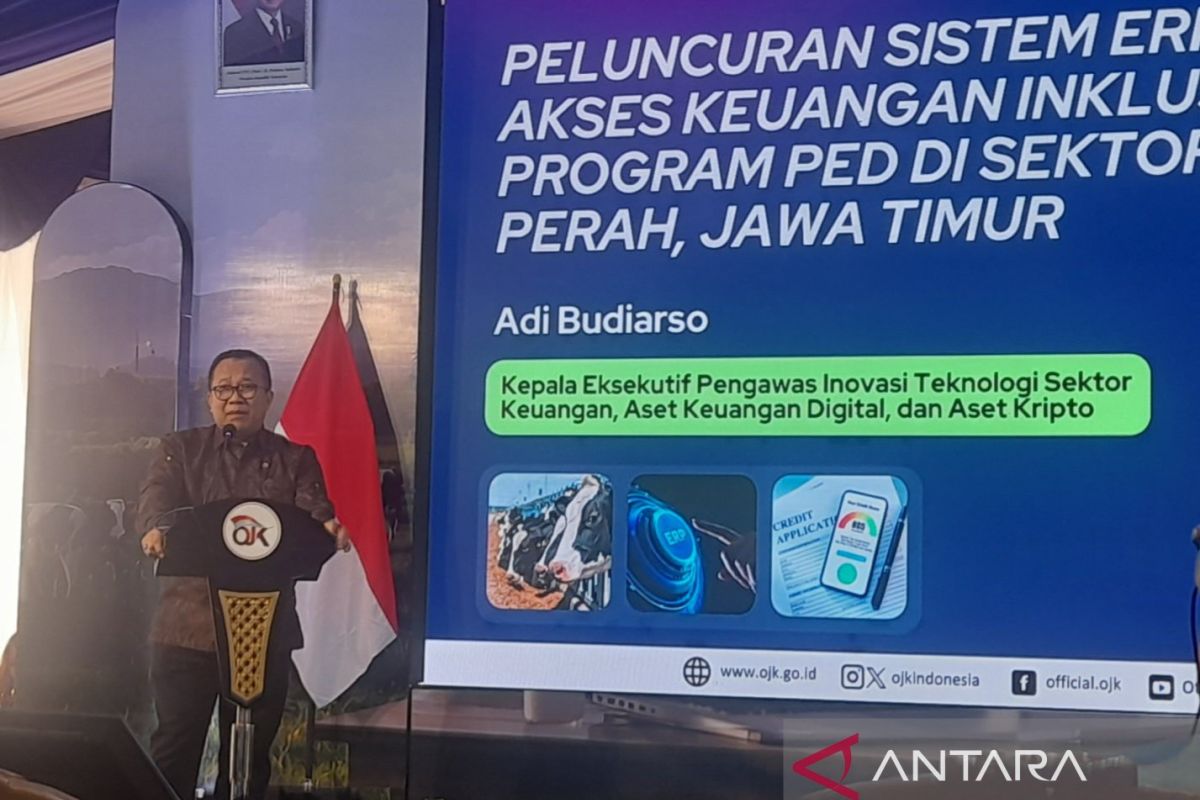
The future of the national livestock sector depends heavily on the ability of various parties to collaborate and utilise digital technology, according to a senior official at the Financial Services Authority (OJK). The OJK Malang office in East Java is partnering with the International Labour Organization (ILO) to strengthen financial access for dairy farmers by introducing an Enterprise Resource Planning (ERP) system. The launch of the ERP system, which is also part of a Regional Economic Development (PED) Programme, took place at the Agro Niaga Cooperative (KAN) Jabung in Malang Regency on Thursday. It was attended by Swiss Ambassador to Indonesia Olivier Zehnder and ILO Director for Indonesia and Timor-Leste Simrin Singh. Adi Budiarso, Chief Executive for the Supervision of Financial Sector Technology Innovation, Digital Financial Assets and Crypto Assets (IAKD) at OJK, stated during the launch that the future of the national livestock sector is heavily contingent on the ability of stakeholders to collaborate and adopt digital technology. “With collaboration, the impossible becomes possible. Something that seems impossible can become a reality when all stakeholders collaborate and work together,” he said. He explained that the domestic dairy cattle sector still faces significant challenges, ranging from the impact of foot-and-mouth disease (FMD) to limited access to financing and persistently low domestic milk production. Indonesia, he continued, currently produces only about one million tonnes of fresh milk per year, while national demand is far greater, forcing the country to import roughly 3.7 million tonnes of fresh milk annually at a cost of Rp25 trillion. “We need approximately 1.4 million additional productive dairy cows if we want to achieve the milk self-sufficiency target. Therefore, productivity must be increased,” he said. A major obstacle for cattle farmers has been the difficulty in accessing formal financing due to the lack of properly documented business data. Through the ERP system developed by OJK and the ILO under the Promise 2 Impact programme, all business activities of farmers can be accurately digitised, providing a basis for credit assessment. According to him, farmers who were previously unbankable now have the opportunity to access financing because their business data is recorded digitally and reliably. Through the Regional Economic Development Programme and the launch of this dairy farming ERP system, the OJK hopes the smallholder livestock sector will become more modern and inclusive, making a greater contribution to food security and reducing national dependence on milk imports. Digitalisation and productivity improvements must become a collective movement so that Indonesia can become a developed nation faster, he noted. “We must dare to have a big vision and dream. If our productivity increases and digitalisation is optimally utilised, Indonesia will recover faster and become stronger,” he stated. The ERP system is connected to a Financial Services Aggregator Platform (PAJK) that allows farmers to access various financial services, including business credit, livestock insurance, and other financial products. The launch was combined with the signing of a Memorandum of Understanding on the East Java Provincial Regional Economic Development for 2026, attended by East Java Regional Secretary Adhy Karyono, OJK IAKD Chief Executive Adi Budiarso, Malang Regent Sanusi, Swiss Ambassador Olivier Zehnder, Head of OJK Malang Farid Falatehan, and Head of OJK Jember Aris Budiman, among other invitees.