
OJK Launches SLIK Optimisation to Strengthen Access to Financing for MSMEs and 3 Million Homes Programme
Jakarta (ANTARA) - The Financial Services Authority (OJK) is continuing to strengthen the national credit information infrastructure through the optimisation of the Financial Information Service System (SLIK). This move is intended to improve the quality of debtor information, expand access to healthy financing, and support credit distribution to productive sectors, including Micro, Small, and Medium Enterprises (MSMEs) and the 3 Million Houses Programme.
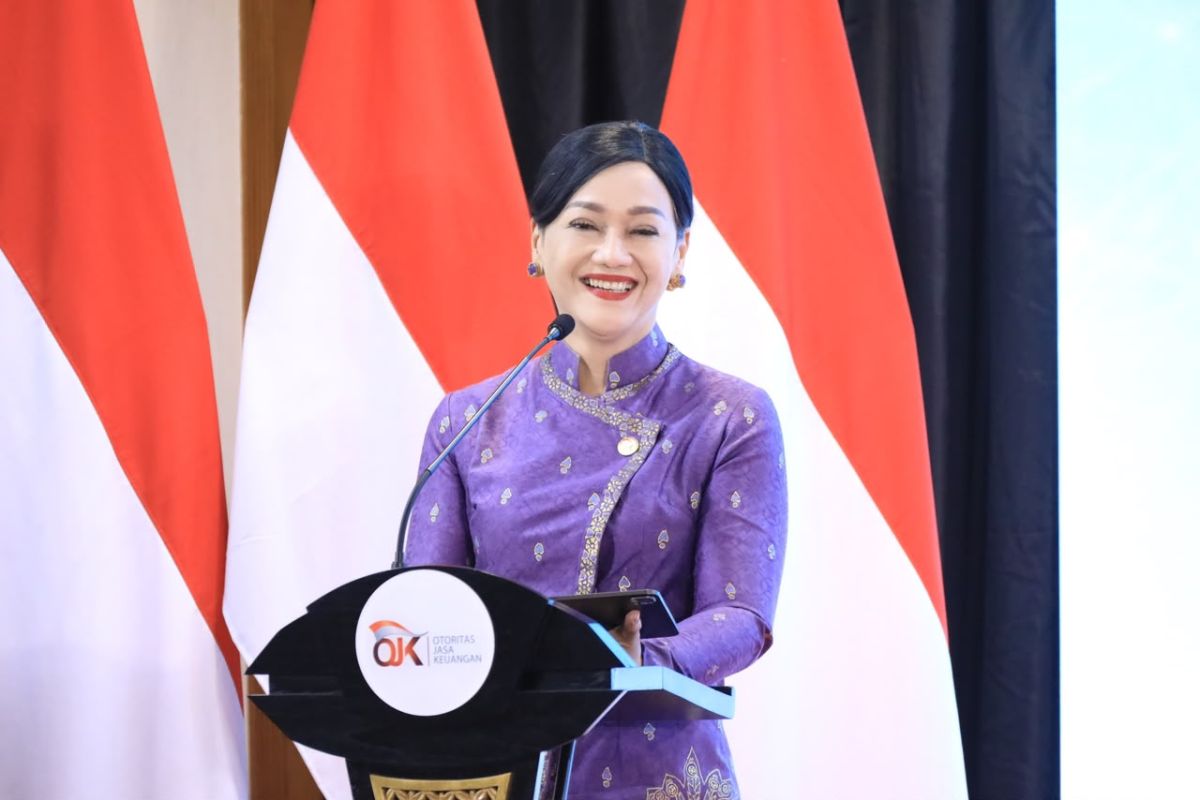
The launch of the SLIK optimisation to support MSME financing and the 3 Million Houses Programme was conducted by the Chair of the OJK Board of Commissioners, Friderica Widyasari Dewi, alongside the Minister of Housing and Residential Areas, Maruarar Sirait, at the OJK Office in Jakarta on Monday.
The event was also attended by members of the OJK Board of Commissioners, leaders from various ministries and agencies, Financial Service Business Actors (PUJK), housing developer associations, and other financial sector stakeholders.
During the event, Friderica stated that the optimisation of SLIK is part of OJK’s commitment to increasing the distribution of high-quality and targeted credit and financing to the public, thereby helping to maintain the stability of the financial sector.
The SLIK optimisation, which comes into effect on 1 July 2026, includes accelerating the update of credit or financing information by Financial Service Business Actors (PUJK) to no later than three working days after settlement. It also involves implementing a debtor information threshold for amounts exceeding Rp1 million, ensuring that the information presented remains proportional and relevant during the credit analysis process.
The availability of more up-to-date, accurate, and relevant debtor information will undoubtedly assist financial institutions in distributing housing finance and subsidised mortgages more quickly and prudently, particularly within the framework of the 3 Million Houses Programme.
“Ultimately, this is expected to be able to drive the expansion of credit and financing access for eligible individuals, including low-income communities, MSME players, and groups of people who have historically had limited access to formal financial services,” said Friderica.
However, Friderica noted that SLIK is not the sole determinant for credit or financing approval. The decision to grant credit remains with each individual financial institution based on feasibility analysis, risk management, and the principle of prudence. Thus, the expansion of financial inclusion can proceed alongside the strengthening of credit and financing quality, consumer protection, and the maintenance of financial system stability.
Maruarar Sirait expressed his appreciation for OJK’s steps in optimising SLIK, which is viewed as a way to support the acceleration of housing finance distribution for the public.
Significant Benefits of SLIK
As of July 2026, SLIK is utilised by 2,169 reporters, comprising banks, finance companies, venture capital firms, microfinance institutions, pawnshops, savings and loan cooperatives, and other financial service institutions.
The high level of SLIK utilisation is reflected in an average of 31 million requests for Debtor Information (iDeb) every month, even reaching 35.3 million enquiries in April 2026. This demonstrates that SLIK plays an increasingly strategic role in supporting national credit and financing processes.
The SLIK optimisation launched today is directed towards achieving four main reinforcing objectives: supporting national economic development programmes through expanded financing access, accelerating data currency, minimising potential public complaints regarding facilities that have been settled but not yet updated, and strengthening the financial ecosystem through a more credible credit reporting system to maintain financial system stability and enhance consumer protection.
The strengthening of SLIK is being carried out amidst the performance of financial sector intermediation, which continues to show positive growth. As of May 2026, banking credit grew by 11.51 per cent (year-on-year) to Rp8,918 trillion, while MSME credit reached approximately Rp1,500 trillion, and housing credit grew by 4.99 per cent (year-on-year).