
OJK Launches Banking Strengthening Roadmap, Five Key Priorities Identified
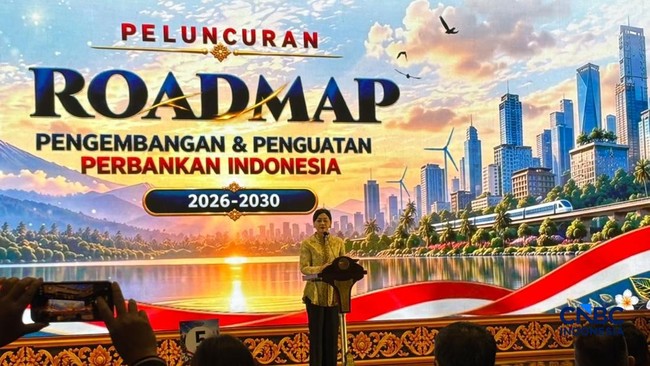
The Financial Services Authority (OJK) officially launched the Indonesian Banking Development and Strengthening Roadmap (RP3I) 2026-2030 on Friday, 2 October 2026.
OJK Executive Head of Banking Supervision, Dian Ediana Rae, stated that the RP3I 2026-2030 establishes five strategic priorities as the framework for developing the banking industry. These five priorities include strengthening institutional integrity, modernising technology and digital resilience, deepening financial markets and strengthening intermediation, sustainable finance and sustainability risk resilience, as well as the adoption of universal banking, integrated licensing, and adaptive supervision.
“These five strategic priorities are supported by four enablers that serve as the foundation for implementation. These four foundations include a conducive economic and investment ecosystem, data, technology and digital infrastructure, human capital, and cross-sector and cross-authority coordination,” Dian explained during the launch ceremony in Badung Regency, Bali.
With this framework, the roadmap is expected to provide a comprehensive direction for the development of the banking industry. Furthermore, the RP3I will serve as the basis for formulating banking development policies and programmes that are more targeted and adaptive to future challenges.
Meanwhile, the Chair of the OJK Board of Commissioners, Friderica Widyasari Dewi, noted that the current condition of the national banking industry continues to show solid performance. As of August 2026, bank credit grew by 13.65% year-on-year, third-party funds (DPK) grew by 10.94%, the Capital Adequacy Ratio (CAR) reached 24.1%, and the gross Non-Performing Loan (NPL) ratio stood at 2.9%.
“The banking sector must itself be an enabler of economic transformation. Indonesia requires a banking system capable of connecting savings with investment capital, technology with productivity, and financing with sustainable growth,” concluded Dian.
Previously, OJK launched the 2020-2025 banking development roadmap, which focused on strengthening the industry’s foundations. That roadmap emphasised the pillar of strengthening banking structures through consolidation policies and minimum core capital (MIM) requirements, as well as digital transformation.
In this latest roadmap, the focus of banking development enters a more complex phase, with an emphasis on deepening financial markets through the expansion of banking products and activities. These steps include the development of structured products, a universal banking framework, open banking, and open finance, as reflected in the pillars of market deepening and strengthening intermediation.
To support this agenda, OJK believes that strengthening the structure, governance, and risk management of banks must continue to be implemented to adapt to new business models. Additionally, digital transformation in banking is directed not only towards the digitalisation of services but also towards enhancing digital resilience and cyber security.
RP3I 2026-2030 also places sustainable finance as a standalone primary pillar. This move demonstrates OJK’s commitment to strengthening the banking industry’s role in supporting the transition towards a greener and more sustainable economy.
Through this roadmap, the Indonesian banking sector is expected to remain resilient and contribute to building the Indonesian economy. This can be evidenced by the target of achieving double-digit credit growth over the next five years.