
OJK Investigates Major Investors over ‘Fixed Allotments’ in BREN and CUAN IPOs
Jakarta, CNBC Indonesia – The Financial Services Authority (OJK) has uncovered suspected arrangements involving fixed share allocations in the initial public offerings (IPOs) of conglomerate Prajogo Pangestu’s companies, PT Barito Renewables Energy Tbk (BREN) and PT Petrindo Jaya Kreasi Tbk (CUAN).
According to the OJK’s investigation, parties connected to the controlling shareholders received large share allocations, concentrating ownership among certain groups.
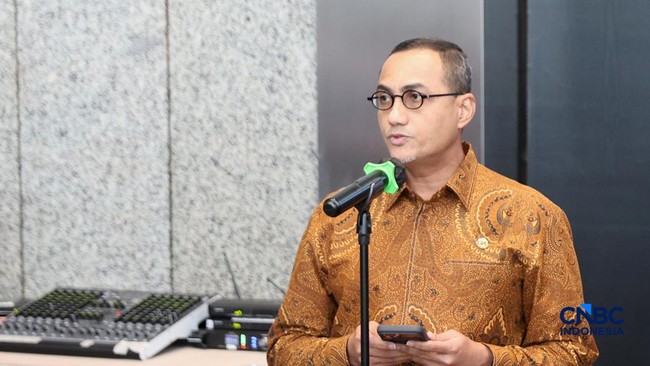
OJK commissioner Hasan Fawzi said the authority had examined investors found to have breached the rules governing the allocation process. He said those under investigation were affiliated with the issuers.
“Those who received fixed allocations and were proven to have breached the rules have been examined,” Hasan told reporters.
Hasan added that the investors under the OJK’s scrutiny were connected to the companies that conducted the share offerings. He did not provide further details about their identities or profiles.
As part of its investigation, the OJK requested data and documents from four securities firms acting as underwriters and three custodian banks. It also traced the flow of funds involving parties connected to the BREN and CUAN offerings.
The OJK also summoned several parties suspected of involvement in violations related to the two companies’ IPOs. Those called in included at least five securities-company directors, three custodian banks and seven parties involved in fixed allocations.
The investigation found irregularities in the share-ordering process for BREN and CUAN. Some parties connected to the companies’ controllers were found to have received very large allocations while concealing their identities.
The practice resulted in BREN and CUAN shares being concentrated among a limited group of parties, leaving fewer shares available to trade on the market.
For the violations, the OJK imposed fines totalling Rp500 billion (about US$27.8 million) on parties related to BREN. Parties related to CUAN were fined Rp100 billion (about US$5.6 million).
IPO shares hit repeated upper limits before HSC listing
CUAN shares drew attention after hitting the upper auto-rejection limit (ARA) for six consecutive days from their first day of trading on the Indonesia Stock Exchange (IDX) on 8 March 2023.
BREN shares also rose for seven consecutive trading days and hit the ARA limit for five days in a row, followed by another ARA on Tuesday, 17 October 2023. Since listing on 9 October 2023, the shares had climbed by as much as 339.74%.
Three years after its IPO, BREN was added to the High Shareholding Concentration (HSC) list. As at 31 March 2026, a limited number of shareholders collectively held 97.31% of the company’s shares, in both scrip and scripless form.
However, HSC status is not an indication of a capital-market violation. It is intended to alert investors to potential risks arising from a company’s ownership structure. HSC measures the degree to which shares are concentrated among particular parties, including controlling and non-public shareholders, as well as specific investor groups.
Fixed allotments are commonly used in Indonesian IPOs. They are made through a special allocation channel for institutional investors, such as mutual funds, insurers and pension funds, or for strategic and high-net-worth individual investors who negotiate directly with the underwriter.
In Indonesia, fixed IPO allocations are generally intended for institutional investors or strategic buyers, and do not have a standard minimum lot requirement for retail investors, unlike the pooling allocation process.
For retail investors, however, the OJK sets a limit: they may order no more than 10% of the total value of shares offered in an IPO. The rule is intended to prevent a single retail investor from dominating the IPO process.