
OJK: Finfluencers Must Clearly State Their Position to the Public
The Financial Services Authority (OJK) has stated that financial influencers (finfluencers) must clearly state their position when conveying information to the public, following the issuance of new provisions regarding influencer activities in the financial sector.
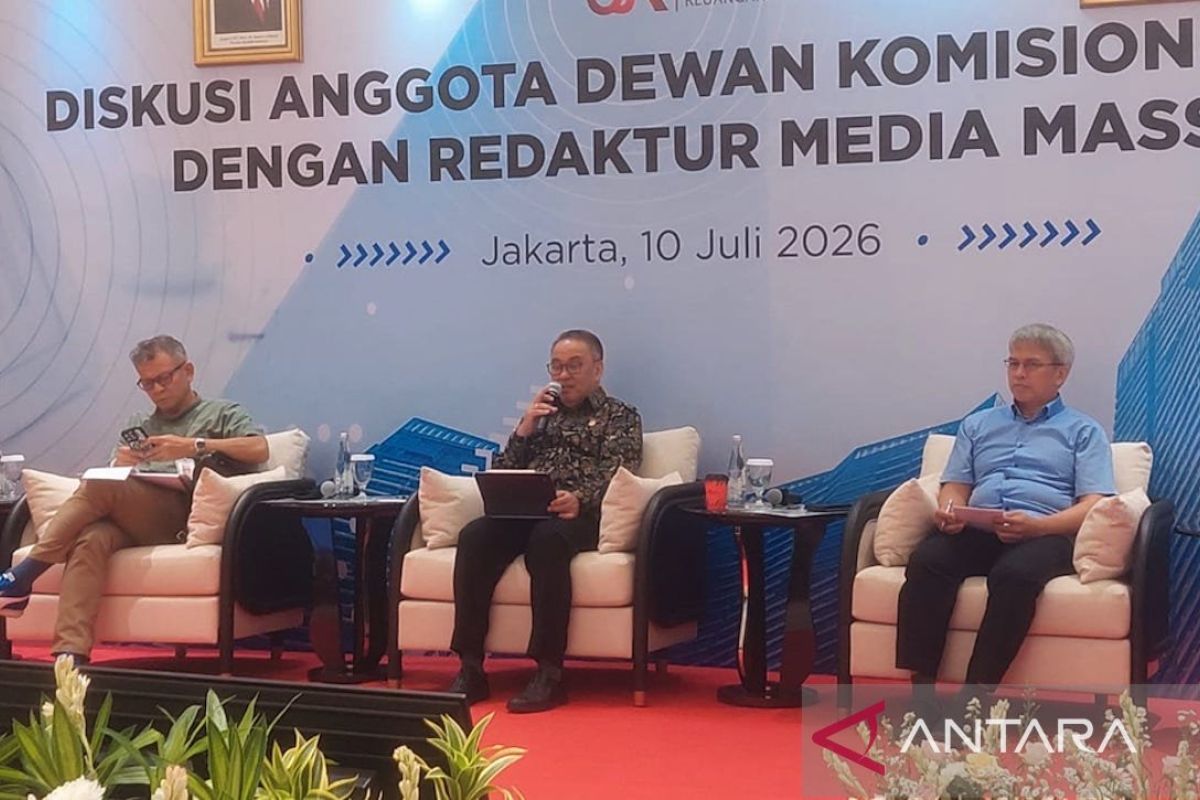
Chief Executive of the OJK’s Behavioural Supervision of Financial Service Business Actors, Education and Consumer Protection (PEPK), Dicky Kartikoyono, said during a discussion in Jakarta on Friday that this clarity of position is necessary so that the public can distinguish between parties providing education and those persuading or giving recommendations to the public in making financial decisions.
The distinction between these finfluencer positions is regulated in OJK Regulation (POJK) Number 6 of 2026 concerning the Conduct of Information Providers in the Financial Services Sector.
“This provision (POJK 6/2026) actually directs every person (finfluencer) to have, mens rea, to have a position to state who they are because we will be able to, again, carry out supervisory action, supervise so that everyone states their position clearly,” he said in Jakarta on Friday.
He stated that this clarity of position is important to close the grey area between the position of a financial educator or a financial recommender in influencer activities in the financial sector. According to him, no influencer should claim to be merely providing education while their content contains persuasion or even directs the public to make specific buy or sell decisions in the financial market.
“They say they are an educator, but inside they are doing a kind of persuasion or even directing people to make financial decisions,” he said.
The OJK considers that POJK Number 6 of 2026 provides a clearer corridor for the authority to take supervisory action against such activities. A crucial aspect when polemics arise regarding influencer content is the process of proof. Dicky said the OJK can dissect the influencer’s content and the actual activities carried out by an influencer on social media.
According to him, content recordings on social media can be used to see whether content claimed as education actually contains persuasion to invest or is purely education in the financial sector. “Everything is with proof. Later, for example, if they say it is education, it turns out the recordings in the social media world can all be recorded. If the content of the recording turns out, for example, to be persuasion to invest, then of course the consumer is in a strong position for prosecution,” he said.
He emphasised that activities referred to as education need to be distinguished from activities containing recommendations or business interests. The OJK does not want education to be used as a cover by certain parties who are actually providing recommendations for financial instruments to the public in order to obtain commissions from the benefiting party.
“Inside, they say, pardon me, it is education. Meanwhile, the content is persuading people to invest and seeking, pardon me, a fee (commission),” he said.
Meanwhile, Deputy Commissioner for Behavioural Supervision of Financial Service Business Actors and Consumer Protection at the OJK, Rizal Ramadhani, said that law enforcement against influencer activities needs to be carried out on a case-by-case basis by looking at the will, knowledge, and motives of the party concerned. According to him, investigative techniques can be used to determine the motives and knowledge of an influencer when carrying out an action.
“We can investigatively see what his will is, what he actually intended or what he knew at the time he took that action. Talking about motives, that can be found out, it is an investigative technique,” he said.
The OJK previously issued OJK Regulation (POJK) Number 6 of 2026 concerning the Conduct of Information Providers in the Financial Services Sector, which regulates the activities of financial influencers (finfluencers). The regulation was issued to encourage the delivery of information that is clear, accurate, honest, easily accessible, and not potentially misleading to support consumer and public protection.
In the regulation, the OJK divides the scope of information delivery activities into three categories: financial education, marketing, and providing recommendations. Financial education is aimed at increasing public understanding and literacy in the financial services sector without using specific product or service brands. This activity is carried out by delivering financial education materials in accordance with the provisions in POJK 6/2026.
Meanwhile, marketing activities include the delivery of information about specific products or services to consumers and the public based on cooperation with financial service business actors (PUJK). This marketing cooperation must follow sectoral provisions and POJK 6/2026. In marketing activities, the information provider is required to include their identity and relationship with the PUJK, only market products or services licensed by the OJK, possess relevant competence, and comply with consumer data protection provisions. The information provider is also required to convey information completely, clearly, and not misleadingly, and to conduct periodic evaluations of their marketing activities. Specifically for crypto asset products, marketing activities can only be carried out through the official media of the PUJK.
As for providing recommendations, this includes the delivery of information about specific products or services with the aim of influencing consumer and public behaviour without cooperation with a PUJK. Information providers who give recommendations are required to have a licence in accordance with sectoral provisions. If the activity is not yet required to have a licence, the information provider must still comply with the provisions in POJK 6/2026.