
OJK: Core capital requirement for unit-linked insurance to ensure companies have adequate capacity
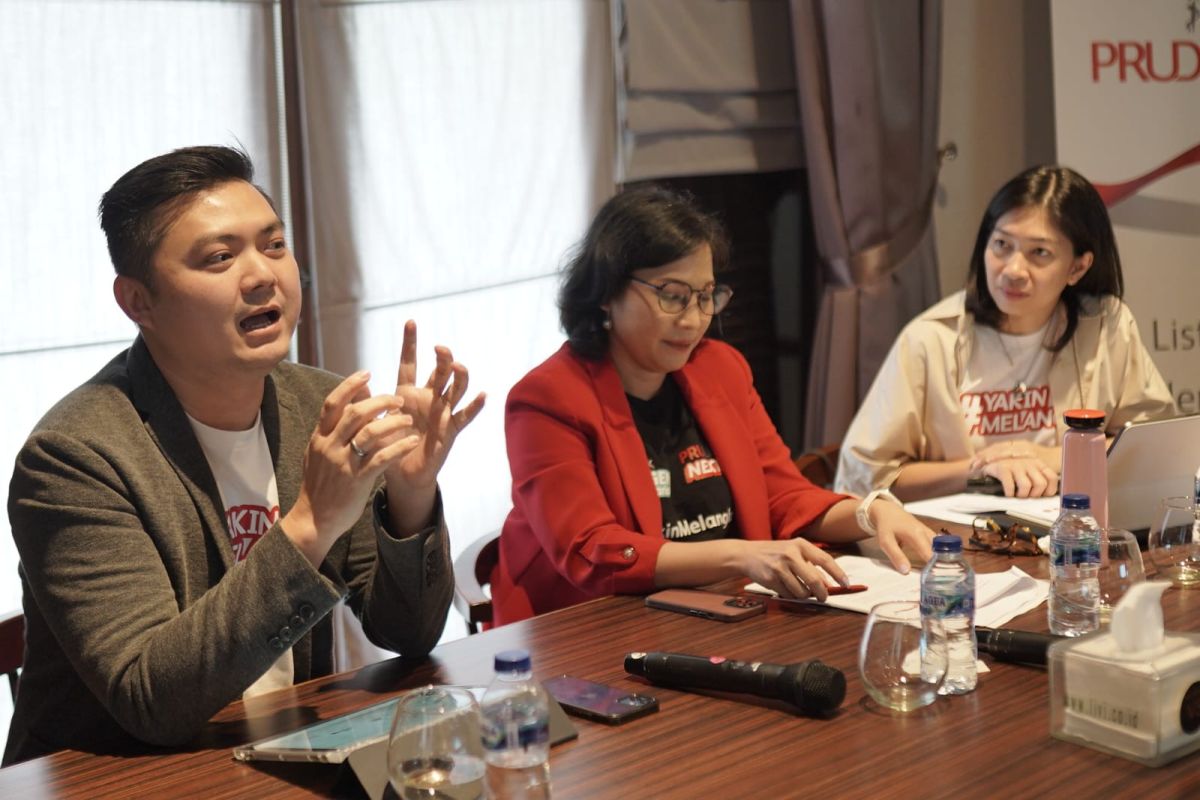
The shift in basis from own capital to core capital also forms part of the refinement of the capital framework.
Jakarta (ANTARA) — The Financial Services Authority (OJK) has stated that the phased increase in core capital is part of efforts to ensure that companies marketing investment-linked insurance products (PAYDI), also known as unit-linked products, have adequate capacity to manage these products sustainably.
“The change of basis from own capital to core capital is also part of the refinement of the capital framework. The detailed provisions in the draft OJK regulation on PAYDI are still being drawn up,” said Ogi Prastomiyono, Executive Head of Insurance, Guarantee and Pension Fund Supervision at OJK, in a written response in Jakarta on Tuesday.
OJK is currently drafting an OJK Regulation (RPOJK) on PAYDI, which contains core capital requirements for insurance companies marketing these products.
Under the draft, insurers marketing PAYDI would be required to hold core capital of at least Rp500 billion up to 31 December 2028, and Rp1 trillion after 31 December 2028. For sharia insurers, the minimum core capital would be Rp200 billion up to 31 December 2028, and Rp500 billion after that date.
Previously, the capital requirements were set out in OJK Circular Letter (SEOJK) Number 5/SEOJK.05/2022, under which companies marketing PAYDI for the first time had to hold own capital of at least Rp250 billion for conventional insurers and a minimum of Rp150 billion for sharia insurers.
Ogi explained that the strengthening of PAYDI rules is essentially aimed at ensuring that products combining insurance protection and investment elements are marketed by companies with adequate capitalisation, governance, risk management, information systems, and human resources.
“PAYDI is a relatively complex product because it carries exposure to insurance, market, operational and market conduct risks. Therefore, PAYDI is in principle intended for consumers who understand the characteristics, benefits, and risks of the product,” said Ogi.
The draft regulation also includes refinements to the naming and investment strategy of PAYDI sub-funds. Ogi said this is principally intended to clarify the characteristics and investment strategies of sub-funds so that they are easier for consumers to understand.
“This can support efforts to prevent mis-selling, although the detailed provisions are still being drafted,” he said.
In terms of performance, data as of July 2026 show PAYDI premium income reached Rp28.59 trillion, growing 21.92 per cent year on year, contributing around 25.65 per cent of the life insurance industry’s total premium income.
OJK views this growth as an indication that PAYDI still has room in the market, but it must be accompanied by product quality, suitability to consumers’ needs and risk profiles, and transparency regarding protection benefits and investment risks.
Source: jawawa.id (https://jawawa.id/newsitem/ojk-core-capital-requirement-for-unit-linked-insurance-to-ensure-companies-have-adequate-capacity-1788858083)
Originally published by Antara (Indonesian) (https://www.antaranews.com/berita/5731232/ojk-modal-inti-unit-link-untuk-pastikan-perusahaan-punya-kapasitas), translated from Indonesian