
OJK confirms banking fundamentals and intermediation remain resilient
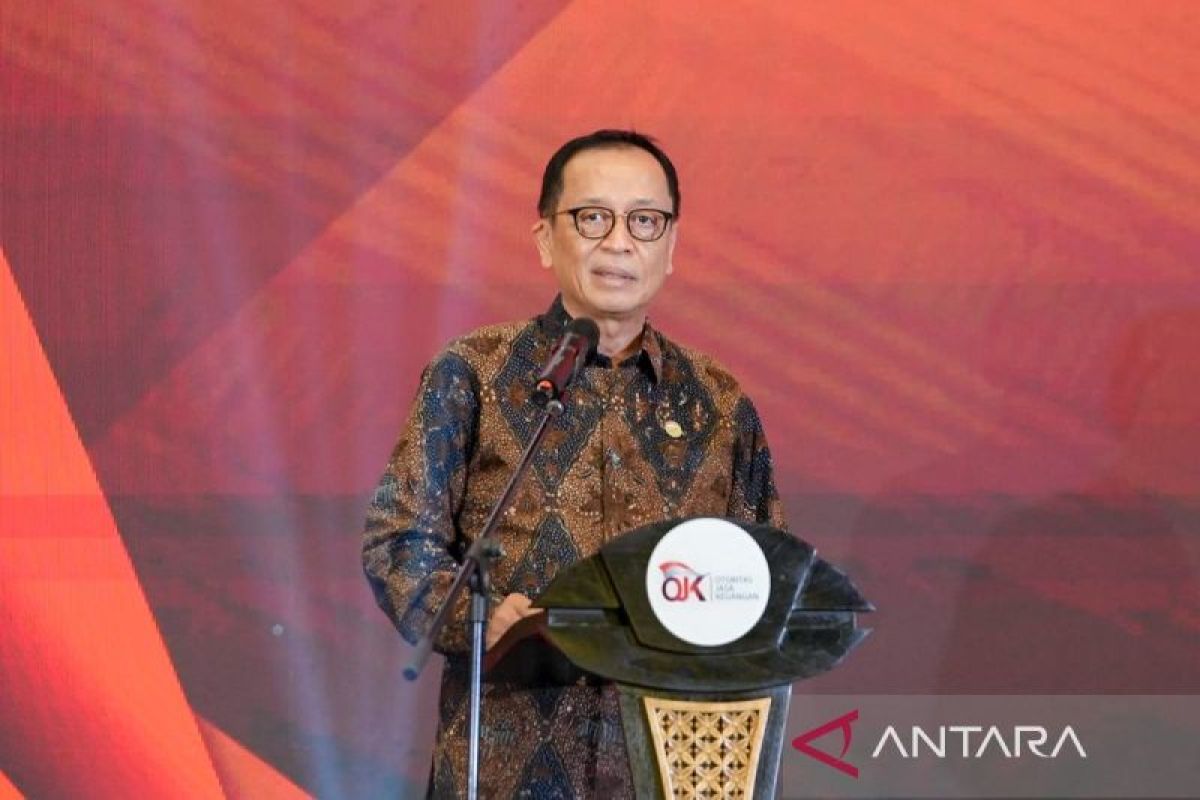
Against this backdrop, Indonesia’s economic fundamentals are considered resilient, supported by subdued inflation and a positive momentum in domestic economic growth. Jakarta — The Financial Services Authority (OJK) has stated that the fundamentals and intermediation of the banking sector remain safeguarded amid ongoing geopolitical turbulence. The conflict in the Middle East and rising oil prices have driven increased volatility in global financial markets and a stronger US Dollar Index, contributing to greater fluctuations in emerging-market exchange rates.
“Against this condition, Indonesia’s economic fundamentals are resilient, supported by controlled inflation and a high momentum of domestic economic growth,” said Dian Ediana Rae, Chief Executive of Banking Supervision at OJK, in a statement in Jakarta on Friday.
OJK continues to monitor the banking industry’s performance intensively, including watching the growth trend of Third-Party Funds (DPK) by currency type. In April 2026, DPK grew by 11.39 percent year-on-year, dominated by Rupiah-denominated DPK growth of 11.49 percent YoY. Rupiah DPK growth was driven by demand deposits up 23.25 percent YoY, savings up 7.88 percent YoY, and time deposits up 6.91 percent YoY. FX DPK grew by 10.87 percent YoY, with foreign-currency giro up 3.15 percent YoY, foreign-currency savings up 23.21 percent YoY, and FX deposits up 22.00 percent YoY. As of April 2026, the number of DPK accounts reached 667,169,152, up 7.22 percent YoY, with most still denominated in rupiah.
“Since the start of 2026, we have seen an increase in the share of FX DPK relative to total DPK. However, the FX DPK increase remains within normal limits, so the FX DPK share relative to total DPK remains relatively stable at around 15-16%,” Dian said.
The higher share of FX DPK is mainly in deposits, given that foreign-currency deposit rates offered by large banks are quite competitive to incentivise exporters to place funds domestically.
The authorities emphasise that domestic financial stability remains intact. Banking resilience is reflected in a high capital adequacy ratio (CAR) as a buffer against risks. This is supported by adequate bank liquidity, with the Loan-to-Deposit ratio (LDR) in April 2026 at 86.88%, and the Liquid/Non-Core Deposit (AL/NCD) and Liquid/DPK (AL/DPK) ratios at 111.13% and 25.39%, respectively, well above their thresholds of 50% and 10%.
Consequently, the intermediation function and foreign exchange services to the public continue to operate well. OJK also monitors and evaluates, periodically, changes in exchange rates and their impact on banking.
The Net Foreign Exchange Position (PDN) ratio for banks has consistently remained well below the maximum 20% of bank capital, indicating that direct exposure to exchange-rate risk is contained and the immediate impact of a rupiah depreciation on banking stability remains limited. However, OJK will continue to monitor potential second-round effects arising from imported inflation or cost-push inflation as global oil prices rise. Dian regards fluctuations in foreign exchange demand as part of a reasonable and measured asset diversification response.
OJK continues to strengthen policy coordination and public communication strategy with BI, LPS and the Ministry of Finance within the KSSK framework to ensure macroeconomic stability and a robust financial system in the face of global and domestic challenges to support sustainable national economic growth.