
OJK Chief Urges Banks to Assess Debtor Repayment Capacity Before Raising Interest Rates
The Financial Services Authority (OJK) has warned the banking sector to consider debtors’ repayment capacity and the potential for increased credit risk when adjusting interest rates, including for Home Ownership Loans (KPR).
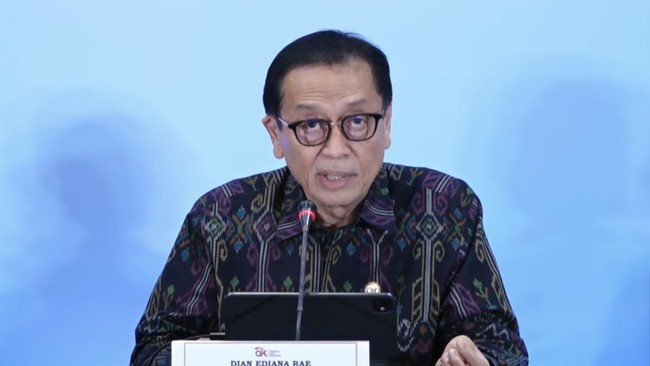
OJK Executive Head of Banking Supervision, Dian Ediana Rae, stated that up to the July 2026 period, banking interest rates have continued to rise in line with BI Rate movements. Cumulatively, from April to July 2026, the BI Rate increased by 100 bps. This was followed by a weighted average increase in Rupiah third-party funds (DPK) of 19 bps and a limited increase in Rupiah credit rates of 15 bps.
“These developments show that the transmission of the BI rate increase to credit interest rates is occurring gradually,” she noted in a written response on Monday (21/9/2026).
Dian assessed that interest rate setting at each bank depends heavily on individual bank strategies and cost structures, particularly regarding the Cost of Funds (CoF). Amid rising global interest rates and the BI Rate, adjustments in banking interest rates are essentially a response to changes in funding costs and market conditions.
“In the process, banks are expected to consider the debtors’ ability to pay and the potential for increased credit risk if credit interest rate adjustments are implemented too quickly or too aggressively,” she emphasised.
Consequently, banks are expected to maintain a balance between managing funding costs, asset quality, and the sustainability of credit distribution. Furthermore, banks need to optimise their funding strategies, particularly by increasing the proportion of low-cost funding.
This effort is considered vital to creating flexibility in setting credit interest rates, while simultaneously maintaining competitiveness and profitability amidst evolving market dynamics.
OJK continues to urge banks to implement gradual and measured interest rate adjustments to remain aligned with market dynamics and maintain financial ratio stability. Additionally, the banking sector is requested to maintain transparency and consumer protection when communicating information regarding banking products.
Banks are expected to maintain openness in product communication, including cost structures and risks, to ensure that customers can make wise financial decisions based on adequate information.
As a snapshot, the Financial Services Authority (OJK) noted that banking credit reached Rp9,135 trillion in July 2026, growing by 13.58% year-on-year (yoy). This growth increased compared to June 2026, which stood at 12.67% yoy.
However, this credit expansion has not yet shown significant pressure on asset quality. The gross NPL ratio was recorded at 2.10%, a slight increase from 2.09% in June 2026. Meanwhile, the net NPL actually improved to 0.81% from 0.82%. Loan at Risk (LAR) also declined to 8.39% from 8.47% in the previous month.
Source: jawawa.id (https://jawawa.id/newsitem/ojk-chief-urges-banks-to-assess-debtor-repayment-capacity-before-raising-interest-rates-1789991559)
Originally published by CNBC Indonesia (https://www.cnbcindonesia.com/market/20260921153702-17-769629/bos-ojk-minta-bank-cek-kemampuan-debitur-sebelum-naikkan-bunga-kredit), translated from Indonesian