
OJK Chief Details Six Major Challenges in Combating Online Gambling
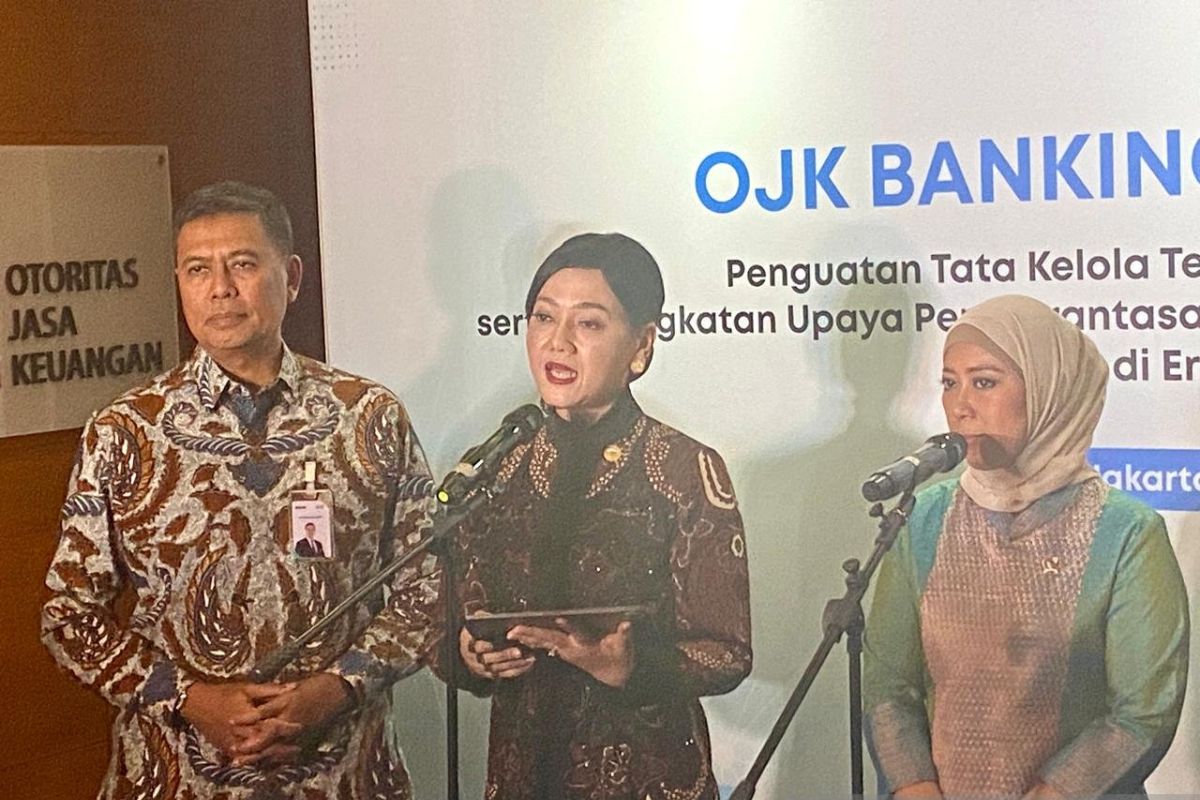
The Chair of the Board of Commissioners of the Financial Services Authority (OJK), Friderica Widyasari Dewi, has revealed six major challenges that remain obstacles in the handling and eradication of online gambling activities. According to her, the first challenge is that gambling sites continue to emerge with different domains and change very quickly after being blocked. ‘This is similar to what the PASTI Task Force has conveyed. The sites we shut down, both related to illegal online lending and online gambling, reappear with new names very quickly,’ she said at the OJK Banking Forum 2026 in Jakarta. Through cooperation with law enforcement, Friderica noted that several perpetrators have been successfully arrested, prosecuted, and sentenced to prison. However, the majority of operators are based overseas, making eradication efforts difficult to achieve in a short time.
The second challenge is the use of digital domains, intermediary accounts, and transactions via physical agents, which makes the flow of funds increasingly difficult to trace. This condition exacerbates the challenge of detecting suspicious financial transactions. The third challenge is the increasing prevalence of online gambling activities controlled by transnational crime syndicates. ‘We have seen how the Police are cooperating with Interpol and law enforcement in various countries. We also see quite a number of Indonesian citizens involved in these criminal networks abroad,’ Friderica said.
The fourth challenge is the limited integration of various data sources, which complicates the preparation of a comprehensive analysis. The fifth challenge is the existence of gambling practices influenced by social and cultural factors in certain regions. The sixth challenge is the uneven level of public literacy. ‘Therefore, it is our shared duty to improve public literacy. Moreover, under the P2SK Law, you in the banking sector are also tasked with providing literacy to the public. This can be a very useful tool to protect the public from becoming victims of various schemes, whether online gambling or illegal online lending,’ she explained.
She stressed that the state must have a dynamic legal foundation so that every institution can act quickly and effectively. Law Number 4 of 2026 has given a mandate to the Task Force to prevent the use of technological innovation for online gambling activities. This mandate, she said, serves as a strategic umbrella for strengthening national collaboration. She also explained that in many digital fraud cases, perpetrators do not simply hack banking systems but exploit user weaknesses through social engineering. Many customers voluntarily provide sensitive information such as passwords, PINs, and OTP codes to perpetrators, meaning the cases occur not because the bank’s system was hacked, but because the victim was manipulated. ‘Therefore, it is our shared responsibility to equip your customers so they are not easily hacked through social manipulation. Every rupiah they are about to send must be thought through carefully. Is this transfer really necessary? Is the recipient legitimate? And so on,’ she clarified.
Furthermore, the OJK has issued OJK Regulation (POJK) Number 24 of 2025 concerning the Management of Commercial Bank Accounts. In addition, the OJK is strengthening the implementation of customer due diligence (CDD) and enhanced due diligence (EDD) to improve customer protection and maintain the security of the banking sector. As of May 2026, the OJK recorded 2.8 million rejections of business relationships with prospective customers, 51,200 terminations of business relationships with customers indicated to be linked to online gambling, and 32,453 accounts blocked following the EDD process. ‘Once again, we emphasise that collaboration is the key to cutting off the flow of funds used for scams and online gambling,’ Friderica stated.