
OJK Caps Single-Party IDX Ownership at 5% Under Demutualization Plan
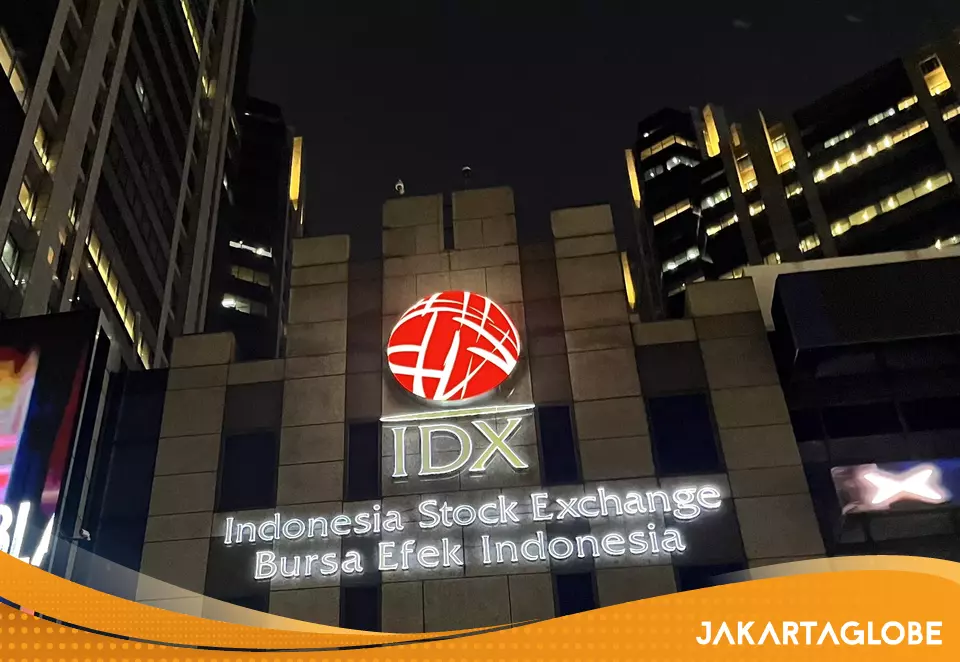
OJK Caps Single-Party IDX Ownership at 5% Under Demutualization Plan
Jakarta. The Financial Services Authority (OJK) is preparing to cap individual ownership of Indonesia Stock Exchange (IDX) shares at 5% as part of a planned demutualization that would open the bourse’s ownership to non-member investors while maintaining regulatory safeguards.
Ownership above the 5% threshold would still be possible with prior OJK approval, provided the shareholder meets requirements and can demonstrate that the larger stake would contribute to the development of the exchange.
OJK Capital Market, Derivatives and Carbon Exchange Supervision Chief Executive Hasan Fawzi said the draft regulation on stock exchange shareholders has entered the harmonization stage with the Law Ministry.
“The regulation has undergone harmonization with the Ministry of Law and is now awaiting the completion of that process before it can be stipulated by the OJK chairman and promulgated,” Hasan told reporters on Wednesday.
The draft regulation is one of the key legal foundations for IDX’s demutualization, which would separate exchange ownership from membership while establishing a broader ownership structure.
Before entering the harmonization stage, OJK discussed the draft with stakeholders including the Finance Ministry, Bank Indonesia, state investment manager Danantara, the Association of Indonesian Securities Companies, the Indonesian Issuers Association, and the Indonesian Mutual Fund and Investment Association.
Under the proposed structure, each IDX share would carry one vote. OJK would also have the authority to automatically revoke a shareholder’s voting rights if the shareholder is declared bankrupt or receives a serious legal sanction.
5% ownership threshold
Hasan said a single party, whether directly or indirectly, would in principle be allowed to own no more than 5% of the exchange’s shares.
Stakeholders seeking to exceed the threshold would have to obtain OJK approval and submit the required documentation.
“A party holding more than 5% of the stock exchange’s shares must provide added value to the development of the stock exchange,” Hasan said.
He said the ownership framework takes into account practices in several international markets, including South Korea, India, Singapore and Hong Kong, where ownership above certain thresholds can also be permitted subject to regulatory approval.
The restriction is intended to prevent a single shareholder from gaining excessive influence over the exchange’s decision-making process.
“Restrictions on stock exchange share ownership are intended to prevent domination by one party and concentration of ownership, as this could allow that party to intervene, reject policies or obstruct the exchange’s decision-making process,” Hasan said.
The proposed rules would also allow IDX to issue new shares and resell shares it has purchased as part of the demutualization process. The exchange could eventually conduct an initial public offering, subject to OJK approval.
Ownership separated from membership
Demutualization would also break the traditional link between owning shares in the exchange and being a member of the bourse.
Under the proposed rules, stock exchange share ownership would be separated from exchange membership. IDX would remain prohibited from granting trading access to parties that are not exchange members, while exchange members could not transfer trading access to other parties outside the applicable rules.
The draft regulation would also separate IDX’s regulatory, supervisory and commercial functions.
IDX would be required to assign directors overseeing regulatory functions separately from those responsible for business and supervisory functions. The exchange would also have to establish information barriers and operational policies to prevent information from its regulatory, licensing, supervisory and compliance-monitoring units from flowing into its business units.
The new structure could allow non-member institutions, including the Finance Ministry, Bank Indonesia and Danantara, to hold IDX shares, as permitted under Article 8B of Law No. 4/2026.
Hasan stressed that government ownership would not change OJK’s role as the independent regulator of the exchange.
“Ownership of the stock exchange by parties other than exchange members must not interfere with OJK’s independence in supervising the stock exchange,” he said.
OJK would remain the sole regulator overseeing IDX, with no overlap in supervisory authority. IDX’s directors and commissioners would also remain subject to independence requirements, while their appointment and fit-and-proper assessments would continue to be conducted by OJK.
Shareholders, directors and commissioners would remain subject to all capital market regulations. IDX’s annual work plan and budget would also require OJK approval before implementation.
The proposed rules would allow IDX to distribute dividends to shareholders, but dividend payments would have to take into account the exchange’s need to build operational reserves and fund its development.
IDX would be required to establish and replenish its reserve fund annually, with the amount approved at a general meeting of shareholders. Plans for reserve allocations and their use would then have to be submitted to OJK through IDX’s annual work plan and budget.
Tags: Keywords: