
OJK: Capital Market Reform Is a Long-Term Commitment to Protect Trust
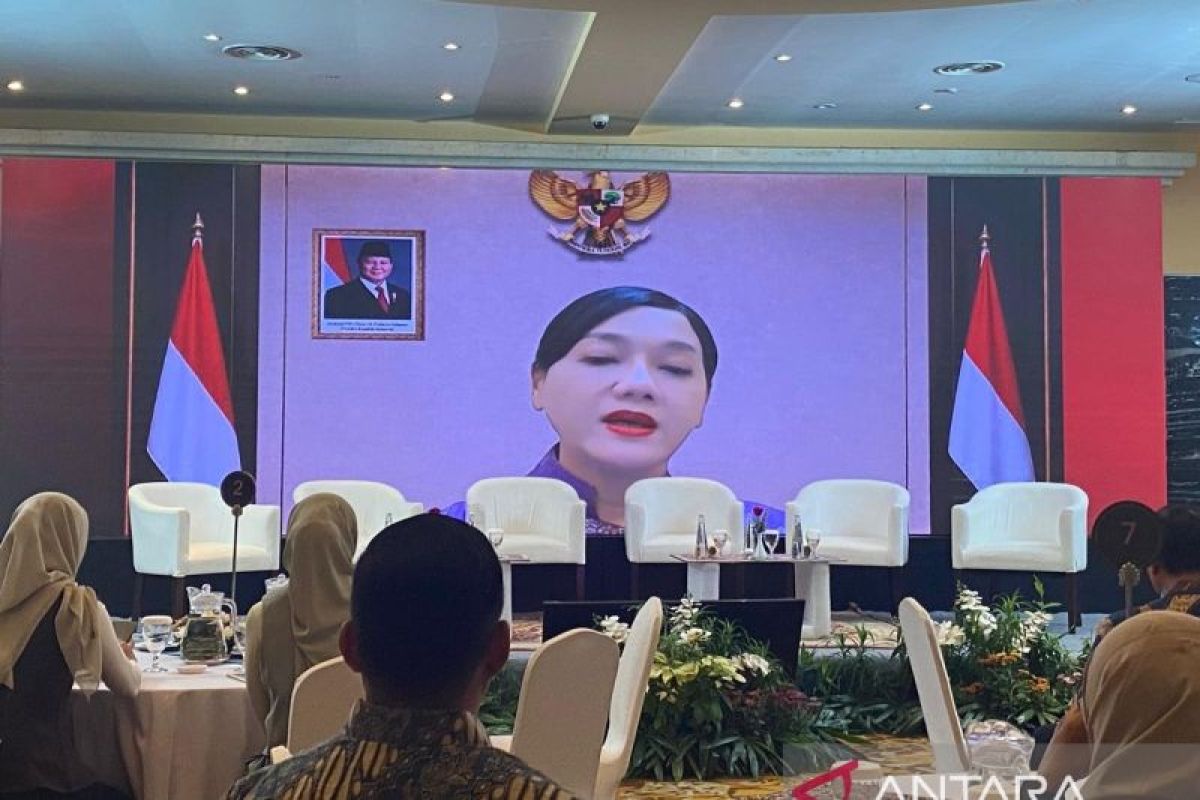
Jakarta (ANTARA) – The Financial Services Authority (OJK) said Indonesia’s capital-market reform was not merely a response to demands from index providers, but a long-term commitment to making the capital market a safe, comfortable and trusted home for all investors.
OJK Board of Commissioners Chairwoman Friderica Widyasari Dewi said that, in terms of law enforcement, fines totalling Rp2.1 trillion imposed on several listed companies were the largest in the history of Indonesia’s capital market.
“Law enforcement will continue to be carried out firmly and without discrimination, including through criminal proceedings,” Friderica said at the CORE Economic Outlook 2027 event in Jakarta on Thursday.
Friderica said Indonesia’s capital market was performing positively. As of 24 September 2026, the Jakarta Composite Index (IHSG) had risen 3.65 per cent month to date, with its movements increasingly aligned with those of other major indices.
OJK believes the Indonesian capital market still has considerable potential to strengthen on the back of solid listed-company performance, rising participation by domestic investors and competitive dividend yields in the region. The number of investors in Indonesia has reached 34 million, measured by Single Investor Identification (SID) accounts.
OJK and the Self-Regulatory Organisations (SROs), including the Indonesia Stock Exchange (BEI), the Indonesian Clearing and Guarantee Corporation (KPEI) and the Indonesian Central Securities Depository (KSEI), are accelerating reforms to the integrity of Indonesia’s capital market by strengthening transparency, governance, market integrity and law enforcement.
Concrete measures include publishing shareholdings above 1 per cent, increasing the granularity of investor categories, establishing an independent High Shareholding Concentration (HSC) committee and refining related methodologies.
Beyond capital-market reform, OJK is continuing to promote deeper financial markets and develop new sources of economic growth through three strategic initiatives.
First, it is strengthening the carbon market by developing the Carbon Unit Registry System (SRUK) to enable carbon trading that is transparent, credible and integrated with global markets.
Second, it is developing a mineral and strategic commodities exchange (BMKS) to establish domestic price benchmarks, improve trading transparency and maximise the value added from national commodities.
The new mandate is set out in the 2026 P2SK Law, under which OJK will regulate and supervise the mineral and strategic commodities exchange.
Third, OJK is developing the bullion ecosystem to support downstream gold processing and broaden investment-financing alternatives. Transactions have reached Rp73 trillion, with 1.6 million accounts.
“These three initiatives are expected to further strengthen the role of the financial services sector as a catalyst for economic growth and increased domestic value added,” Friderica said.
She also highlighted three challenges for 2027, one of which is strengthening the resilience and stability of the financial sector amid global uncertainty.
The other priorities are improving the quality of financial intermediation towards productive sectors and micro, small and medium-sized enterprises (MSMEs), while maintaining prudential principles; and accelerating financial-market deepening through stronger market integrity, innovation, digitalisation and consumer protection.
“Achieving this entire agenda will, of course, require synergy and collaboration among all parties,” Friderica said.
Source: jawawa.id (https://jawawa.id/newsitem/ojk-capital-market-reform-is-a-long-term-commitment-to-protect-trust-1795679725)
Originally published by Antara (Indonesian) (https://www.antaranews.com/berita/5879795/ojk-reformasi-pasar-modal-komitmen-jangka-panjang-untuk-jaga-trust), translated from Indonesian