
OJK: Banks Close 51,200 Accounts Linked to Online Gambling
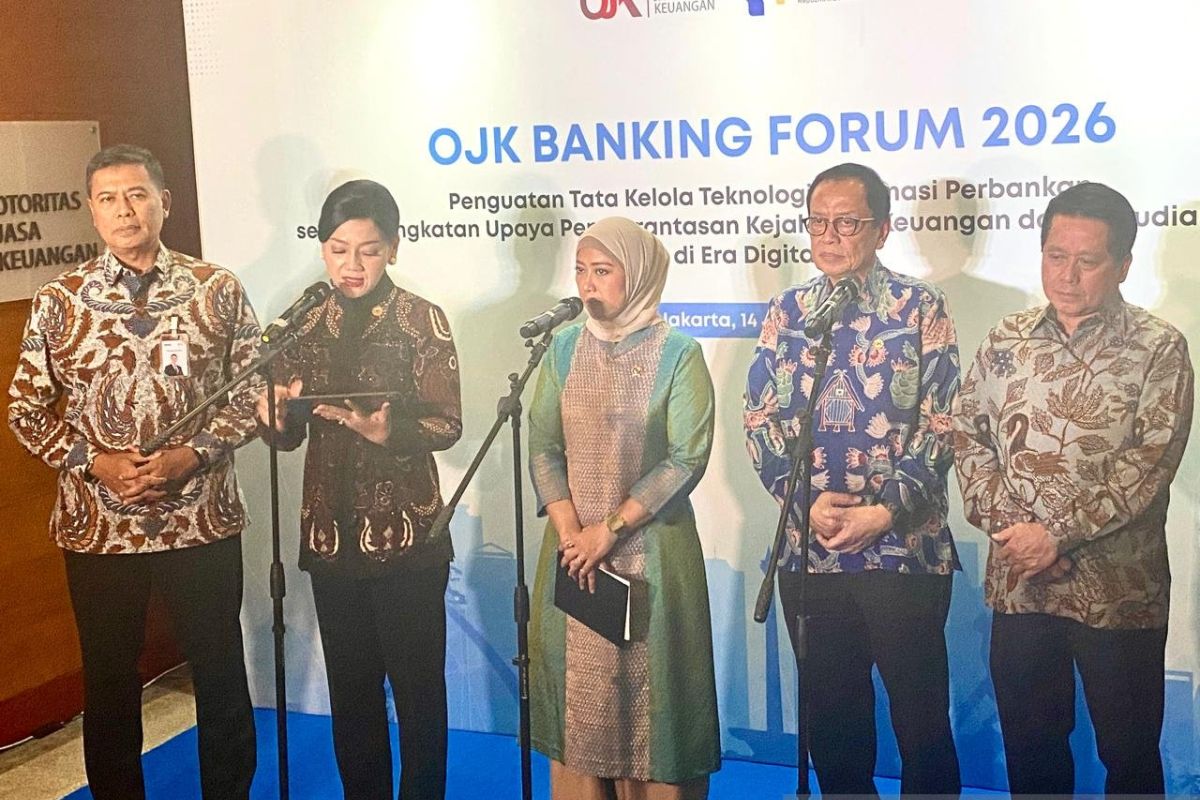
The Financial Services Authority (OJK) has revealed that banks have terminated business relationships with 51,200 customers due to transactions identified as being linked to online gambling activities, based on provisional data up to May 2026. In addition, during the same period, banks rejected business relationships with around 2.8 million prospective customers. OJK Chief Executive of Banking Supervision Dian Ediana Rae stated that the provisional data is the result of ongoing risk-based supervision. This supervision is conducted through compliance audits, requests for refinement of online gambling transaction detection parameters, the preparation of sectoral risk assessments, and strengthening industry capacity in implementing customer due diligence (CDD) and enhanced due diligence (EDD). Dian noted that this strengthened risk-based supervision is one of the main steps continuously undertaken by the OJK and the banking industry in efforts to eradicate online gambling. The OJK has also strengthened the implementation of the Anti-Money Laundering, Counter-Terrorism Financing, and Counter-Proliferation Financing of Weapons of Mass Destruction (APU, PPT, and PPSPM) programme through OJK Regulation Number 8 of 2023. Furthermore, the OJK has enhanced coordination and handling of accounts related to online gambling. Based on recommendations from the Ministry of Communication and Digital Affairs (Komdigi), the OJK has requested banks to conduct EDD and follow up by blocking accounts and submitting Suspicious Transaction Reports (LTKM) to the Financial Transaction Reports and Analysis Centre (PPATK) if accounts show indications of being used for online gambling. “In relation to this, after going through the EDD process, 32,453 accounts have been blocked,” Dian said. He mentioned that LTKM reports with indications of predicate crimes of gambling from all banks in Indonesia to PPATK have shown increasingly significant data in recent years. On one hand, this reflects the commitment and contribution of banks to eradicating online gambling practices. On the other hand, it also shows the magnitude of the challenges still faced in eradicating online gambling. LTKM reports for indications of gambling predicate crimes in 2025 showed a significant increase of 260.03 percent. This, Dian said, is in line with the significant increase in the contribution of gambling predicate crime indications to the total predicate crime indications, from 18.37 percent in December 2024 to 48.83 percent in December 2025. The increase in gambling predicate crime indications during that period is assessed to have continued into this year. Up to the first quarter of 2026, Dian stated that gambling predicate crime indications accounted for 35.28 percent of total LTKM reports. Dian cautioned that the statistical data resulting from reports submitted by banks to PPATK potentially indicates threats to social stability, family resilience, national productivity, and the integrity of the financial system. “Therefore, its handling certainly cannot be done sectorally and requires a comprehensive, integrated approach based on national collaboration,” he said. He also emphasised that the OJK will continue to encourage banks to increase the effectiveness of online gambling eradication through action against accounts indicated for use in online gambling, strengthening fraud detection systems (FDS) and transaction monitoring, and educating the public about the dangers of online gambling and account trading. Dian added that the OJK also understands that KBMI 4 and KBMI 3 banks face greater challenges in eradicating online gambling because they have larger business scales, transaction volumes, and customer bases compared to other bank groups. “However, we observe that these banks have essentially undertaken various efforts to increase the effectiveness of online gambling eradication, both by increasing the closure of business relationships with customers, rejecting business relationships with prospective customers, and significantly increasing reporting to PPATK as a result of the EDD conducted,” Dian said.