
OJK Assures Oversight Unchanged Amid Stock Exchange Demutualisation
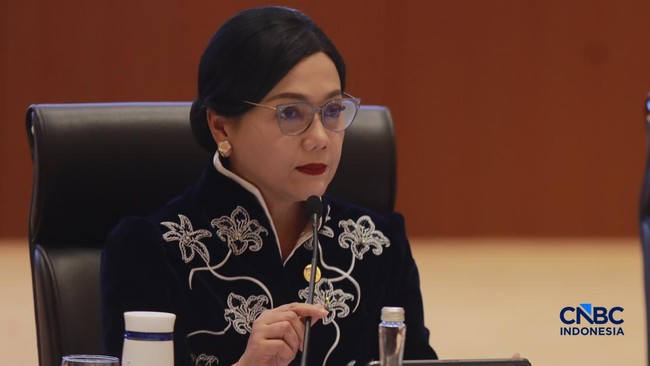
Jakarta, CNBC Indonesia — The Financial Services Authority (OJK) has stressed that the demutualisation process of the Indonesia Stock Exchange (IDX) will not reduce the regulator’s authority to oversee and supervise the stock exchange. Chair of the OJK Board of Commissioners, Friderica Widyasari Dewi, stated that the IDX’s demutualisation is a strategic step to strengthen the institution while enhancing the competitiveness of the Indonesian capital market. “In the implementation of this demutualisation, including if the stock exchange’s shares are owned by other parties such as the Ministry of Finance, Bank Indonesia, and Danantara as mentioned in the law, one thing that is certainly a concern for all of us is that the independence of the stock exchange will remain a principle that we must uphold together,” Friderica said during a joint press conference regarding the Draft State Budget and Financial Note for Fiscal Year 2027 on Friday (14/8/2026). She asserted that changes to the ownership structure of the exchange through demutualisation would not alter the OJK’s position as the capital market regulator. “We need to emphasise that demutualisation does not reduce the OJK’s authority to regulate and supervise the stock exchange,” she said. Friderica stated that the OJK would continue to carry out its regulatory and supervisory functions fully to ensure the Indonesian capital market operates transparently and accountably, in accordance with statutory provisions. She added that this supervision would also continue to prioritise market stability and integrity, including investor protection, especially for retail and minority investors. On the other hand, the OJK sees demutualisation as providing greater scope for the IDX to strengthen its institutional capacity and improve operational efficiency. Through demutualisation, the exchange is expected to be able to conduct a comprehensive evaluation of its institutional structure, operational mechanisms, financial condition, trading infrastructure, and other supporting infrastructure. This institutional strengthening is also expected to encourage an increase in the IDX’s capacity and technological resources. Consequently, the exchange is considered capable of having better operational resilience in facing various risks, particularly those related to the reliability, security, and continuity of trading infrastructure. Furthermore, demutualisation is expected to broaden the IDX’s access to capital sources, strengthen competitiveness, and accelerate the adoption of global best practices. One of the main principles in demutualisation is the clear separation between the ownership of stock exchange shares and trading access rights as an exchange member. According to Friderica, this separation is expected to strengthen governance, enhance professionalism and objectivity in decision-making, and minimise potential conflicts of interest. “So this is truly to improve governance and risk management,” Friderica said. With these changes, the OJK hopes that the integrity of and trust in the Indonesian capital market will increase further, while the IDX’s independence is maintained despite changes in its ownership structure.