
OJK and SROs Strengthen Transparency to Boost Investor Confidence in Capital Market
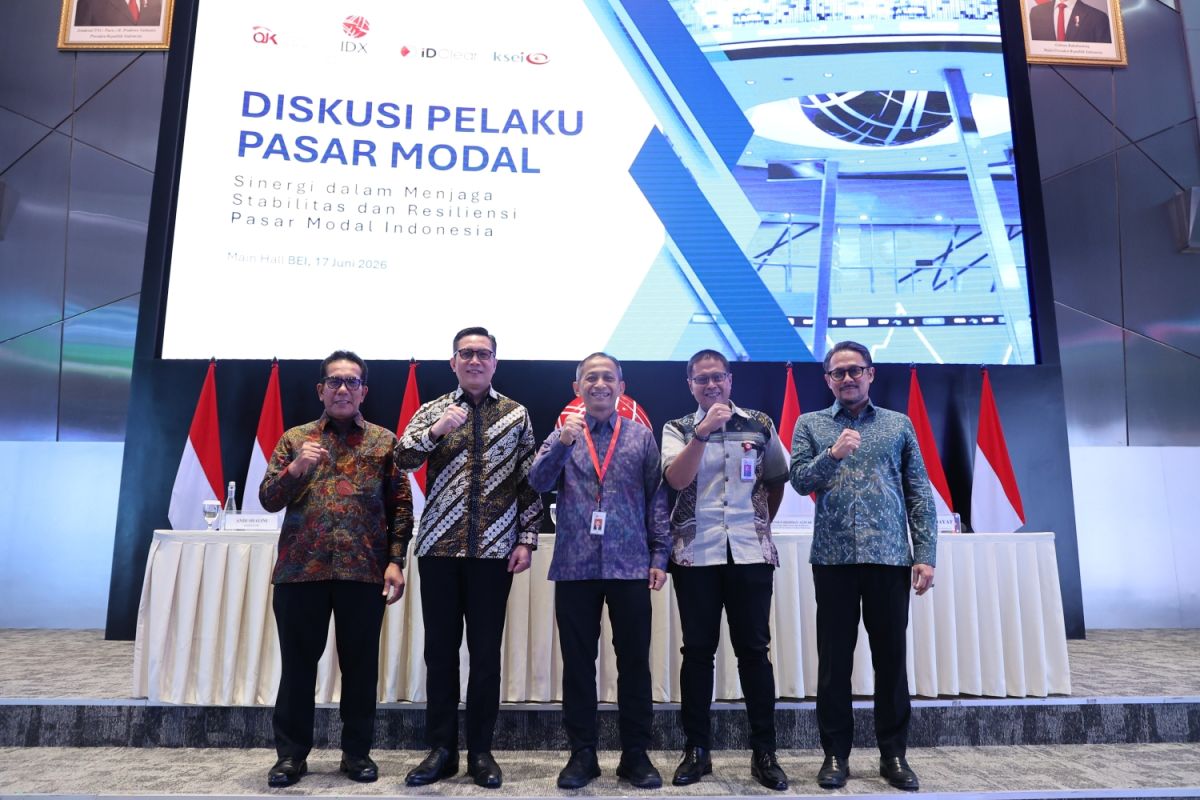
The synergy between regulators, SROs, industry players, and investors is key to maintaining stability while strengthening the competitiveness of Indonesia’s capital market going forward.
Jakarta (ANTARA) - The Financial Services Authority (OJK) together with Self-Regulatory Organizations (SROs), which include the Indonesia Stock Exchange (BEI), the Indonesian Clearing and Guarantee Corporation (KPEI), and the Indonesian Central Securities Depository (KSEI), are pushing for strengthened reform and transparency to boost investor confidence in the Indonesian capital market.
In this context, OJK and SROs held two strategic forums titled “Synergy Discussion in Maintaining Stability and Resilience of the Indonesian Capital Market” and “Capital Market Insight: Buyback Regulations and Market Update.”
OJK Deputy Commissioner for Issuer Supervision, Securities Transactions, Special Examinations, Derivative Finance, and Carbon Exchange, Khairul Muttaqien, speaking at the BEI building in Jakarta on Thursday, affirmed the commitment to continuously strengthen the integrity and competitiveness of the Indonesian capital market through a structured and sustainable reform agenda.
“The reform includes increasing transparency of share ownership data, strengthening more granular investor classification, implementing High Shareholding Concentration announcements, raising the minimum free float requirement to 15 percent, and strengthening supervision and law enforcement in the capital market,” Khairul stated.
Khairul explained that reform is a necessity to strengthen the foundation of the Indonesian capital market and increase investor confidence in the long term.
Acting BEI President Director Jeffrey Hendrik said the current market conditions represent an important momentum to strengthen collaboration among all stakeholders in maintaining investor confidence and accelerating capital market reform. Amid global market dynamics, he assured that the foundation of the Indonesian capital market remains strong, with maintained market liquidity, increasing domestic investor participation, and the majority of listed companies still showing positive performance.
“Therefore, synergy between the regulator, SROs, industry players, and investors is key to maintaining stability while strengthening the competitiveness of the Indonesian capital market going forward,” Jeffrey said.
KPEI Director Antonius Herman Azwar stated that broad capital market infrastructure connectivity with financial institutions, both domestic and global, plays an important role in encouraging market deepening and increasing transaction activity. Beyond efficiency, he continued, strengthening connectivity also serves as a foundation for creating a capital market ecosystem that is more integrated, liquid, and competitive with global markets.
Through its role as a Central Counterparty, KPEI ensures that risk management complies with international standards and that collateral management is carried out in an integrated manner, thereby enhancing security and settlement certainty to maintain investor confidence. “KPEI also conducts various business developments to provide supporting products and services that can be integrated with global markets,” Antonius said.
KSEI President Director Samsul Hidayat said the resilience of the Indonesian capital market cannot be separated from the strength and trust of the maintained domestic investor base. “KSEI is committed to continuously strengthening the transparency and quality of share ownership data to be more granular and reliable, as part of the support for the Capital Market Integrity Reform Acceleration Action Plan run jointly with OJK and SRO,” Samsul said.
As of 12 June 2026, the number of capital market investors recorded at KSEI reached 28.3 million, with asset ownership dominated by local investors. As of the same period, the average daily transaction value for shares reached Rp24.7 trillion, with the total number of capital market investors exceeding 28 million and stock investors reaching 9.8 million. The majority of listed companies also recorded positive financial performance, with around 80 percent posting profits in the first quarter of 2026.