
OJK and ILO Launch Enterprise Resource Planning to Boost Dairy Farmer Financing Access
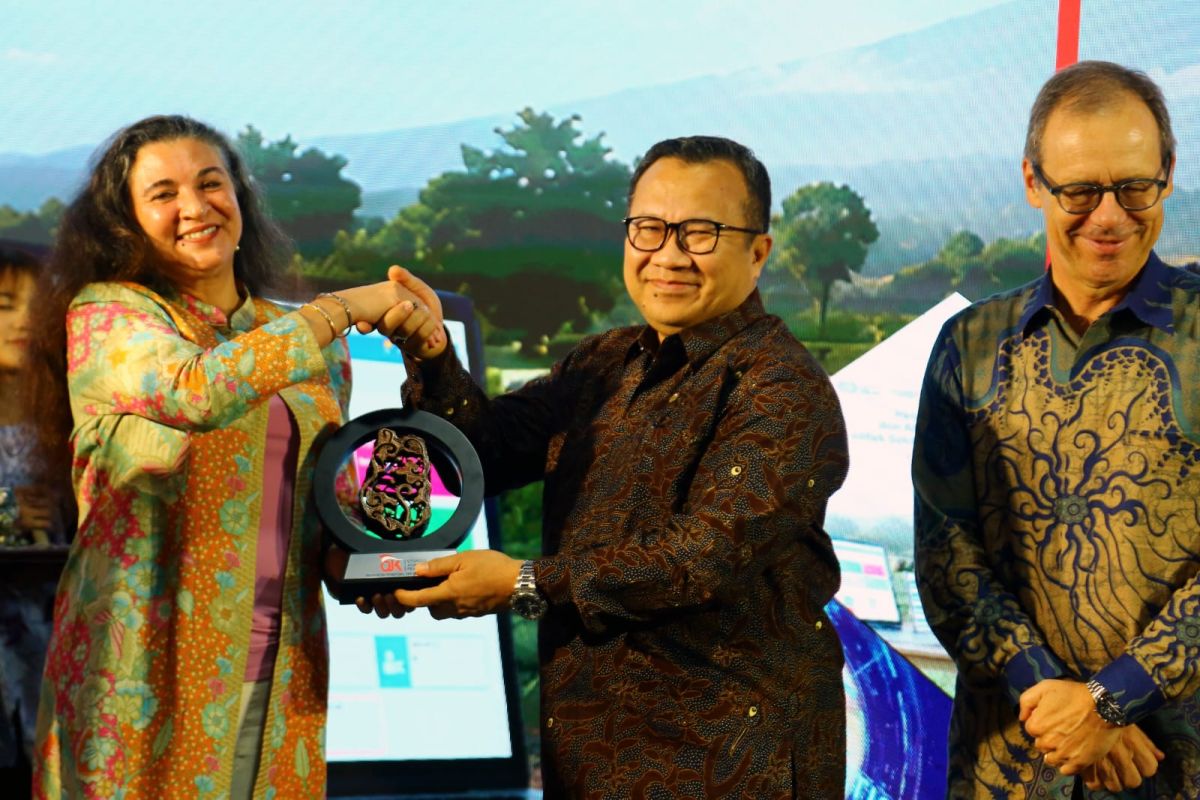
The Financial Services Authority (OJK) together with the International Labour Organization (ILO) have improved access to formal financing for dairy farmers through the launch of an Enterprise Resource Planning (ERP) system and an inclusive financial access programme in East Java. The programme is designed to overcome financing access barriers that farmers have faced due to limited business data, while simultaneously encouraging digitalisation and strengthening a more productive and sustainable dairy farming ecosystem. The event, held at the Agro Niaga Cooperative (KAN) Jabung in Malang Regency, East Java, on Thursday (11/06), is part of the implementation of the PROMISE 2 IMPACT programme. This is a collaboration between the ILO, the Coordinating Ministry for Economic Affairs, and the OJK, supported by the Swiss Government through the State Secretariat for Economic Affairs (SECO), to expand financial access, promote digitalisation, strengthen business value chains, and improve the quality and sustainability of MSMEs in Indonesia. OJK’s Chief Executive for the Supervision of Financial Sector Technology Innovation, Digital Financial Assets, and Crypto Assets (IAKD), Adi Budiarso, stated that the programme was born from the need to address real challenges faced by farmers in accessing formal financing. “We received reports that farmers often face obstacles in accessing formal financing due to information asymmetry, including a lack of valid data, unclear business profiles, inconsistent production capacity, and poorly documented financial conditions,” Adi said. Recognising this, the OJK through the OJK Infinity Innovation Centre together with the ILO established a strategic collaboration via the PROMISE 2 IMPACT programme. The programme also aims to encourage MSME development so they can contribute more significantly to sustainable grassroots economic growth. The dairy ecosystem digitalisation programme is built on two main foundations: strengthening a sustainable business ecosystem and building reliable digital infrastructure. Through the ERP system, cooperative production, financial, and operational data can be documented more systematically and in real time, providing a more accurate picture of production capacity, business quality, and farmers’ financial conditions. Adi explained that integrating the ERP with Alternative Credit Scoring (PKA) services and Financial Service Aggregation Providers (PAJK) is a crucial step in bridging farmers with the formal financial services ecosystem. “Through the data generated by this ERP system, alternative credit scoring can build farmers’ credit profiles more objectively, accurately, and inclusively. Together with Financial Service Aggregation Providers, this system becomes a bridge connecting smallholder farmers with the formal financial services ecosystem more comprehensively and according to their needs,” Adi clarified. ILO Director for Indonesia and Timor-Leste, Simrin Singh, conveyed that digital transformation plays an important role in strengthening business resilience and expanding economic access for communities. “Digitalisation can increase productivity, expand access to financing, strengthen business resilience, and create better job opportunities. This partnership demonstrates how innovation, public policy, and multi-stakeholder collaboration can work together to ensure more inclusive economic growth,” Simrin said. Meanwhile, Swiss Ambassador to Indonesia, Timor-Leste, and ASEAN, H.E. Olivier Zehnder, affirmed that strengthening local business actors is a crucial foundation for sustainable economic development. “Switzerland believes that sustainable economic growth must start from strengthening local business actors. When farmers have better access to information, technology, and financial services, they have greater capacity to invest, increase productivity, and contribute to regional economic development. We are proud to support partnerships that produce real impact for communities,” Olivier said. East Java Provincial Secretary Adhy Karyono, representing the Governor of East Java, stated that the dairy sector has a strategic role in supporting national food security while driving the regional economy. “Strengthening the dairy sector is not only about increasing milk production, but also about improving farmer welfare, strengthening cooperatives, and building a more resilient rural economy. Through digitalisation and expanding financial access, we are building a new foundation for the growth of a more modern, productive, and competitive livestock sector,” Adhy explained. The launch marked the successful development of the ERP system integrated with Alternative Credit Scoring (PKA) services at three priority dairy cooperatives in East Java: Agro Niaga Cooperative (KAN) Jabung, Setia Kawan Dairy Farmer Cooperative (KPSP), and KPUD Tani Wilis, collectively covering more than 10,000 cooperative members. The event was attended by Malang Regent H. Sanusi, Deputy for Coordination of Community Economic Empowerment and Migrant Worker Protection at the Coordinating Ministry for Community Empowerment Leontinus Alpha Edison, Acting Head of the OJK Office for East Java Province Horas V.M. Tarihoran, Head of OJK Malang Farid Faletehan, Head of OJK Jember Aris Budiman, as well as representatives from ministries, agencies, local governments, cooperatives, and the financial services industry. As a follow-up to the programme launch, OJK held a Focus Group Discussion (FGD) with stakeholders to support the expansion of programme implementation throughout East Java. The successful implementation in the three cooperatives is expected to become a model that can be replicated in various other regions.