
OJK: 557,751 Accounts Blocked as of June Amid Financial Scam Crackdown
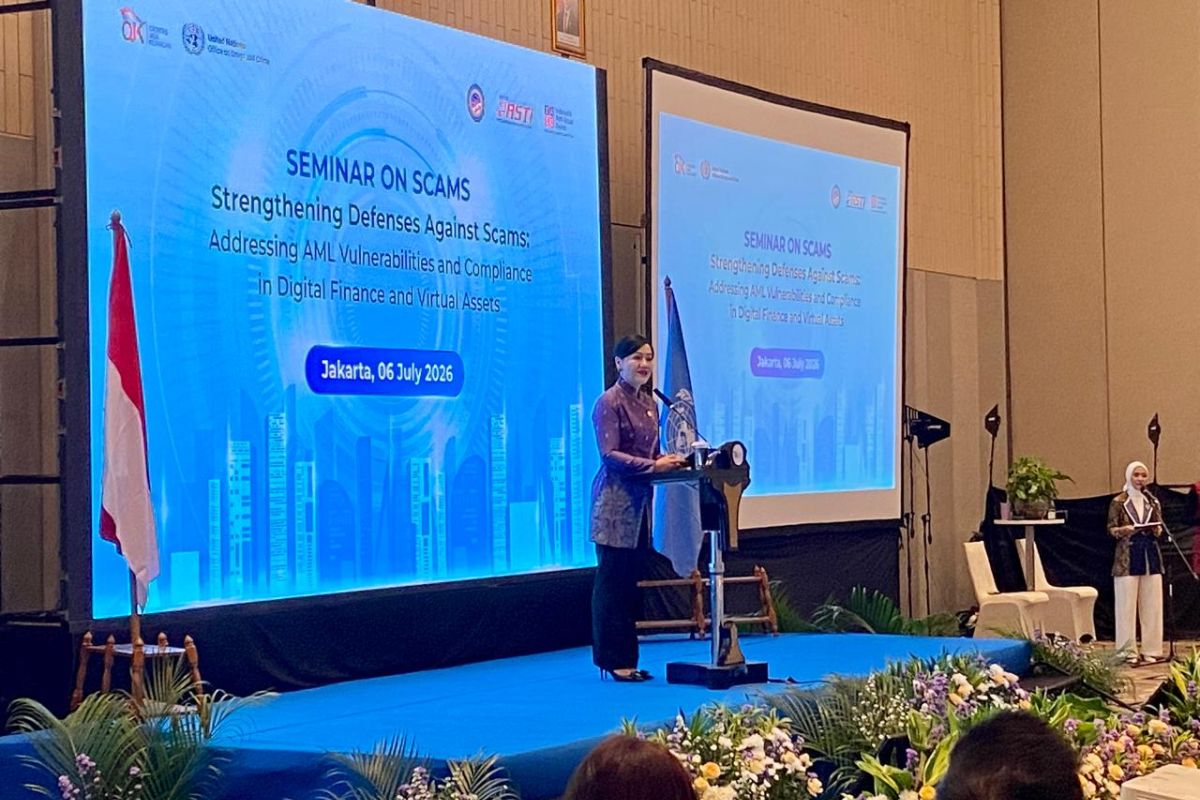
The Financial Services Authority (OJK) has revealed that 557,751 accounts have been blocked out of a total of 608,168 reported by victims to the Indonesia Anti-Scam Center (IASC) since November 2024 until the end of June 2026. The total amount of victims’ funds that have been blocked or secured is recorded at Rp674.1 billion, while the amount returned to victims stands at Rp196.93 billion. “I believe this figure is just the tip of the iceberg because not all victims report that they have been scammed,” said Friderica Widyasari Dewi, Chair of the OJK Board of Commissioners, in Jakarta on Monday. Friderica assessed that many victims are reluctant to report cases due to embarrassment or feeling it is inappropriate to be a victim, including those working in the financial sector. She noted that this indicates the recorded number of cases is likely far below the actual situation. She also stressed that the significant amount of funds secured through IASC coordination demonstrates that swift action can protect consumers. However, once funds have been split, transferred, converted, or moved abroad, the chances of recovery become much smaller. From an anti-money laundering (APU) perspective, Friderica explained that fraudulent practices generally exploit money mules, nominee accounts, various payment channels, merchants and sub-merchants, virtual assets, and cross-border networks. These various channels can conceal perpetrators, disguise the origin of funds, and complicate the tracking of illegal financial transactions. Therefore, APU is not merely a compliance obligation but also a defence mechanism to cut off the flow of fraudulent proceeds. Friderica added that implementing robust customer due diligence, identifying beneficial owners and controlling parties, monitoring transactions, and reporting suspicious transactions in a timely manner are crucial steps to prevent misuse of the financial system. The OJK views that four aspects need continuous strengthening: governance and compliance, effectiveness of customer due diligence, technology-based monitoring and detection, and prevention efforts. “These four priorities must be supported by strong partnerships to enable the strengthening of data exchange, intelligence exchange, and cross-sector and cross-border coordination,” said Friderica. Furthermore, the OJK emphasised four steps that need to be strengthened collectively: accelerating and streamlining information exchange, improving the quality of intelligence exchange, speeding up the blocking of accounts and assets, and building capacity and knowledge sharing among stakeholders. The OJK also invited all stakeholders to strengthen three shared commitments: reinforcing anti-money laundering and counter-terrorism financing (APU PPT) controls, enhancing detection capabilities through fraud detection systems and case handling mechanisms, and deepening collaboration at national and cross-border levels. Meanwhile, UN Resident Coordinator in Indonesia Gita Sabharwal stated that losses due to cyber fraud in East and Southeast Asia in 2023 reached approximately US$37 billion, based on data from the United Nations Office on Drugs and Crime (UNODC). “The impact has also been felt in Indonesia. One in four Indonesian consumers admits to having lost money due to fraud,” said Gita. She reminded that behind every fraud case is an individual who loses trust, a family that loses hard-earned savings, business operators who experience operational disruptions, and entrepreneurs who lose capital to grow their businesses. Beyond financial losses, every successful fraud also erodes trust in digital financial services and weakens the foundation of financial inclusion. Gita views that Indonesia is at the forefront of digital transformation with more than 57 million QRIS users, the majority of whom are MSMEs. Nevertheless, she also cautioned about the risks of financial crime accompanying technological transformation. According to her, through a strategic partnership with the OJK, UNODC has also supported Indonesia in strengthening the handling of financial crimes related to fraud and promoting cross-border cooperation. Gita assessed that Indonesia has shown leadership in building a collaborative approach through the establishment of the IASC and strengthening cooperation between the government, law enforcement officials, and the financial services sector. “Strengthening that trust is our shared responsibility. By working together to prevent fraud, we can ensure that Indonesia’s digital future remains dynamic as well as safe,” said Gita.