
Oil tanker catches fire as Russia-Ukraine drone war threatens Black Sea; Turkey issues warning
A sea-drone attack struck the Aframax oil tanker Rio off the coast of Sochi, Russia, triggering a major fire that sent flames and black smoke into the sky over the Black Sea. The incident took place as Russia and Ukraine intensified long-range attacks involving hundreds of drones against energy infrastructure, ports and strategic facilities. The escalation now threatens commercial vessels travelling along one of the most important trade routes between Europe and the Black Sea region.
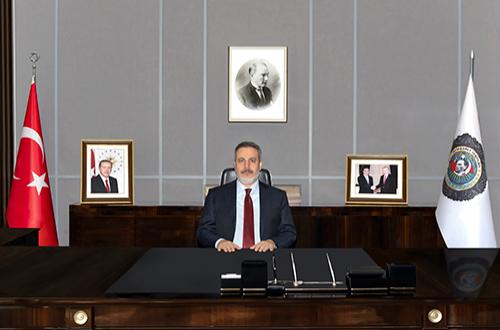
Concern grew after Turkish Foreign Minister Hakan Fidan warned on Thursday (8 October 2026) that the Black Sea risked becoming a new battlefield, endangering international shipping. Ankara urged Moscow and Kyiv to stop attacks on commercial vessels after several deadly incidents in recent days. Turkey has also put forward proposals to both countries to guarantee the safety of shipping and grain exports.
The incident off Sochi illustrates how far the threat has spread. The Liberia-flagged Aframax Rio was attacked by an unmanned sea craft on Tuesday evening (6 October 2026), local time, while sailing in the Black Sea near Russia’s coast. The attack triggered a major fire and forced the entire crew to abandon the vessel.
Russia’s Transport Ministry said all 23 crew members had been rescued. They were all Indian nationals and were reported to be unharmed. Local authorities temporarily closed several beaches in the Sirius area of Krasnodar Krai as a precaution while the fire was burning.
Huge fire in the Black Sea
Footage circulating from the Sochi area showed bright orange flames at sea. Black smoke billowed from the burning tanker, creating a striking sight near one of Russia’s best-known resort areas. Sochi is the coastal city that hosted the 2014 Winter Olympics.
According to a Reuters report on Tuesday (6 October 2026), Russia’s Transport Ministry said the vessel had been attacked by an unmanned sea craft. The fire was so intense that rescue workers had to assess its severity before attempting to extinguish it fully. Local authorities deployed emergency services and secured nearby coastal areas.
The latest update came on Wednesday (7 October 2026) from Executive Ship Management, the company responsible for the Aframax Rio’s technical management. It confirmed that all crew members had been brought ashore with assistance from the Port of Sochi authorities. The fire had also been extinguished, while an inspection of the vessel was under way.
In its official statement, Executive Ship Management said two senior officers from the vessel were accompanying officials as they inspected the damage. The company was also assessing possible environmental effects of the incident. At the time of the announcement, there was no official conclusion on the extent of the damage or the possibility of an oil spill.
Lloyd’s List reported on Wednesday (7 October 2026) that the Aframax Rio had been sailing from the Russian port of Novorossiysk to Istanbul, Turkey, when it was attacked at about 20:00 local time. The specialist shipping publication said the vessel was carrying crude oil and was involved in the Russian oil trade. However, the amount of cargo on board at the time of the attack could not be established from information available to the public.
The circumstances have raised concerns about the safety of the oil cargo and the risk of environmental damage to the Black Sea. A tanker fire does not automatically mean that oil has spilled into the sea, and any pollution must still be established through inspection. The authorities and the vessel’s management company have not announced final findings on the environmental impact of the attack.
Who attacked the Aframax Rio?
As of Thursday (8 October 2026), the identity of the party that attacked the Aframax Rio had not been independently confirmed. Ukraine is known to have the capability to use sea drones to attack Russian targets in the Black Sea. However, that capability alone is not evidence that Kyiv was responsible for the tanker attack.
In its report, Lloyd’s List linked the attack to the possible resumption of Ukrainian drone operations against vessels involved in the Russian oil trade. That assessment was based on the pattern of attacks and the nature of the target, rather than an official announcement identifying the perpetrator. The Ukrainian government has not made any admission that could establish its involvement in the Aframax Rio incident.
Executive Ship Management also adopted a cautious position. The company said an investigation was continuing to establish the circumstances of the attack, any possible links to previous security incidents, and why the vessel was targeted. The manager said it would not speculate about the attacker’s identity or motive.
The uncertainty over responsibility highlights the growing challenges facing modern maritime security. Unmanned sea craft can strike vessels in open waters without directly revealing who operates them. Establishing responsibility requires examination of technical evidence, the craft’s movements and reliable intelligence.
Source: jawawa.id (https://jawawa.id/newsitem/oil-tanker-catches-fire-as-russia-ukraine-drone-war-threatens-black-sea-turkey-issues-warning-1791485442)
Originally published by Republika (https://news.republika.co.id/berita/tmlq49451/tanker-minyak-terbakar-perang-drone-rusiaukraina-ancam-laut-hitam-turki-beri-peringatan), translated from Indonesian